





Affordable Senior Housing OK’d for Downtown Worcester
Worcester officials have approved a proposal from Boston-based WinnCompanies to redevelop the vacant former Boys & Girls Club building at 16 Salisbury St. in the city’s downtown.
Worcester officials have approved a proposal from Boston-based WinnCompanies to redevelop the vacant former Boys & Girls Club building at 16 Salisbury St. in the city’s downtown.

Besides the benefit to the quality and character of these urban centers, these historic preservation and adaptive reuse projects are inherently more sustainable, economic and potentially face less resistance during approvals.
A new state fund outlined in a bill before the state legislature would help facilitate improvements to underutilized commercial or industrial buildings in economically distressed areas.

Penrose, under Regional Vice President Charlie Adams, is making a name for itself as a developer of creative housing models throughout the East Coast. Locally, it’s working on unique projects in Jamaica Plain and Chelsea.

For developers and owner-operators throughout New England, adaptive reuse has long proven a cost-effective, sustainable and market-responsive means of generating new housing units, creating successful mixed-use communities and preserving our region’s architectural history.
There’s one downside to the seeming end of the Boston office market’s slide.

To reach carbon neutrality, both new and existing buildings must address operational and embodied carbon. Existing buildings represent a prime opportunity by prolonging the life of used materials and creating a venue to cut operational emissions.

The East Boston racetrack where thoroughbreds’ hoofbeats thundered for 84 years is now available to the public for recreation as plans proceed for a 16.2-million-square-foot redevelopment.
With the city staring down numerous complex challenges city leaders need to start developing options now for giving downtown landlords a menu of realistic options for adapting to an office market that’s poised for great change

A renovation of Fitchburg’s city hall by Medford-based Bond Construction garnered Preservation Massachusetts’ Paul & Niki Tsongas Award, which recognizes the best in historic preservation efforts across the commonwealth.

Adapting historic structures to 21st century real estate needs is a big part of Özge Diler Himes’ role at Boston-based Finegold Alexander Architects, where she’s working on options for interior renovations to The First Church of Christ, Scientist in Boston.

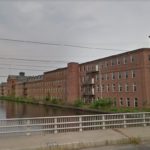
A giant vacant mill at the center of legal disputes and dreams of future redevelopment for a Central Massachusetts mill town will be leveled to entice future development.

State officials have released draft guidelines for redevelopment of the property that rule out demolition of the state offices building, which is prized by devotees of modernist architecture.

CBT’s Maren Reepmeyer played a key role in designing Fidelity Investments’ Seaport World Trade Center at Commonwealth Pier, redesigning office space for collaboration, eliminating the aging meeting hall and adding new retail on Seaport Boulevard and outdoor public spaces on the Boston Harborwalk.

With the incredible demand on urban settings, the redevelopment of existing office buildings presents a prime opportunity to re-invest in aging real estate assets and simultaneously revitalize and energize our urban centers.

Now more than ever, the opportunity to reuse and reposition a property requires a critical design skill and expertise, and will prove essential to how we push forward as an industry.

Commodore Builders is nearing completion of Boston’s first cross-laminated timber building, a redevelopment of a former rivet factory into office and retail space at 69 A. St. in South Boston.

Despite top-tier locations, industrial sites can be a hard sell to investors because of pre-existing contamination. But remediation and reuse of properties doesn’t have to be daunting if you work with the right environmental team.

Amid the Fenway neighborhood’s transformation from a disconnected sprawl of parking lots, gas stations and auto-related uses to a vibrant, mixed-use neighborhood, one building remained stubbornly in the past: The 1 million-square-foot former Sears building now called 401 Park.

Nauset Construction recently completed the transformation of the historic 1870 Whitney, Lucretia and Henry Building into a 67-room boutique luxury hotel located in Cambridge’s Central Square.

