





Lawmakers OK Bill to Take Norwood Hospital by Eminent Domain
The measure passed Friday effectively ratchets up the pressure for the property’s owner to make a deal with a new operator before the state flexes its authority to intervene.
The measure passed Friday effectively ratchets up the pressure for the property’s owner to make a deal with a new operator before the state flexes its authority to intervene.
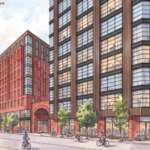
It’s back to the design drawing board for at least one of the proposed redevelopers of a key parcel of city land in Somervile’s Inner Belt neighborhood.
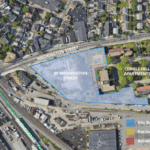
Somerville is seeking housing development proposals for a former shopping center property seized by eminent domain for an abandoned public safety complex project.
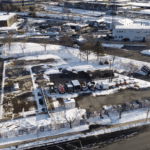
Somerville Mayor Katjana Ballantyne abandoned a plan to develop a new public safety complex outside Union Square after the city lost a legal battle over an eminent domain taking of the 90 Washington St. property.

The Massachusetts attorney general’s office defended Gov. Maura Healey’s decision to seize St. Elizabeth Medical Center through eminent domain during the Steward Health Care bankruptcy.
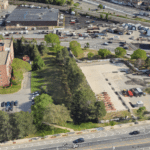
The Massachusetts Appeals Court ruled in favor of a developer that challenged an eminent domain taking of its property for a new Somerville public safety complex, awarding $30 million for the acquisition.

The firms that control the real estate of St. Elizabeth’s Medical Center in Brighton rejected what they say is the state’s low-ball offer for the property and told Gov. Maura Healey that they will “vigorously challenge” her plan to take the land beneath bankrupt Steward Health Care’s hospital by eminent domain.

The Massachusetts Department of Transportation overstepped its authority in a 2018 eminent domain taking for a South Boston property owned by Boston-based developer Core Investments, the Supreme Judicial Court ruled.
Three months into the 2021-2022 session, the legislature is winding up to consider constitutional amendments at the constitutional convention the House and Senate must convene by May 12.

In a case of first impression, the Massachusetts Supreme Judicial Court ruled last month in Abuzahra v. City of Cambridge that property owners can accept partial payments from government bodies for eminent domain takings, while simultaneously challenging the lawfulness of the takings.

Every city in Massachusetts has one or two, and in Lawrence, there are hundreds, Mayor Daniel Rivera said Thursday: vacant properties that aren’t being developed, because their owners are tied up in land court or the ownership is otherwise unclear.

The owner of a downtown Worcester building mired in controversy is looking for a developer to partner on a project on the site.

Why should property owners care about a legal dispute involving a local ordinance in rural Pennsylvania requiring that cemeteries on private property be open to the general public? Because last month the U.S. Supreme Court issued a groundbreaking decision about this dispute that will have broad ramifications.

A recent Falmouth case shows property owners face big odds if they try to bring a lawsuit over a “regulatory taking.”

In addition to excellent highway access, Brockton has three Commuter Rail stations, offering 30-minute trips to Boston’s South Station. Yet despite these amenities, economic success has been elusive. There are signs that this will change.

Some local officials’ reasons for deploying the “nuclear option” of eminent domain in Brockton, Waltham and Hopedale should trigger warning lights.
Thirteen years ago Saturday, the U.S. Supreme Court ruled that a private organization could legally use eminent domain powers granted by the city to seize private property in a seaside Connecticut neighborhood and hand it over to another private corporation in the name of economic development.

The dreary and stunningly mediocre Charles River Park apartment complex is all that remains of a big chunk of the old West End, torn down via eminent domain by Boston officials back in the 1950s.

