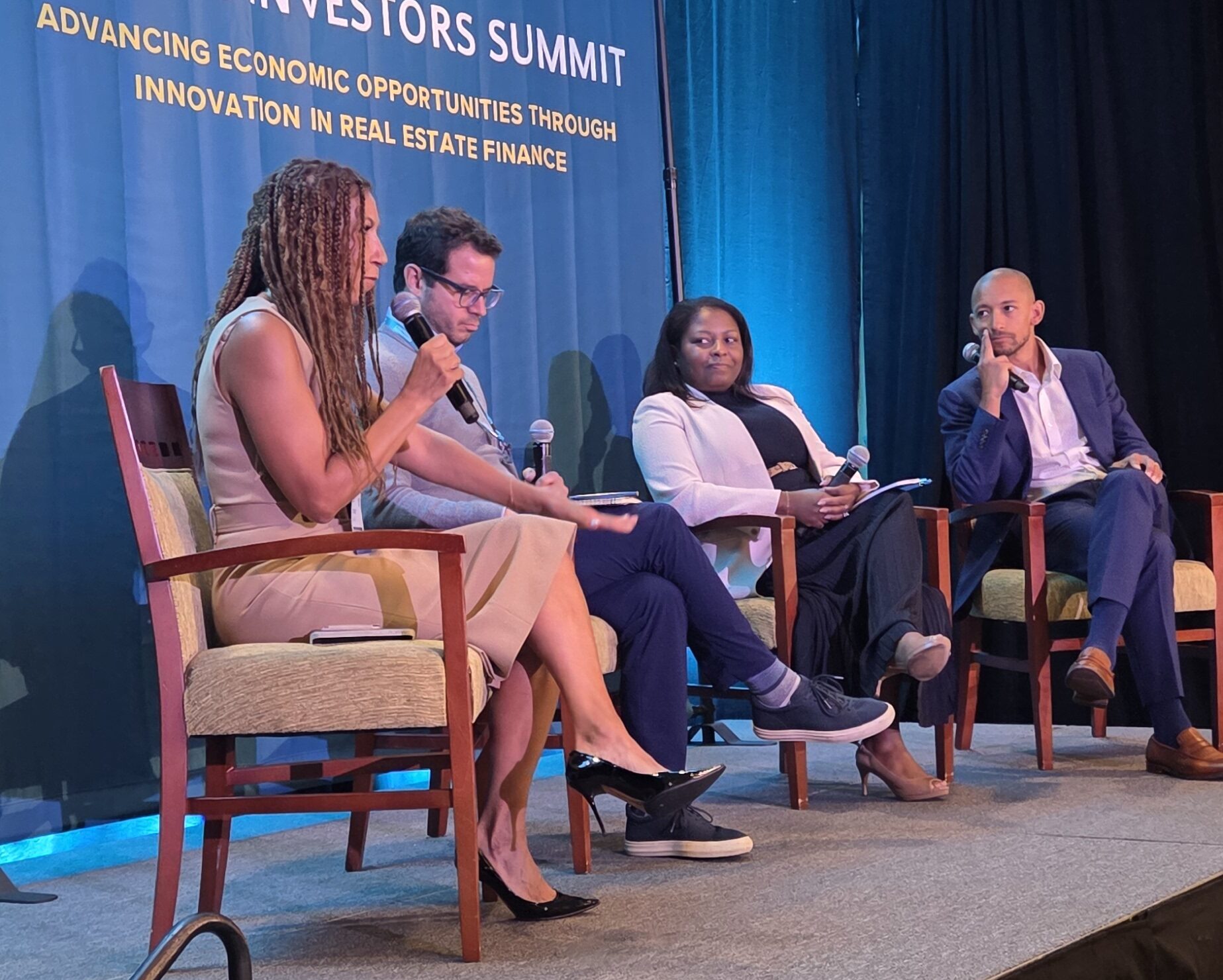
Panelists at the Builder Coalition's first-ever National Capital Summit included Tammy Jones, CEO & Founder, Basis Investment Group; Carlos Febres-Mazzei, Managing Principal, Quaker Lane Capital; Tiara Henderson, Managing Director, CRE & Investment Banking, Wells Fargo and Andy Elliot, Associate Director, Nuveen Green Capital. Photo courtesy of The Builder Coalition
Emerging real estate developers and potential financial backers gathered in Boston this week to make connections, do deals and share strategies to overcome the challenging investment climate.
A political backlash to DEI initiatives adds a new hurdle for fundraising, said Tammy Jones, CEO of New York-based Basis Investment Group.
“The red states don’t want to hear about [environmental, social and governance]. They don’t want to hear about diversity,” Jones said. “I’ve been told, ‘Take that out of your presentation.’ So my lesson that I would like to share with you is: Try to find the folks that will be more open to your story.”
Jones’ firm has invested and loaned more than $8 billion since its founding in 2009.
The Builder Coalition, a Boston-based professional networking and education group, hosted the first-ever National Capital Investors Summit, held Wednesday at the Seaport Hotel.
The day-long matchmaking event gave local early-career development firms, many of them minority-owned, a chance to network with 71 capital providers from 31 institutions, including private equity groups, community development financial institutions and national banks.
“It’s not rocket science,” Builder Coalition CEO Dave Madan said. “Get good people in a room together and get them to do deals. Why does this not happen more often? I suspect it’s because this field is so competitive.”
The importance of collaboration was a common theme among speakers as they described ways to overcome the unusually challenging financial conditions that deter development.
“It’s harder to finance deals now than it was in the global financial crisis,” said Carlos Febres-Mazzei, CEO of Boston-based Quaker Lane Capital.
Vince Toye, a JPMorgan Chase managing director and head of community development banking, said developers may need to partner with competitors to complete certain deals in the current climate.
“For those of you who think you’re competing against that person, you’re not. You’re competing with yourself,” Toye said. “Learn from each other. Talk to one another. Don’t worry about someone stealing your ideas and your plans.”
Minority investments in projects can put developers at a disadvantage if they don’t include decision-making powers, speakers acknowledged, or don’t provide controls to protect investments. But if successful, they can give smaller developers a track record with lenders and investors to do future deals.
While traditional lenders remain wary of many deals, private capital including high net worth individuals and family offices offers a growing source of funding, speakers said.
“How you identify those different capital sources is critically important in the market right now, but I think the capital is out there and you’re going to see more investment in ground-up development over the next six to 12 months,” Febres-Mazzei said.
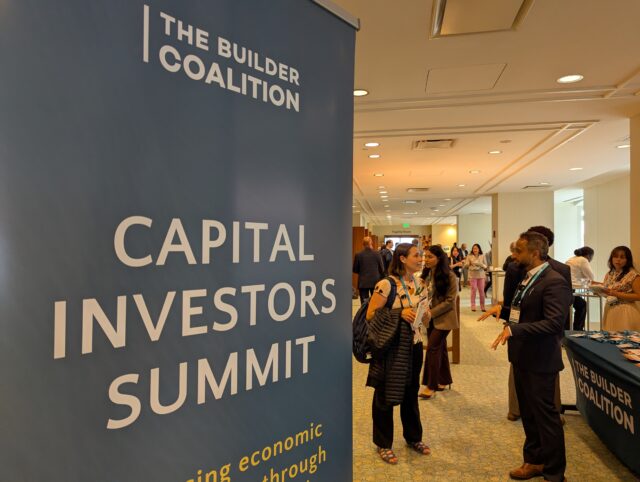
The Builder Coalition CEO Dave Madan, right, talks with an attendee at the group’s first-ever National Capital Investors Summit at the Seaport Hotel Boston on Sept. 24, 2025. Photo by James Sanna | Banker & Tradesman Staff