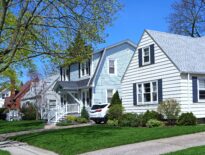
Older apartments rented at below-market rates, known as “naturally occurring affordable housing” are a priority for purchase by community development corporations. iStock photo
Massachusetts faces a housing affordability crisis. While we are investing billions of dollars in affordable housing production – which is critical – we must at the same time ensure we are not allowing existing affordable units to be lost, including through speculative ownership which raises rents and displaces long-term tenants.
The Massachusetts Association of Community Development Corporations (MACDC) is committed to two strategies – distinct but related – focused on preserving the affordability of rental housing that is currently in the unregulated private market.
The importance of this focus is underscored by a 2025 study by the Metropolitan Area Planning Council and Housing Navigator Massachusetts which found that, in every region of the commonwealth, at least two-thirds of households with incomes at or below 80 percent of area median income lack access to an income-restricted unit and rely on the market for housing.
More State Funds for NOAH Buys
The first strategy is the preservation of naturally occurring affordable housing, also known by the acronym NOAH.
These apartments in privately-owned buildings have a measure of affordability courtesy of being rented at less than market rates which, once lost, can be almost impossible to reclaim.
A 2025 report by MACDC and The Boston Foundation found that the success of community development corporations, or CDCs, in acquiring and preserving NOAH depends in part on a combination of good practice, including CDC capacity to acquire and manage scattered-site properties and organized tenants to discourage speculative investors. The report found it also depends on external factors: real estate market dynamics, property condition, and availability of supportive private and philanthropic partners.
If we are to scale up successful NOAH acquisitions, however, state government needs to provide additional subsidy funding for these acquisitions by mission-based developers, CDCs among them.
A good start would be to build upon the $1 million awarded in 2025 under the Small Property Acquisition Fund, or SPAF – by allocating an additional $3 million, and by allocating some of the roughly $500 million for affordable housing anticipated to be in the commonwealth’s fiscal year 2027 Capital Spending Plan for larger NOAH acquisitions.

Emily Haber
TOPA Levels the Playing Field
To complement funding for NOAH acquisitions, we need the Legislature to enact the Tenant Opportunity to Purchase Act (TOPA).
Once enacted, TOPA will level the playing field between tenant associations and speculative purchasers by requiring advance notice to tenants of an impending listing and providing tenant associations with the right of first refusal to match any third party offer for their building.
Sellers would still receive the full market value of the sale of their property, while tenants would have a tool to remain in their homes by balancing out the sizeable advantage currently enjoyed by all-cash purchasers who are likely to displace the residents after the sale.
Ironically, a major preservation success story underscores the need to enact TOPA. In March 2025, the city of Boston announced the successful acquisition of Fairlawn Estates in Mattapan and conversion of all 347 units from market-rate housing to permanently affordable housing.

Don Bianchi
Boston Win Relied on Federal Help
This amazing success story was the culmination of six years of tenant organizing and the city provided $10 million in subsidized funding from its Acquisition Opportunity Program, along with philanthropic support. However, prior to this acquisition, the property was purchased by an investor who significantly raised rents, resulting in tenant displacement.
Furthermore, the city’s substantial investment was aided by federal dollars made available through the American Rescue Plan Act – funds which are no longer available.
Had TOPA been on the books in 2018, the building could have been purchased by the tenants, without the trauma of displacement and no doubt with less public subsidy.
Effective public policy involves hard choices and tradeoffs, and spending more on scaling up NOAH acquisitions is no different. We have an opportunity now to bring to bear complementary strategies: the enactment of TOPA to provide tenants with the opportunity to acquire their buildings when they are being sold, and the dedication of state dollars to support acquisition and affordability preservation of homes in the private market at risk of being lost.
Emily Haber is president and CEO and Don Bianchi is director of housing at the Massachusetts Association of Community Development Corporations, the trade group for the state’s nonprofit community development corporations.