Berkshire Group’s Benjamin tower hit the market last week; another 478 apartments are set to come online at its sibling property, The Via, later this month.
Commercial real estate valuations have hit all-time highs nationally and Greater Boston is in the midst of a massive multifamily building boom skewed toward high-end properties, raising concerns about future risks.
Nearly a third of banks have tightened standards on development and construction loans, according to a recent Federal Reserve survey of senior loan officers. Over 36 percent say they’ve raised requirements for multifamily loans.
“The community bank is really scared about commercial real estate risk in general,” said Justin Bakst, director of capital market analytics for CoStar. “The biggest risks that are on bankers’ minds are multifamily supply risk in the tier one markets, such as Boston and New York, and the luxury sector.”
Multifamily valuations are now 33 percent higher than they were before the housing collapse in 2008, according to CoStar research. Another 850,000 units are scheduled to be delivered nationwide by 2020, with high-end properties in pricey markets comprising half of the total.
In Greater Boston, apartment deliveries hit their highest levels in more than three decades in 2015 with more than 8,000 new units. Nearly 8,000 more are scheduled for completion during 2017.
Last week, the local luxury apartment inventory added more than 800 new units with the opening of the 447-unit Montaje complex at Somerville’s Assembly Row and 354 apartments in Boston’s Seaport District at Berkshire Group’s Benjamin tower. Another 478 apartments are set to hit the market this month at Berkshire’s sibling property, The Via.
But deliveries are expected to fall off sharply in 2019, with fewer than 4,000 new units, according to CoStar estimates.
Lenders are pulling back by raising requirements for big-ticket multifamily construction loans, said John Gorga, president of Boston-based Fantini & Gorga.
“There’s pressure on most construction lenders to rethink where we are in the market, but (multifamily) is still a favored asset class,” Gorga said. “There’s tightening but there’s still some appetite.”
Robert Mahoney, CEO of Belmont Savings Bank, thinks he’s seen this movie before. Inexperienced developers are pursuing projects in secondary and tertiary submarkets around Boston, and non-recourse loans with loan-to-value ratios as high as 90 percent are widely available, he said.
“The lending aggressiveness and pricing looks a lot like 2007 to me, so we’re being cautious,” Mahoney said. “There’s too many amateurs joining the fray: it’s the guy in the truck who used to be a carpenter and became a contractor and is now a developer.”
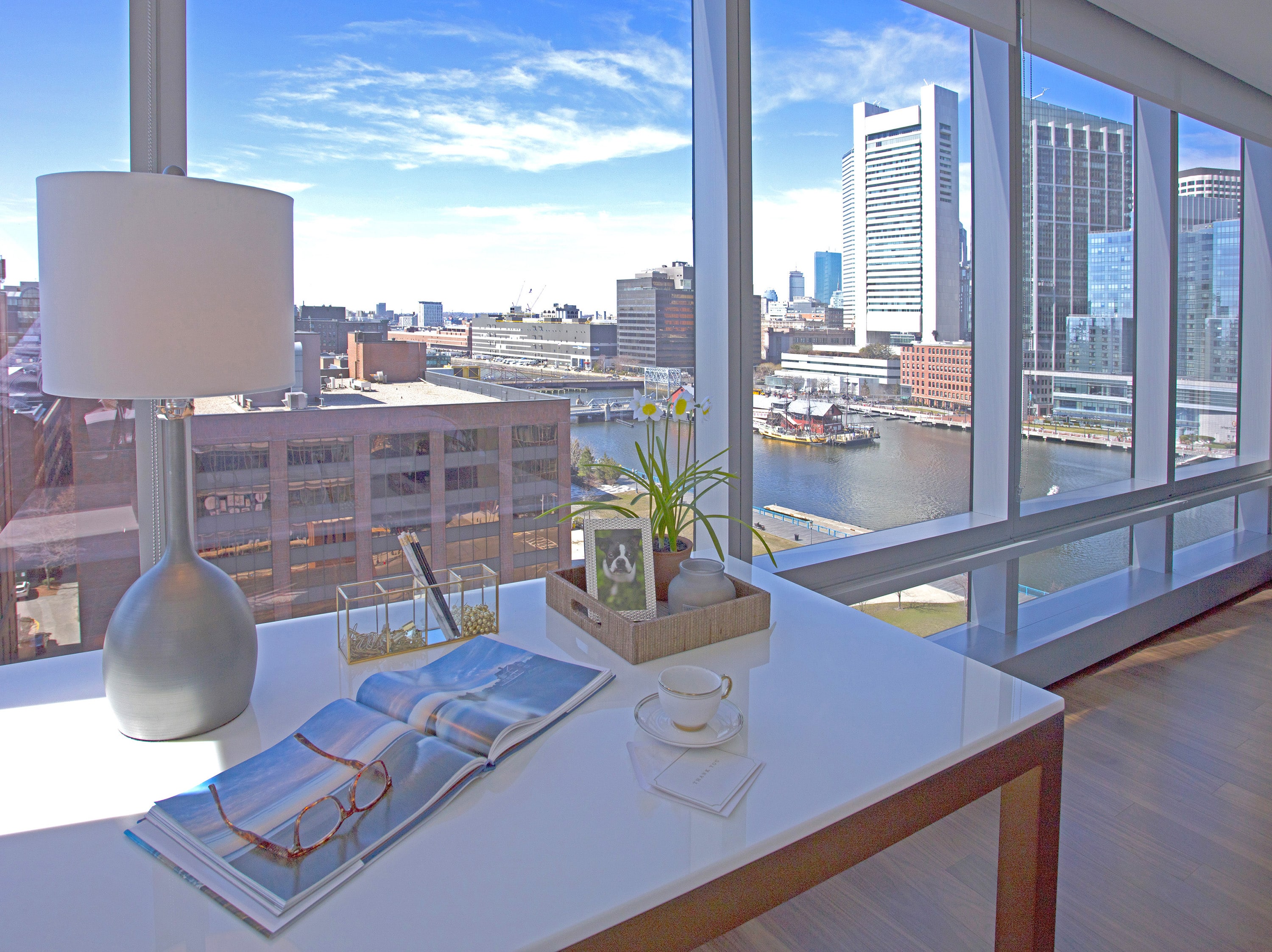
More than 800 luxury apartments hit the market in Boston and Somerville last week with the opening of the Montaje complex at Somerville’s Assembly Row and Berkshire Group’s Benjamin tower in Boston’s Seaport District (pictured).
Belmont Savings Bank is still active in multifamily loans for experienced developers expecting to rent units in the $2,000 to $2,500 per month range, he said.
East Boston Savings Bank is taking a similar strategy with multifamily lending because the luxury market appears overbuilt, said John Migliozzi, executive vice president of commercial lending. For now, it’s focusing on projects such as rehabs of class B apartment complexes.
“We’re looking cautiously at new construction across the board,” Migliozzi said. “On acquisition loans, Boston is obviously a very strong and desirable market and there’s a lot of sources of capital coming in. But it’s slowed down a little bit and some of it’s pricing. At some point people are saying, ‘I can’t get there.’”
Is It Different This Time?
In Greater Boston, apartment vacancies rose 0.3 percent to 4.9 percent in the first quarter. But after declining 1.6 percent in the fourth quarter, rents resumed their upward march in 2017, rising 0.3 percent to $2,131.
In public remarks in May, Boston Fed President Eric Rosengren raised concerns about commercial real estate valuations while acknowledging that urbanization, delayed marriage and Millennials’ demand for housing are propping up the multifamily market.
Lost amid the attention paid to luxury housing has been sluggish growth in other segments, CoStar’s Bakst said.
“Single-family home construction has yet to recover,” he said. “Although we’ve seen some of these luxury apartment markets’ risks, overall we’re underhoused – and that’s consistent throughout the country.”