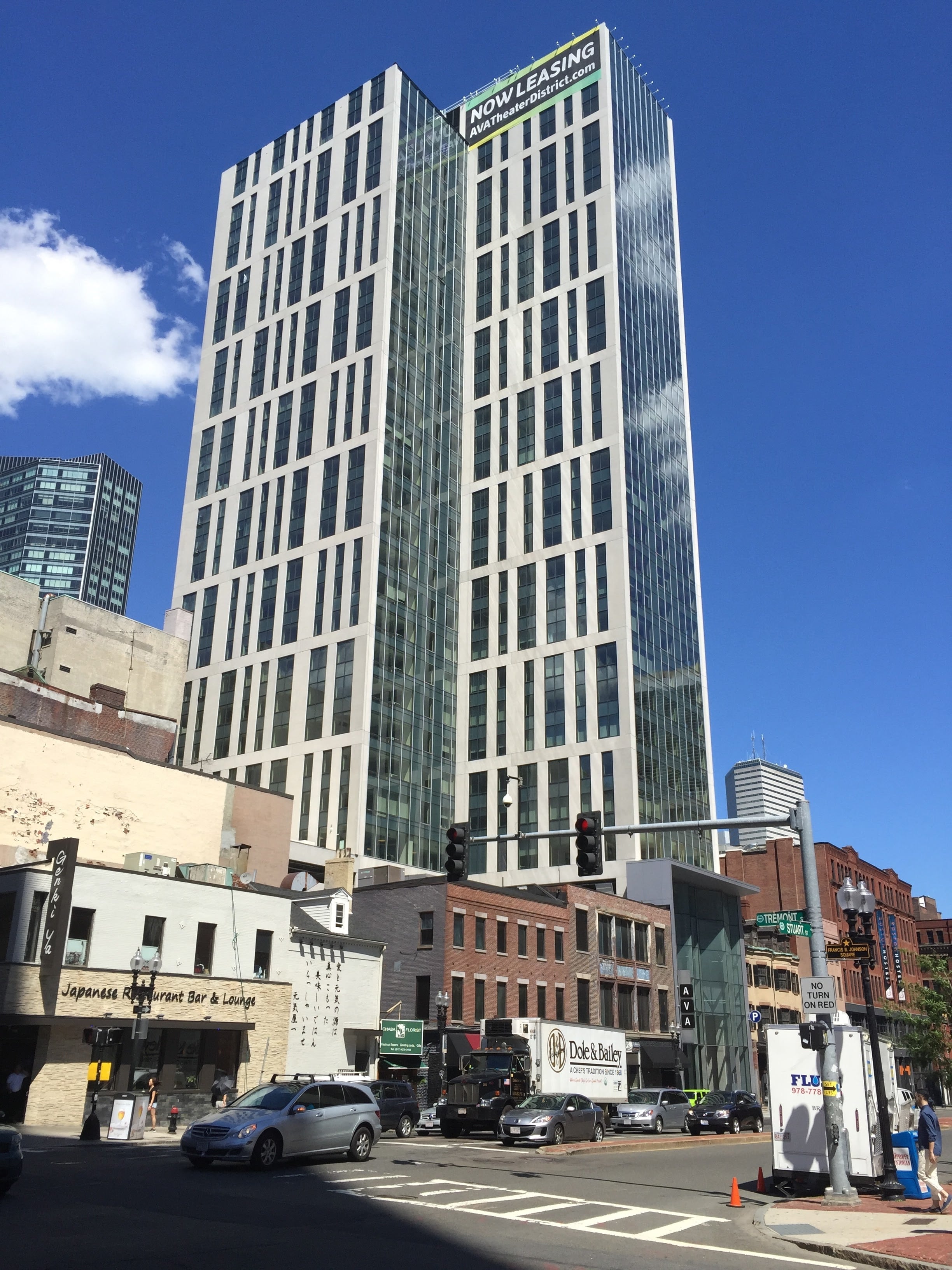
The AVA Theater District apartment tower in central Boston. Photo by Steve Adams | Banker & Tradesman Staff
A Boston city councilor and a landlord group are warning of unintended consequences from a proposal to increase property taxes on large apartment buildings in Boston.
District 4 Councilor Brian Worrell submitted a home rule petition that would reclassify apartment buildings with more than 30 units as “commercial residential” properties, subjecting them to a higher property tax rate.
“Homeowners and small landlords are carrying a heavier load, while larger apartment owners often pay less taxes per unit,” Worrell said in introducing the petition at Wednesday’s City Council meeting.
Under Boston’s split property tax structure, commercial properties pay $25.96 per $1,000 of assessed value in fiscal 2026, compared with $11.58 for residential properties.
Worrell’s proposal would reclassify large apartment buildings at the commercial tax rate, with a 10 percent exemption.
Even before Worrell’s proposal was submitted, a property owners’ group warned that landlords will pass along the additional costs to tenants.
“This extreme proposal would do significant harm to Boston renters and landlords, deter investment in much-needed new housing stock, and enable the city of Boston to continue its recent pattern of unchecked spending increases,” the Small Property Owners Association stated.
Worrell said the tiered property tax structure – already in place in cities including New York City and Washington, D.C. – would decrease costs on the majority of apartment buildings in Boston, which have 30 or fewer units.
The petition includes a provision that the city could give seven-year tax breaks to developments with 100 or more units, to avoid deterring new construction. It would enable the city to offer a 50 percent tax exemption if big landlords reserve at least 80 percent of units at restricted rents for households earning 80 percent or less of area median income.
A fellow councilor warned the proposal appears to add another burden to developers, following steep interest rate increases and inflationary pressures on project costs.
“We urgently need to build more housing, not create barriers that will make it harder to do so,” District 8 Councilor Sharon Durkan said. “I have serious reservations about disincentivizing housing construction. It feels like this proposal is a gut punch at the wrong time.”
Both progressives, Durkan and Worrell are also both considered allies of Mayor Michelle Wu.
The proposal was referred to the council’s Committee on Government Regulations.
As a Home Rule petition, Worrell’s proposal requires approval by the state Legislature, which has been skeptical of recent attempts by Boston officials to tweak the city’s property tax structure.
In 2024, the Boston City Council approved Mayor Michelle Wu’s shift in the commercial-residential tax split, increasing the commercial sector’s share of the overall tax levy. But the proposal stalled in the state Legislature.