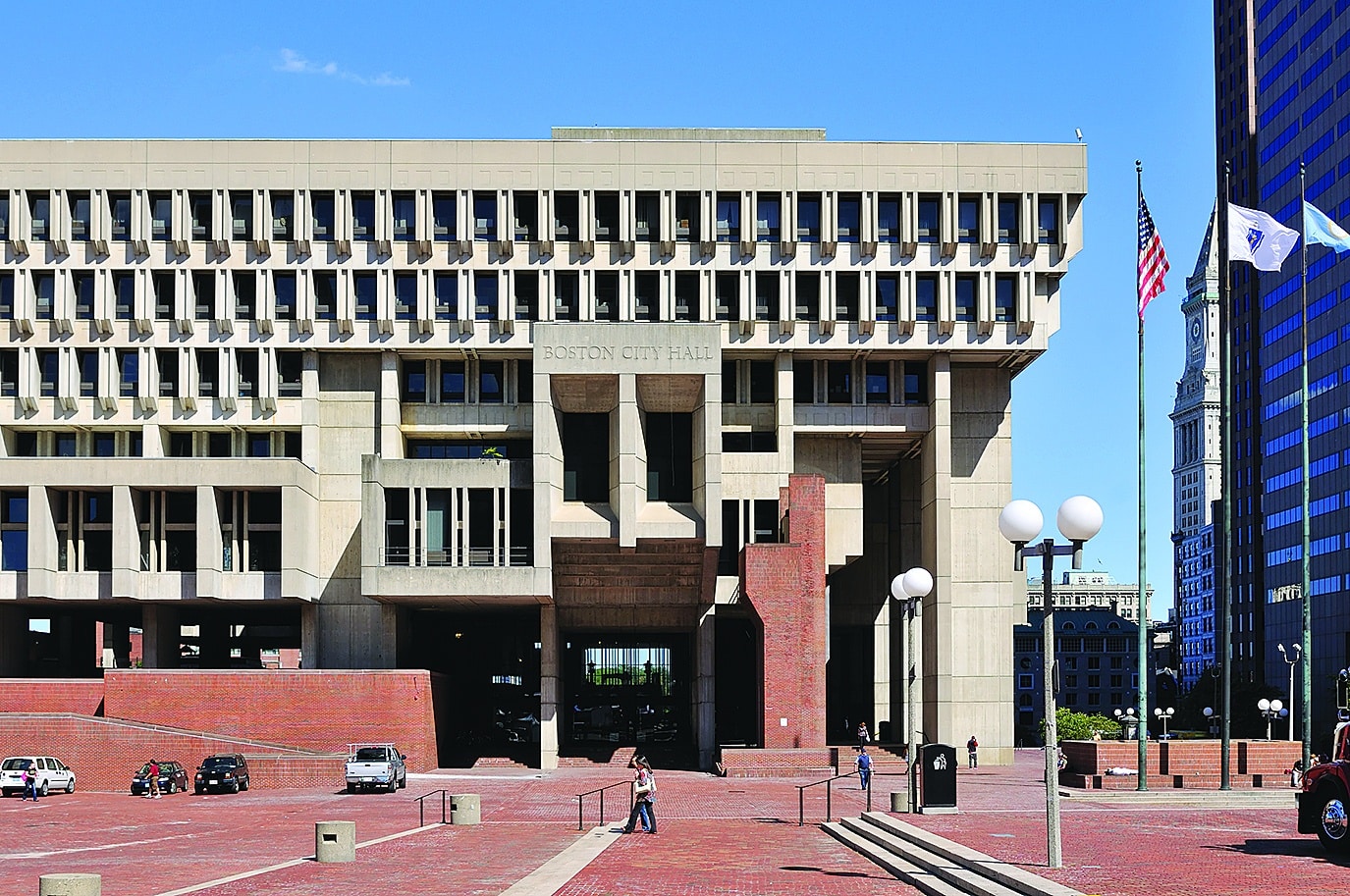
Boston City Hall
Boston city councilors have backed Mayor Michelle Wu’s proposal for a real estate sales tax on expensive properties. The measure now heads to Beacon Hill where state legislators must approve it before it can become law.
The proposal would add a 2 percent sales tax to all real estate transactions, with the first $2 million being exempt The City Council would have the power to raise the amount of a sale exempted from the tax “based on the percentage increase in the median citywide sales price for all properties” every three years.
Sales between family members and transfers of convenience would be excluded, and the ordinance would let the City Council create further carve-outs for “economically vulnerable populations,” affordable housing developments, deed-restricted affordable housing, homeowners or people who bought their homes through a city-approved homebuyer program.
The money raised would go into the city’s Neighborhood Housing Trust Fund, which is used to help pay for affordable housing developments and the preservation of existing affordable units. City officials estimated earlier this year that such a tax would have raised nearly $100 million on 704 sales in 2021, largely from large commercial sales and the transfers of high-end condominiums downtown.
Wu hopes to convince legislators to reject real estate industry groups’ concerns that it would add yet more costs on top of the high price of construction in the city. A key tool may be her choice to package the transfer tax proposal with a new senior property tax relief program.
However, Wu’s two predecessors also tried – and failed – to get the state legislature to sign off on similar proposals in recent years. The Mass General Brigham hospital system has also thrown its support behind a bill already on Beacon Hill that would allow any town or city to put its own transfer tax in place to fund affordable housing.