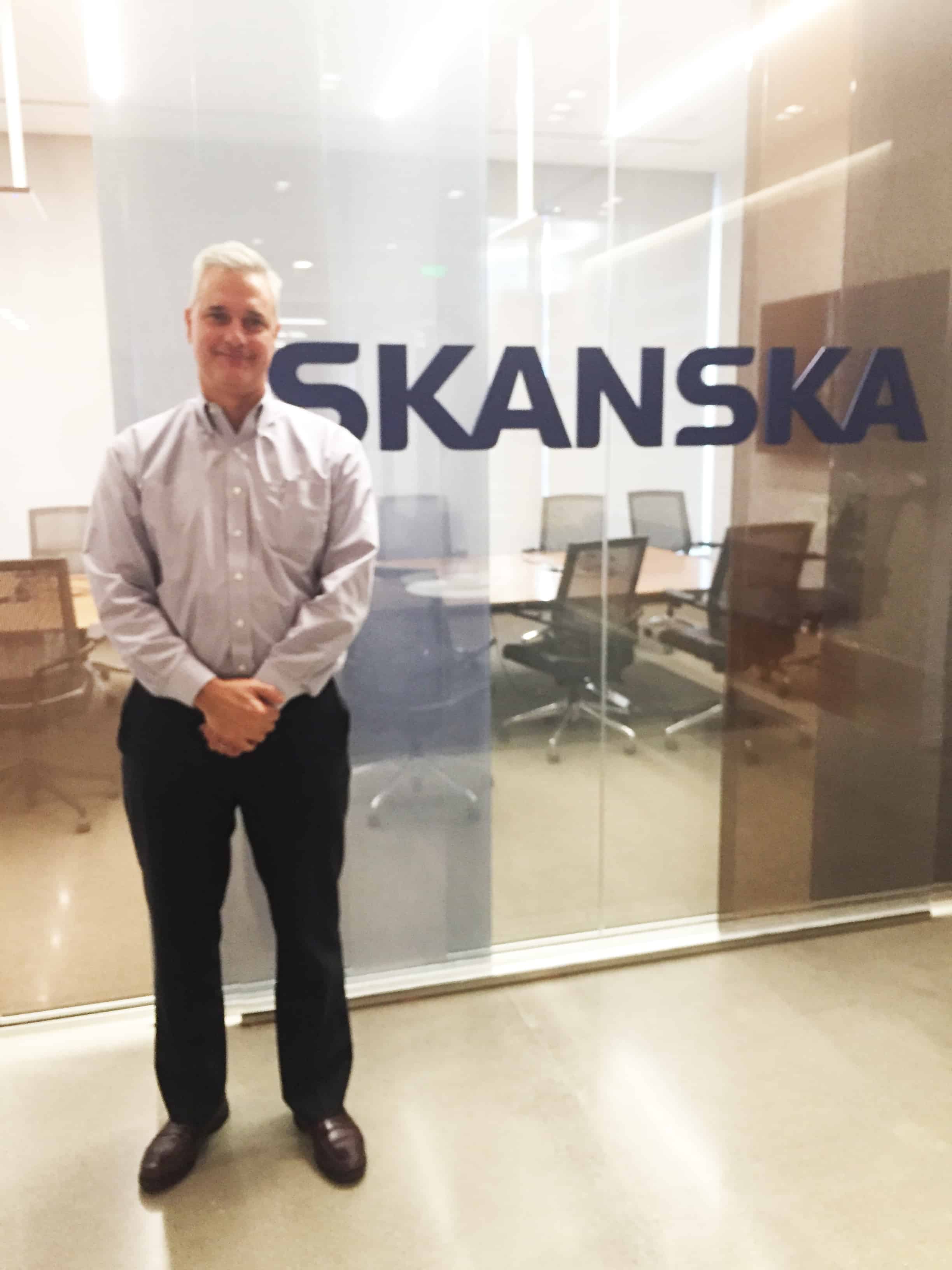
Kerim Evin
Title: Executive Vice President, Skanska USA Building
Age: 55
Experience: 31 years
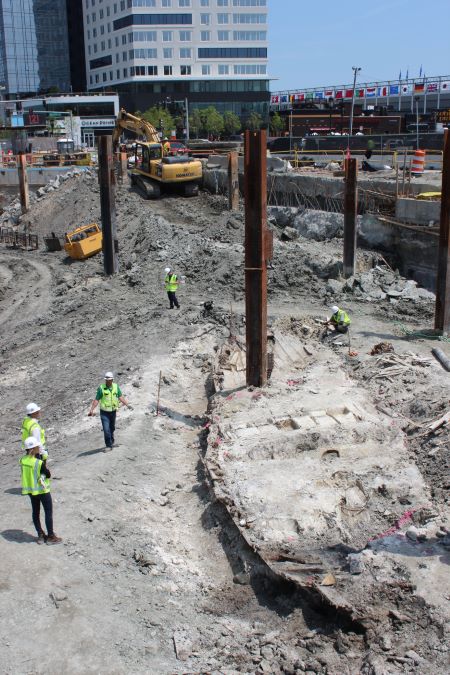
Surprises are common in complex construction projects, but it’s not every day of the week that they come in the form of a centuries-old shipwreck buried beneath an office tower site. That’s what Skanska USA discovered in May at 121 Seaport, a 17-story, 400,000-square-foot office tower that it’s developing in Boston’s Seaport District. It’s one of the latest projects that Kerim Evin, an 18-year Skanska executive, has participated in along with the Harvard Art Museum’s renovation and expansion and construction of State Street Corp.’s 37-story office tower in downtown Boston.
Q: How did you hear about the discovery of the shipwreck?
A: It’s funny. My desk (at Skanska’s offices at 101 Seaport) overlooks the excavation, so I actually found out about it by seeing it. I had to ask because you could see this outline of the ship starting to form as the excavation was going down, and then things seemed to stop. When I saw it, I called one of our guys down on the project and he told me what was going on with it. I think it was at the point in time when the people on the project still didn’t know what it was. So some of the guys on the job had found a few pieces, the top of a barrel, and they were doing research online to figure out what they had come across. Then it went from there. It was really a crazy story.
Q: So you notified city archaeologist Joe Bagley?
A: There were some immediate reactions. “What do we need to do?” And ironically, the answer was we don’t need to stop. We could keep going. There’s no legal obligation. But the team said, “Hey, it doesn’t feel right. We need to stop and give them an opportunity to look at that.”
Q: Did it push back the timetable?
A: There was a two- to three-week hiatus in one corner of the project but it hasn’t really had any material impact on us. It’s a very complex excavation. You’ve got the (MBTA) Silver Line on one corner and the nature of the project, it’s an up-down type project which is something we do fairly frequently. We were able to reconfigure the approach to the building when we found the ship. We have our own internal civil group doing the excavation, which turned out to be a blessing. We weren’t dealing with subcontractors. We were dealing with our own people, figuring out technically how to get around it, which really made a difference for us. It probably would not have been as pleasant for an external client dealing with a contractor who’s being delayed. But that’s one of the advantages we have with multiple business units under one roof.
 Q: Where is the ship now?
A: The ship was taken away in pieces and is being stored in our (warehouse) in Waltham. I know that there is a group of people trying to figure out how to repurpose what was left from the lumber. I think it’s going to be pretty cool.
Q: What other surprises did you find at 121 Seaport?
A: We had drawings that depicted where the (MBTA) Silver Line was and the conditions. And ironically when we started digging we found an entirely different situation. Again, we were able to find out what was there through the relationships our civil people have with people in the city. We got to an engineer who used to work with the MBTA and they told us what the conditions were and pointed us in the right direction.
Q: You just topped off the 1350 Boylston St. apartment tower in November. How did you mitigate the odor issues associated with excavation of soil in the Fenway?
A: In that general area, there is a layer of peat. Anytime you open up an excavation, it really starts to smell. We had to really negate and treat the exposed soils. You have to try and limit the amount of time you have those materials exposed. The way those things happen is people call City Hall and the building department contacts us and asks what we’re doing. They communicate back. As long as we’re doing everything we should be, we usually don’t have any problems.
Q: The Novartis headquarters buildings in Cambridge were designed by two separate architects in Maya Lin and Toshiko Mori, along with architect of record Cannon Design. Was that a challenge?
A: Anytime you’re dealing with architects of that class and talent, the design could be one of a kind. Almost everything you’re doing – if you look at the facades of those buildings – they’re all demised just for that building. You’re not going to go to a place in the city or even the country and find something like that. We’re often having to work with designers ground-up to create the systems that support the architectural intent of the building. And that’s a challenge. You have to satisfy budgetary requirements and simultaneously meet the demands of an architect who’s trying to deliver something that’s never been done before. That takes the right skillset and the right mindset.
Evin’s Five Favorite Leisure Activities:
- Skiing with his family
- Après-ski
- Mountain bike rides
- Reading on the beach
- Woodworking