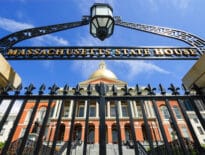
According to Meet Boston, previously known as the Boston Convention and Visitors Bureau, the BCEC will have a record year of room nights in 2023. iStock illustration
Just 12 months ago, the Boston and Cambridge lodging market was showing signs of a recovery from the pandemic, but was slower to recover than most markets across the country. It’s quite a different story today.
The city’s lodging market has not fully recovered from the devasting impact of the global pandemic that began in early 2020. However, hotel managers in the local lodging market are not looking back anymore. Without hesitation, it’s fair to say that the local hotel market is only slightly below pre-pandemic levels and room revenues are expected to surpass 2019 by year end 2023.
Before we discuss the current and projected state of the Boston/Cambridge lodging market, let’s first quickly review the city’s lodging history. Similar to the national lodging market, the Boston lodging market is cyclical. Over the past 25 years, there were three low points in the cycle, the most recent and most significant occurred in 2020.
For the seven years immediately preceding 2020, the annual occupancy in the city was over 80 percent. Boston’s occupancy dropped to 25 percent in 2020, and increased to 45 percent and 70 percent in 2021 and 2022, respectively. With respect to average daily room rate (ADR), pre-COVID the city’s long-term ADR grew at 2.5 percent, compounded annually. In 2020, the ADR declined by 38 percent, followed by a 32 percent increase in 2021. In 2022 the ADR reached $279, $18 above the ADR in 2019.
For the past three years, the hotel industry presented data as an index to 2019. The point of the index was to quantitatively display the recovery, with the goal of illustrating when the hotel industry will meet and/or exceed pre-COVID metrics.
 ADR Drives the Recovery
Market occupancy in Boston and Cambridge was 45 percent in 2021, only 55 percent of its level in 2019 (a 55 percent index). By the end of last year, occupancy reached 84 percent of its pre-COVID level. Leisure demand surpassed its pre-pandemic levels in 2022, however corporate and group demand were still limiting travel, and international visitors were well below historic levels given the travel restrictions that were still in place last year. While demand in 2022 was not fully recovered, operators were very successful in managing ADR, and in 2022 the ADR’s index to 2019 was 107 percent. As a result, revenues per available room (RevPAR) achieved 90 percent of the revenues pre-COVID.
The recovery in Boston and Cambridge was well below the recovery seen across the country. By way of example, the RevPAR index in 2021 and 2022 for the entire U.S. lodging market was 83 percent and 108 percent, respectively. In the top 25 markets, as defined by STR, the index these two years was 67 percent and 100 percent, respectively. Undoubtedly the top 25 markets have been slower to recover, and Boston’s recovery was below the average of the top 25 markets.
The improvement to the city’s lodging market in the first quarter of 2023 continues its upward trajectory. Noticeably, the city is getting closer to a full recovery with a 96 percent RevPAR index in the first quarter of 2023.
Projections for 2023
To move away from indexing, let’s discuss the monthly improvements compared to last year. For the first three months of 2023, the city accommodated 1.5 million visitors, which was approximately 338,000 more occupied rooms than last year during the same time period. Using simple math, that’s an average of 3,700 more guest rooms occupied per day than the first quarter of 2022.
This increase in demand is primarily from corporate and group visitors. Even more favorable is the improvement to room rates. In the first quarter of 2023, the ADR was almost 12 percent above the first quarter of 2022, which is well above inflation. Clearly, the market’s performance in the first quarter of 2023 is encouraging.
With the first quarter behind us, and the pandemic rarely a topic of discussion, how will the city’s hotel operating metrics end up by the end of 2023? We looked at a myriad of factors to estimate year-end hotel performance including, but not limited to the potential for an economic slowdown. Convention demand in Boston is expected to have its best year ever based on business on the books, a huge positive for group demand. Numerous leisure events are planned for the city, but many leisure travelers will opt to travel outside of the U.S. given the ability to travel abroad.
Business travel will continue to get stronger; but work-from-home and hybrid work is here to stay. Inflation will come down, but will still be well above the desired rate of 2.5 percent.
With this in mind, Pinnacle believes that demand will improve in Boston and room rates will increase. Our expectations for demand growth, coupled with extremely limited new supply in 2023, results in a projection of 75 percent for year-end occupancy.
A Record Year Ahead?
All demand segments will continue to increase in 2023. Business travel, the slowest segment to recover, will continue its upward momentum, but is not expected to be as dominant as it was in 2019. Leisure has proven to be resilient and will likely moderate in 2023. Nevertheless, Boston has clearly proven itself to be a leisure destination.
Small and large groups and conventions are back in full swing. According to Meet Boston, previously known as the Boston Convention and Visitors Bureau, the BCEC will have a record year of room nights in 2023, beating the record set in 2019 of 488,000 roomnights.

Rachel Roginsky
Almost all international travel restrictions have been lifted. Demand from colleges and universities, an important component of Boston’s lodging market, is out in force. With demand back, hotel managers will continue to drive rates, although by year end rate growth will likely be closer to inflationary levels.
There is much to be optimistic about as we head into the summer of 2023. Revenue growth will be positive, but it’s important to point out that the hotel industry continues to deal with a challenging labor market, higher operating costs, and wage pressures. Still, all signs point to a healthier lodging market in 2023.
Rachel Roginsky is owner and principal of Pinnacle Advisory Group.