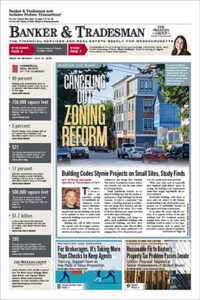
Many, many of you have asked, “Who is this mysterious public policy analyst, this sexy, blond, tall, lanky, brooding, force for good who sort of just suddenly appeared in Banker & Tradesman?”
Well, Cohen wanders the mean streets of the big city, looking for, you know, policy to analyze. As with so many businesses right now, times are tough in the policy analysis game. It took me months of standing around at all hours of the day and night outside of Banker & Tradesman Tower, begging editors who passed by to, maybe, hire me on to write about, well, policy and stuff.
In the end, the marketing was effective. I have the desk, the barrel of rum, and the big bucks that come with the profound responsibility of analyzing public policy for bankers and tradesmen.
But I’ll never forget the Little People that I left behind. I will continue to speak out against injustice and defective public policy from politicians who are jealous of Cohen’s success and determined not to see it repeated by others.
The Rhyme Of Meter
For instance, Boston City Councilor Michael Flaherty wants to install old parking meters around town to snare donations that otherwise would go directly to homeless panhandlers and starving public policy analysts. Instead of going to effective, entrepreneurial beggars, the money would go to public-sector social workers with fat pensions and health insurance imported from Sweden.
Imagine if Cohen had been so close to getting his foot in the door at Banker & Tradesman, but at the last minute, this Flaherty fellow, who thinks he wants to be mayor, tells the editors to put a quarter in the parking meter slot, instead – to be shared by all God’s children, not just that Cohen fellow. Thanks, Mike.
And then, there’s the 11 p.m. curfew in Lowell for potential criminals under the age of 18 – a law currently under challenge before the Supreme Judicial Court, because youthful looking job-seeking professionals such as Cohen, hanging out at Banker & Tradesman Tower, might be at risk of being picked up and harassed by confused cops.
I live in fear that the curfews in such authoritarian countries as Lowell and Holyoke, if they survive court challenge, would infect the entire state, thus cutting into the time available to confront distracted editors outside their office towers. A panhandling, curfew-breaking kind of policy analyst probably would have received the death penalty.
In fact, the various laws, ordinances and societal snippiness across the country aimed at the homeless and the loiterers and the panhandlers are a bit of a mess, both as a matter of law and a matter of public policy, which, by the way, I am available to analyze or write about or something, for a fee – especially if you don’t make me beg, late at night.
A Dream Job
Laguna Beach, Calif., is currently embroiled in a messy bit of legal business, trying to sort out its ordinance that kind of prohibits sleeping in public, unless you’ve just listened to a speech by Vice President Joe Biden. The issue, in part: does the anti-sleeping language actually sort of criminalize homelessness, unless you can manage to stay awake all the time, begging for policy analysis jobs?
Prosecutors, judges and juries would rather fall asleep in a public park in Laguna than attempt to analyze the local ordinances that have popped up across the country, banning “aggressive” panhandling, as opposed to suave, persuasive, polite, low-key panhandling.
In 2004, the Chicago City Council passed an ordinance banning panhandling near ATMs and banks, on the theory that you wouldn’t want to feel pressured to hand over a crisp, $20 bill, fresh out of the cash machine. But, you see the problem? The law of unintended consequences. How often have you had to beg for your ATM for money? In Chicago, you’d be a criminal.
Depending on the clarity of the legislative language, and the selectivity with which cops enforce them, the anti-loitering, anti-homeless, anti-panhandling cases have been decided every which way. The persistence with which they are written stems in large part from the understanding that while the poor will always be with us, we don’t necessarily want them “with us.”