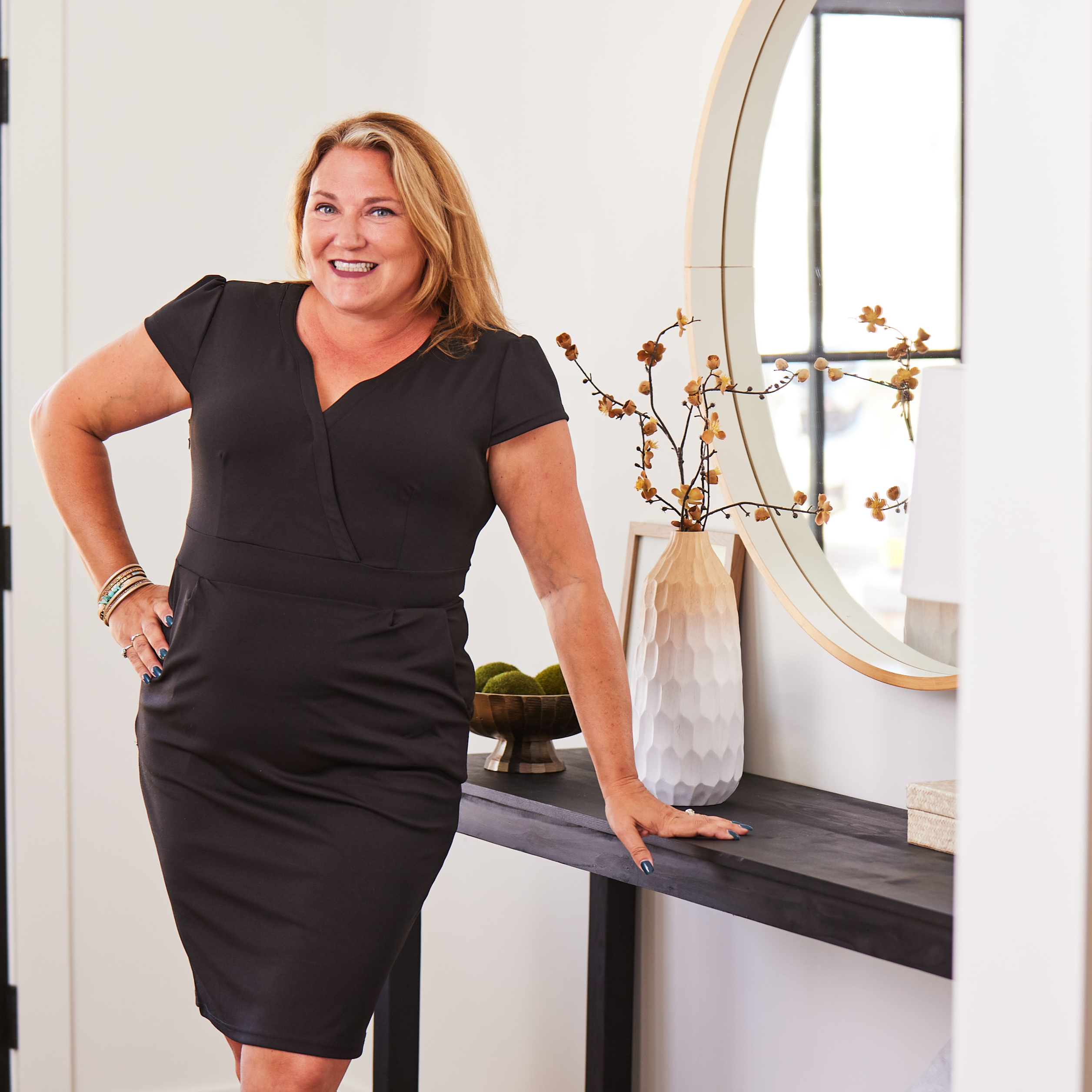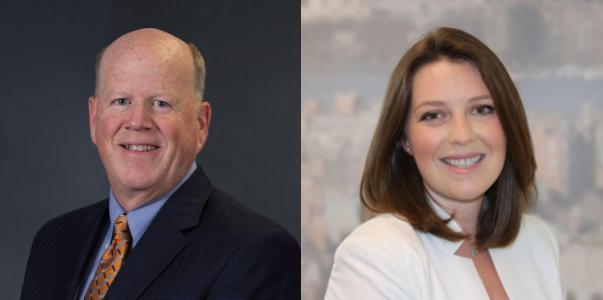
Photos courtesy of R.W. Holmes
Garry Holmes
President, R.W. Holmes Commercial Real Estate
Industry experience: 40 years
Age: 61
Elizabeth Holmes
Director of Corporate Services, R.W. Holmes Commercial Real Estate
Industry experience: 9 years
Age: 31
As it marks its 50th anniversary in business in 2026, Wayland-based R.W. Holmes Commercial Real Estate is positioned to solidify its niche in MetroWest real estate brokerage. Elizabeth Holmes joined the family-owned company in 2017 as the third generation of leadership, working hand-in-hand with her father Garry to plan business growth while remaining an independent, family-owned company.
Q: What is R.W. Holmes’ niche in the brokerage industry?
Garry: My dad started the company 50 years ago, and I joined out of college, and Dad passed away when he was 57, so I’ve been running the company ever since. At this point, we’re delighted to have Elizabeth join us. She was at Ernst & Young for a while, and [is] excited to get it into the third generation.
Elizabeth: When my grandfather started it, he had been working for a downtown Boston brokerage, and saw the trend that the suburbs were starting to become a thing, which is kind of wild. And that’s kind of how he decided to kind of be one of those pioneers, to start really one of the first – I think the first – suburb-based brokerage firm. Our area of expertise is serving the landlords and companies that are [also] suburb-based. And then if they need help in national or international, we can help there, but it’s really the companies that have their headquarters in the Greater Boston suburbs that is really our niche. Our company originally was founded in Natick, and outgrew that location 18 years ago, so we bought a building in Wayland and have been located in Wayland since.
Q: Looking at suburban real estate conditions, what are the most underutilized property types and how are owners looking at redevelopment options?
Gary: There’s certainly a fair amount of underutilized properties. Unfortunately, most of them are in the office sector. Truthfully, before the pandemic, not just Massachusetts but probably across the country, 20 percent of the office product was functionally obsolete. Maybe it was those really large, digital equipment-type buildings, with huge floor plates. COVID really exacerbated that issue. Right now, when you look around and what’s underutilized, especially in the suburbs of Boston, there’s not much excess land. And I think the main issue is some of the municipalities get it, but most don’t. What I mean by that is: You can look at it and say, “Wow, that building would be great for multifamily, while that building would be great for retail,” but probably 90 percent of the time, it’s not appropriately zoned. A lot of these communities love the taxes that come from an office building. And some of these buildings have been sitting empty for three years or so.
Elizabeth: Office space for most of the submarkets that we cover is where we’re seeing the excess space, and in some markets, lab was overbuilt. That one’s still going to be a question mark for the next few years, because of the newly-built lab space being, in most cases, over $800 a square foot to build. The real estate folks haven’t figured out what to convert that to, that still gets a return that’s feasible. For the meantime, those lab landlords have just started building out spec suites, or smaller spaces. Where previously they might have wanted a 50,000-square-foot user, they might be looking at 25,000, 10,000 or 15,000 and they’re just going to slowly chip away at it. And then in some of the industrial markets, we saw larger, out-of-state institutional owners come in and build these big box warehouses over 300,000 square feet, when Massachusetts really has been more in the 50,000- or 100,000-square-foot range for a majority of the demand. In some cases, we’re seeing that as underutilized property that’s just sitting vacant. But the owners that can come in and subdivide those down are starting to see some success there, too.
Garry: If the first floor of a building has a loading dock, can you put in an R&D or flex-type user? You’d be shocked at how many groups are primarily office-based and need a nice office, but they might get one delivery a month that needs to come in through a loading dock, or they have a heavy piece of machinery that needs to be on the first floor that needs some way of getting in the building, and wouldn’t work in a class A building. So, a lot of the deals that we’re doing in our A-minus and B buildings are those types of creative flex R&D uses, or that quasi-medical user.
Q: How do the two of you divide the responsibilities?
Garry: Anything I don’t want to do. I give to Elizabeth! No, I’m much more on the mentoring side, spending time on transactions that get a little tricky. Elizabeth, I’d say you’re much more onboarding, responsible for overseeing our marketing people in-house, coming up, hopefully, with new and creative ideas on the business development side.
Elizabeth: We work together on the strategy piece and long-term planning. I’m super fortunate that my dad has let me take the Ernst & Young consulting background and take the high 360-degree look and think of where we want to go and how we elevate the company to last another 50 years.
Q: How many times have you gotten offers to acquire the company?
Garry: I would say we’ve only been in serious discussions twice. If it wasn’t for Elizabeth coming on board, we certainly would have entertained it a number of years ago. Everyone uses the term “family business,” but that really has been that way here. Average employees have been here now for over 25 years. Why have they stayed here so long? It’s the relationships internally. So, what happens in the future? That’s going to be up to Elizabeth. I like to say we’re so blessed for most small businesses. You know, you have good years, you have bad years, and when you’re ready to retire, you hope, the economy, the stars, the planets, everything’s lining up at once, so you can have a financial event, so you can retire. Fortunately, we haven’t been in that position where we need to sell off at some point. And that’s has worked out very well for us.
Garry’s Five Favorite Massachusetts Golf Courses
- Kittansett Club, Marion
- Sankaty Head, Nantucket
- Hyannisport, Hyannis
- Old Sandwich Golf Club, Plymouth
- The Country Club, Brookline
Elizabeth’s Five Favorite Metrowest Restaurants
- Juniper, Wellesley
- Enoteca, Natick
- The Villa, Wayland
- Lola’s, Natick
- Dumpling Daughter, Weston