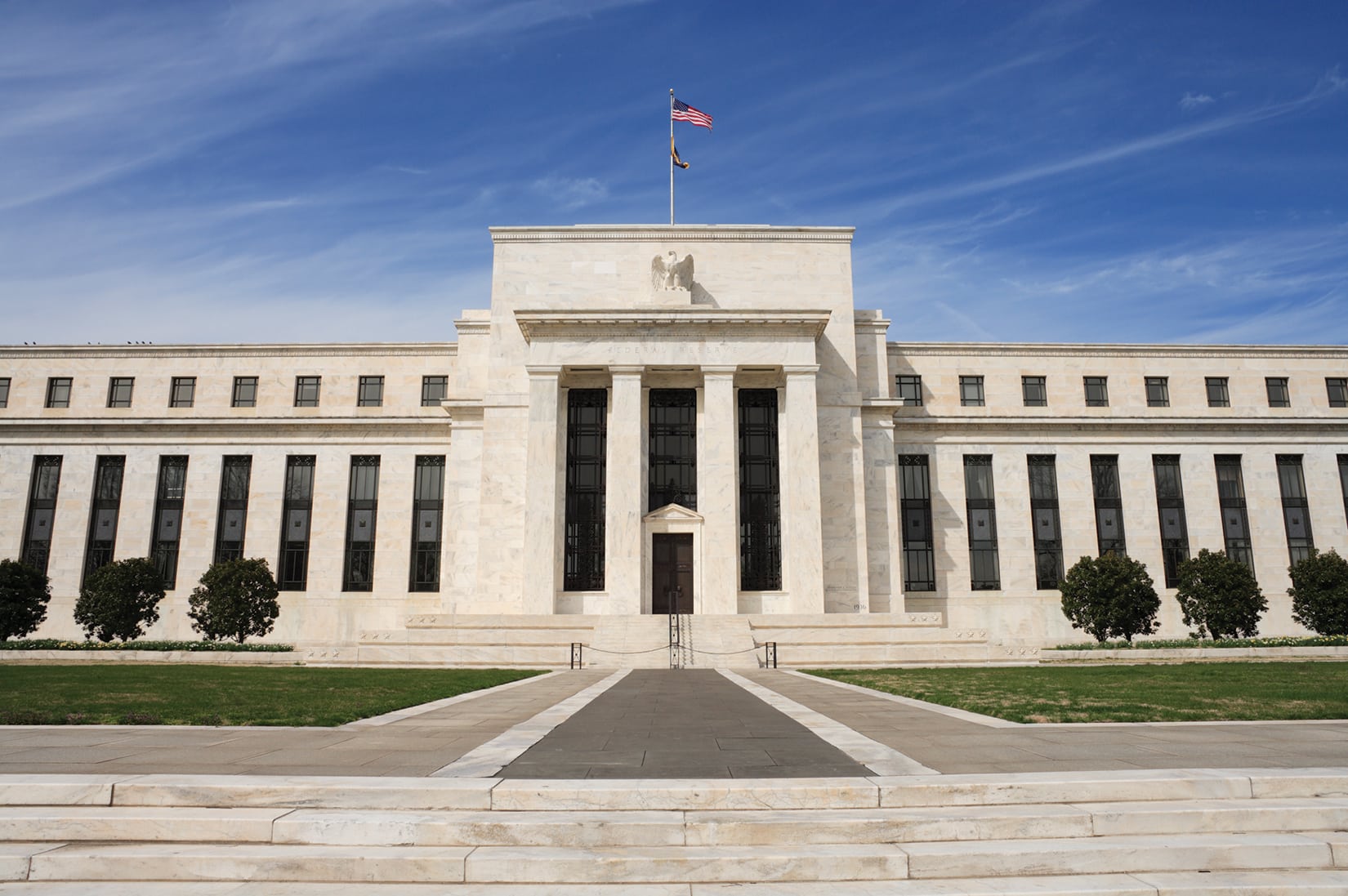
The Federal Reserve's headquarters in Washington, D.C. iStock photo/File
The nation’s largest banks, including many key to the New England economy, have strong capital levels and would be able to continue lending to households and businesses during a severe recession, according to the Federal Reserve’s annual stress test.
The Federal Reserve said in a statement yesterday that all banks involved with the 2022 test remained above their minimum capital requirements. The results did project that banks would experience combined losses totaling $612 billion under what’s known as the severely adverse scenario.
The 2022 stress test measured 34 banks, including the parent companies of Citizens Bank, KeyBank, M&T Bank, Chase Bank, Bank of America, PNC Bank, TD Bank and Santander Bank. State Street Corp. was also evaluated.
While the largest banks participate every year, some banks get tested every other year. Last year only 23 banks participate.
Created as part of the Dodd-Frank Act, the stress test estimates banks’ capital levels, losses, revenue and expenses using hypothetical scenarios that cover nine future quarters. The Fed said the stress test evaluates the resilience of large banks and helps ensure they can support the economy during economic downturns.
The 2022 scenario involved more challenging conditions than the Fed used in last year’s scenario. This year’s severely adverse scenario included a severe global recession with substantial stress in commercial real estate and corporate debt markets, the Fed said. The scenario saw the unemployment rate rise by 5 3/4 percentage points, peaking at 10 percent, while GDP declined. Asset prices declined sharply under the scenario, with a nearly 40 percent decline in commercial real estate prices and a 55 percent decline in stock prices.
Under these conditions, the stress test estimated that Citizens during nine quarters would have a net loss of $4.7 billion and M&T Bank would have a $4.2 billion loss. M&T’s results did not include the effects of the People’s United Bank acquisition, and the Fed had said in March that M&T, which typically gets tested every other year, would need to participate again in 2023.
The stress test estimated that Santander Bank would have pre-tax net income of $1.8 billion during the nine quarters. Santander Holdings USA said in a statement that the results demonstrated its resiliency and the strength of its business model and capital position.
“The results indicate that SHUSA can remain well capitalized during times of severe market stress,” the bank said in the statement. “The Company’s robust capital planning process is designed to ensure the efficient use of capital while maintaining a long-term approach to capital allocation and distribution.”
Rob Nichols, president and CEO of the American Bankers Association, pointed to the strength of the banking industry.
“[Thursday’s] stress test results from the Federal Reserve show that the nation’s largest banks remain well positioned to absorb a range of potential economic shocks while continuing to support their customers, clients and communities,” Nichols said in a statement. “The industry’s strong balance sheets and high capital levels ensure banks can make the loans that drive our economy even if they face substantial headwinds.”