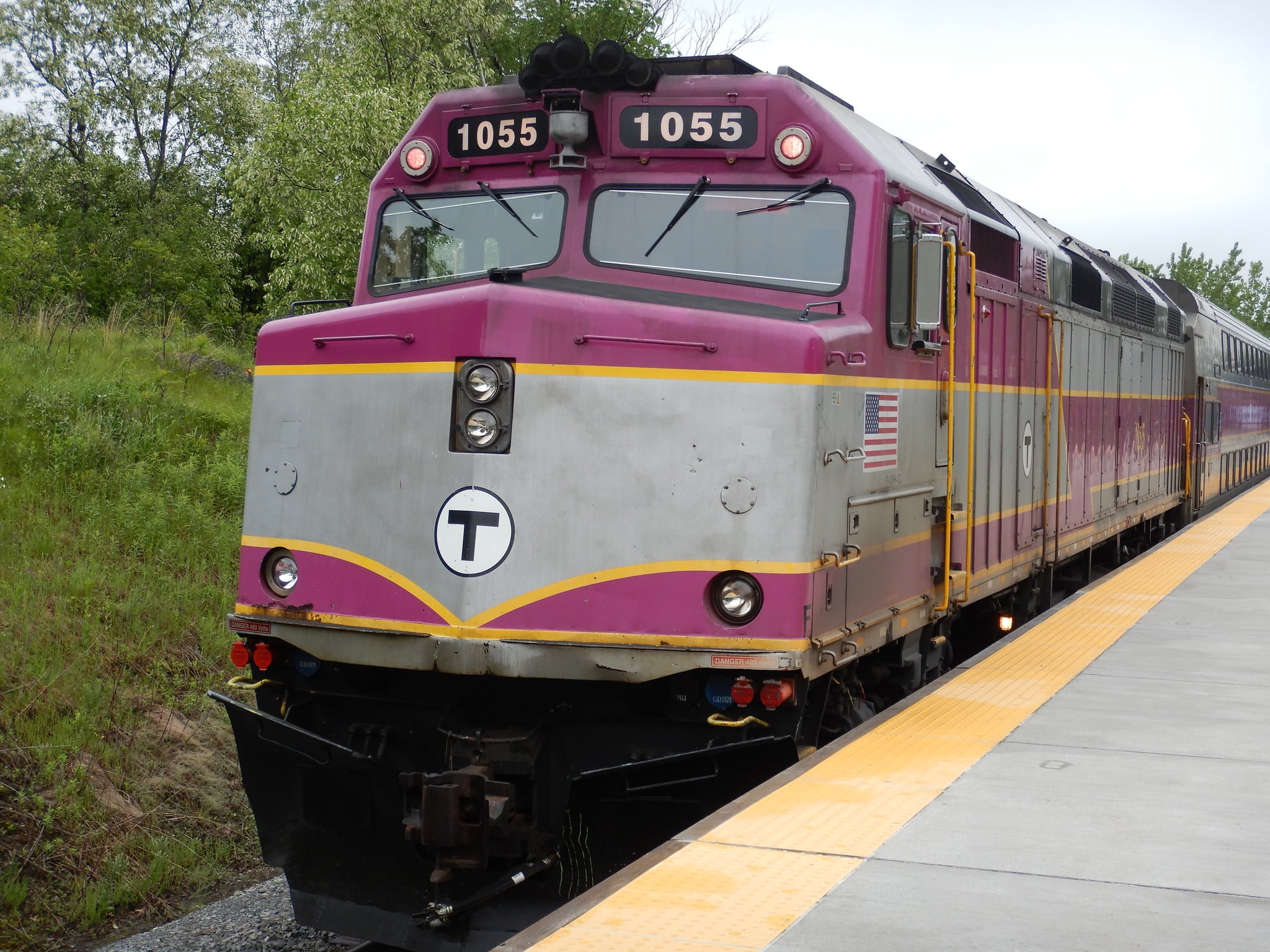
An MBTA commuter rail train waits at a station in 2019. Photo by Paul Morris | Flickr / CC BY-SA 2.0
New Bedford residents soundly rejected calls from some to stop commuter rail trains arriving in their city as part of the MBTA’s South Coast Rail expansion project.
The project will connect Fall River and New Bedford with downtown Boston’s South Station via Taunton.
City voters approved a ballot measure to join the MBTA, 80.43 percent to 19.57 percent, in Tuesday’s election according to results posted by the city Elections Commission.
At issue was the state’s new MBTA Communities zoning reform, which requires towns and cities served by the agency’s suburban trains, buses and subways establish zoning districts to allow by-right multifamily development that can accommodate multifamily units totaling between 5 percent and 25 percent of the community’s housing stock, depending on the type of service it receives from the T.
For New Bedford, a “commuter rail community” under the zoning reform’s definitions, would have to create a zone at least 50 acres big that can accommodate 6,688 existing or new multifamily units at a density of 15 units per acre – slightly denser than a neighborhood of three-deckers.
While New Bedford has significant numbers of existing small multifamily buildings already, opponents of the measure on Tuesday’s ballot were worried that the zoning requirement would trigger a land rush that could price out many in the working-class South Shore city.
In anticipation of South Coast Rail’s arrival late next year, some investors have already begun buying up multifamily properties in the city, as Banker & Tradesman reported this summer. Purchase mortgages for two- and three-family properties in Bristol County issued in 2021 alone jumped 37.8 percent over the same period in 2020 and 33.7 percent over 2019 according to data from The Warren Group, publisher of Banker & Tradesman.