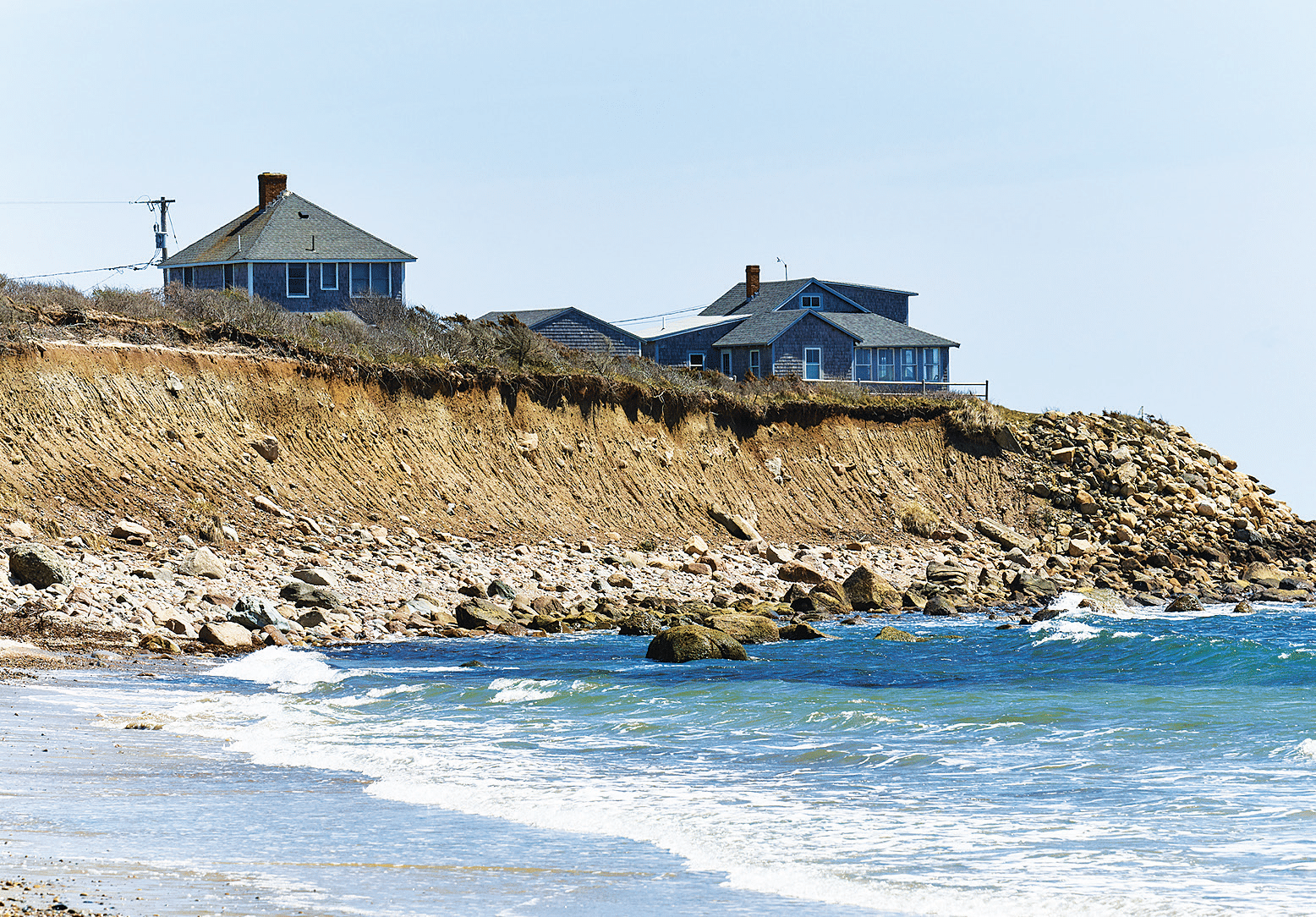
Vacation homes sit on a bluff overlooking Buzzards Bay in Westport. While coastal flooding from hurricanes has dominated much of the conversation about flood risks, inland flooding from severe weather made worse by climate change has emerged as a relatively uncharted risk. iStock photo
Gov. Maura Healey tucked two big changes for the real estate industry into her new, $2.9 billion bill that pays for municipal defenses against extreme weather.
The Mass Ready Act, filed with the Legislature Tuesday, mainly authorizes bonding to pay for new bridges, dams, road upgrades like culverts and salt marsh restoration projects. The new infrastructure is intended to be a bulwark against increasingly frequent storms being made stronger by climate change.
But as with the governor’s $5 billion Affordable Homes Act passed last year, a number of policy changes have been tacked on, too.
Among those: exemptions from the state’s environmental permitting law for certain kinds of “priority” housing projects and requiring home sellers disclose any history of flooding.
“The Mass Ready Act is an investment in our infrastructure and in our communities,” Healey said in a statement. “It will save people money and jumpstart housing by streamlining the permitting process. This legislation will help our communities get ready for the challenges ahead and make sure our families and neighborhoods stay safe.”
Healey’s bill doesn’t define what qualifies as a “priority” housing project – leaving that up to the Executive Office of Housing and Livable Communities once the bill is passed – but it would allow them to receive a Chapter 91 waterways license in just 60 days under a new licensing system.
Those “priority” housing projects will also get to skip environmental impact reports under the Massachusetts Environmental Policy Act, also known as MEPA, provided they meet certain standards.
The idea, and several others in the Mass Ready Act, was one of dozens floated by Healey’s Unlocking Housing Production Commission earlier this year.
A fact sheet issued by Healey’s office also said the cumulative changes included in the proposed legislation will also “eliminate duplicative administrative appeals processes” and cut between six and nine months of Department of Environmental Protection review and advance any appeals of local wetlands decisions straight to the state Superior Court.
“For too long, desperately needed housing projects have been bogged down in seemingly never-ending permitting delays, often preventing new housing from ever being built,” NAIOP-MA CEO Tamara Small said in a statement provided by Healey’s office.
Disclosure Required for Home Sales, Rentals
Homebuyers and renters are also getting something from the bill: a mandatory disclosure of both past flooding and future flood risk when they go to buy or lease a condominium or a one- to four-family residence.
The bill directs state environmental officials to come up with a standardized notification form that includes whether the home is on a floodplain, documentation of past flooding and damages and details about flood insurance carried on the property.
“The Mass Ready Act sets the tone for a future where we build to standards that can withstand the new normal of increased storms, flooding perils, and other natural catastrophes, which are now causing over $100 billion in insured losses every year,” Massachusetts Insurance Federation Executive Director Christopher Stark said in a statement provided by Healey’s office. “Together, the provisions of this legislation will provide peace of mind to consumers, ensure our buildings are resilient, and help drive down the cost of future storms.”
The bill also adds new seats on the state board that oversees the state building code for experts in housing development, resilient design and climate risk.
But it also includes language that could force changes in how some homes are built, by adding a requirement that the state building code takes into account the ways climate change could damage structures and could injure or harm occupants.
“Massachusetts wasn’t built for the intense storms, rising seas, and extreme heat we are seeing now. The Mass Ready Act is our down payment on a safe, healthier future – protecting clean air and water, strengthening local food systems, and preserving parks and green spaces for generations to come,” state Energy and Environmental Affairs Secretary Rebecca Tepper said in a statement.