High rents, low vacancies and steep barriers to entry are hallmarks of the Greater Boston multifamily housing market, the third-most-expensive U.S. region in which to rent an apartment.
The region added more than 5,500 new apartment units in 2017, led by the city of Boston’s powerful building boom, according to real estate researchers REIS Inc. But average rents have risen 3.8 percent in the past year to $2,198, reflecting the heavy concentration of luxury developments in the recent pipeline.
“That keeps pulling the vacancies up, but it’s keeping rent growth positive because what’s for rent is the upper-end product,” said Barbara Byrne Denham, a REIS economist.
Only New York City and Silicon Valley have higher average rents, according to REIS Inc.
Greater Boston apartment vacancies are expected to rise to 6.6 percent by the end of 2018, according to REIS, with developers on track to complete 8,200 units in 2018. The data is based upon a survey of non-subsidized, privately managed apartment communities in the Boston metropolitan statistical area with 40 or more units.
In a U.S. geography increasingly divided into economic winners and losers, the Boston area’s job growth in the high-paying tech and life science sectors continues to prop up housing demand.
“Boston is clearly among the winners, when you think about the growing concentration of talent,” said Niko Skiadas, who co-leads the multifamily capital markets team for JLL Boston. “It’s positive for investors, and not so positive for the people who live in those units.”
New supply of apartments could take a hit as developers increasingly test the market for condo construction instead in outlying Boston neighborhoods and the suburbs.
Far-reaching demographic trends also play into the equation, given the Boston area’s disproportionately large Millennial population, Skiadas noted. Delayed family formation points toward a longer-tenured population of renters.

Steve Adams
Competition for Development Sites
REIS forecasts a decline in the Greater Boston apartment construction pipeline to 2,300 units by 2020, and local multifamily brokers say there’s rising competition for apartment development sites.
As the life science industry expands into the suburbs, lab developers are bidding against apartment investors to acquire industrial sites for conversions.
“There are other uses starting to catch up with multifamily prices and supersede them,” said Christopher Sower, senior vice president for Colliers Boston’s multifamily group. “With the lack of availability in Kendall Square, it’s trickling out to non-traditional lab markets.”
Adam Dunn, a director in HFF Boston’s multifamily practice, said prices of industrial space are “through the roof” because of demand for last-mile e-commerce distribution centers and lab space.
“In the last 12 months or so, everyone’s focused on industrial and they are the product du jour with life science (conversions),” Dunn said.
Sales of industrial properties in Greater Boston set a record price of $130 per square foot in the third quarter, according to research by Newmark Knight Frank.
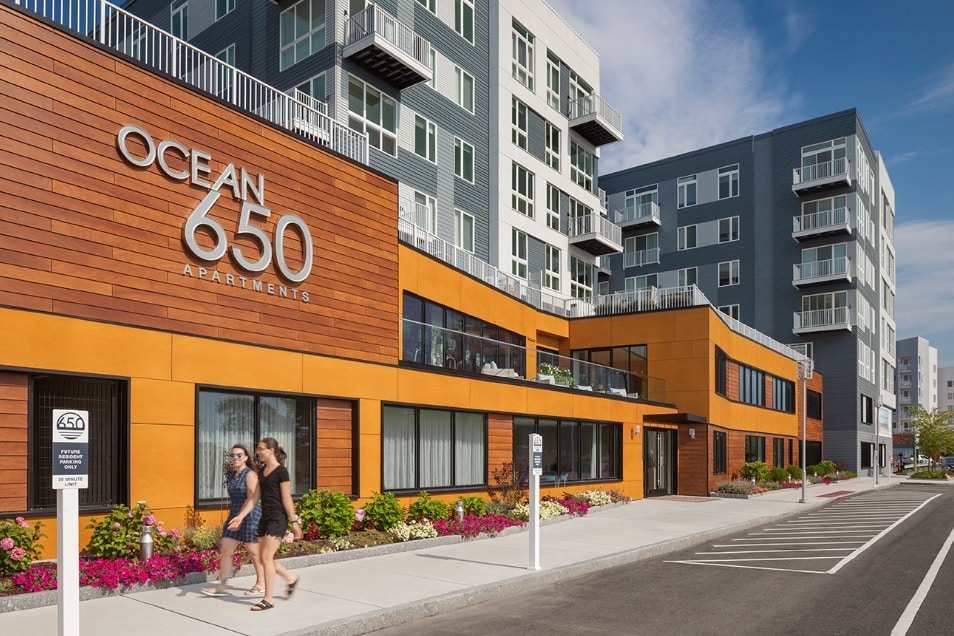
One future multifamily investment hotspot could by the inner suburban markets north of Boston, where large complexes are scheduled for completion this year in communities such as Everett, Saugus and Lynn. Such projects, with rents in the $3 per square foot range, could attract institutional investors looking to break into the Greater Boston market, Dunn said.
“There is more liquidity in the market than ever before and not that many deals, so we’re finding groups just becoming super aggressive to plant a flag in Boston because of the STEM jobs,” he said.