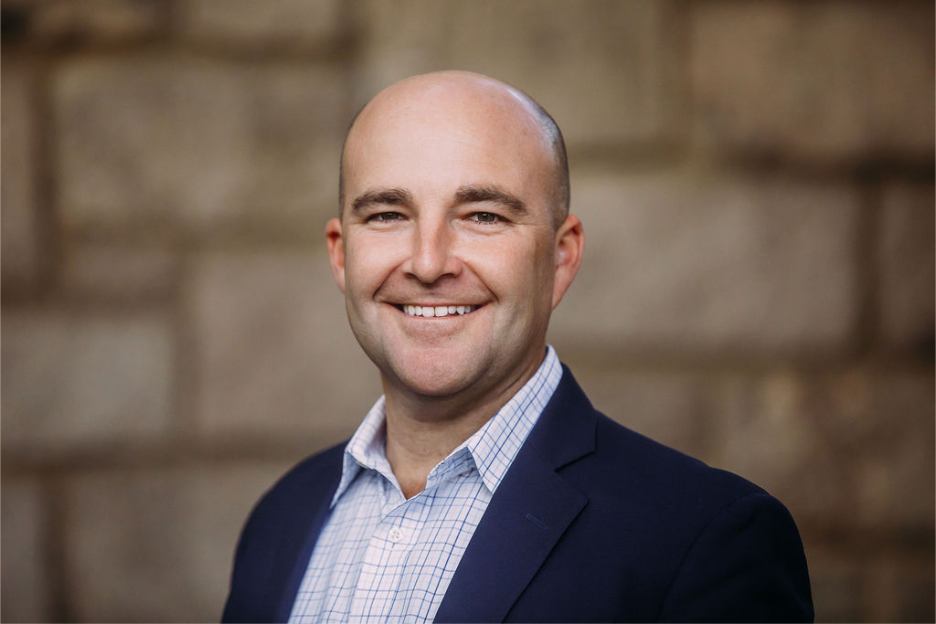
Photo courtesy of Pinnacle Advisory Group
Sebastian Colella
Managing Principal, Pinnacle Advisory Group
Industry experience: 25 years
Age: 43
Hotel developers and owners turn to Pinnacle Advisory Group for site analysis and advice on how to pivot to profitability through changes in format. Despite Greater Boston’s high room rates, hotel owners face profitability pressures related to high labor and operational costs, and new development remains muted because of difficult financing terms. Colella joined Boston-based Pinnacle Advisory Group in 2011. Following a three-year stint working for a Vermont real estate development firm, Colella returned full-time to Pinnacle as managing principal effective Jan. 1 and as founder Rachel Roginsky transitioned to a senior adviser role.
Q: What are the biggest concerns that you hear from clients in the Massachusetts hotel market these days?
A: What we are hearing most consistently – not just the last few months, but the last 18 months – is concern around margin pressure, so increased expenses, both operating and labor-related. We’re seeing those expenses grow at a much faster clip than revenue. Of course, they’re seeing that on their bottom line. That forces a lot of questions around the operation itself: the format, a platform, what efficiencies you have, but also brand alignment and long-term value. While we do a lot of work with proposed hotels even today, market and feasibility studies in particularly, one shift we’ve seen in the last 18 months, is more owners asking us to take a look at the day-to-day operations: how the hotel is being run, whether the current management company, or even the brand, is still the right fit.
But I think that the question owners have right now, especially those smaller or independent owners, is: What levers can realistically be pulled to unlock value that hasn’t been there in the past? They’re looking at ways to cut costs and be more efficient. There are ways to simplify your operation. In a market like Boston or any market in the Northeast, really, leaner food and beverage operations, reducing staffing. If you are a full-service hotel, can you lean toward a more select-service model? Going back to food and beverage, it’s a department that doesn’t typically have the highest of profits. So how do you adjust food and beverage offering to make sure your guests have what they need?
Ultimately, you’re trying to improve your margins, reduce your risk. Some of those things are more challenging if you’re a branded hotel that dictates certain operating models, or if you’re in a union environment.
Q: What appears to be the strategy for the new D Street hotel developer?
A: I haven’t discussed with the developer specifically, but my guess is that it’s being developed in somewhat conjunction with the two existing [Element and Aloft] hotels. If you look at the plans, it will physically tie into the Aloft and the Element. And so, what they’re hoping to do there is to find some operating synergies. That’s one way to cut down on construction costs and improve your operations.
Q: Is a change of format usually accompanied by a change of brand?
A: Changing brands is not as easy as one would think. Your franchise agreements with one of the major companies – the Marriotts and Hiltons – are somewhat long-term: anywhere from 10 to 20 years. And to terminate those early does come at a cost. So you would typically work with the brand or within the brand family to identify whether or not that can be changed. But again, it does ultimately depend on the franchise agreement itself. Usually a sale is encumbered with the flag. So you get the flag with the sale, and then you are also required to complete a property improvement plan that is dictated by the brand itself. One example was the Courtyard in Cambridge that sold so the new owners there, assuming they continue under the franchise agreement, will be renovating to the Courtyard standards.
Q: Beyond the 180 Guest St. hotel under construction in Brighton, what are the prospects for new hotel development in Boston?
A: The biggest constraint right now, across any new construction, is development costs and returns. A lot of these projects aren’t penciling. Construction costs are at an all-time high. Financing is incredibly conservative, and as I mentioned, operating costs are incredibly high. Full-service means capital-intensive, operationally complex. As soon as you start layering in the food and beverage, the meeting space, staffing requirements: They all add risk. And I guess it doesn’t necessarily mean these projects aren’t feasible or viable.
We’re working in a lot of markets right now where there’s a lot of new supply under construction, mostly in the South or the Mid-Atlantic. But I think when it comes to any of these projects, the one thing we’re seeing a lot more of is value engineering considerations of different operating models, as we talked about creative capital stacks. But in the Northeast, I’d say the thing we’re seeing the most of is patience. In years past, while a hotel may have made sense, there used to be one or two other uses that made more sense. Oftentimes, that would be lab. And right now, of course, the lab market is – this is about as weak it’s been in a very, very long time. So, I don’t see a lot of developers switching gears and changing use. It’s really difficult to underwrite residential with the unknowns of what the politics are around [rent control].
Q: Following the change of leadership, what is Pinnacle’s growth strategy?
A: My focus really isn’t on expanding services for the sake of expansion, but I, I have been meeting with our team and with the prior owner of the company to really identify ways that we can grow intentionally, client-driven and preserve what really has kept Pinnacle different than other groups. You know, I think our strengths are really in that we are able to analyze a market with real-world operating insight. We don’t just run models. We help our clients make better decisions as advisors. And so everything we do is tailored to our client, the market in the specific asset. Our core focus will always be in proposed hotels, feasibility and market studies, and then also really leaning into our asset management capabilities for existing hotels and acquisition due diligence when there is an increase in transactions.
Colella’s Five Favorite Classic Hotel Bars in the Northeast:
- Bemelmans Bar at The Carlyle, New York
- Round Robin Bar at The Willard InterContinental, Washington, D.C.
- The Street Bar at The Newbury Hotel, Boston
- King Cole Bar at The St. Regis, New York
- Oak Long Bar + Kitchen at The Fairmont Copley Plaza, Boston