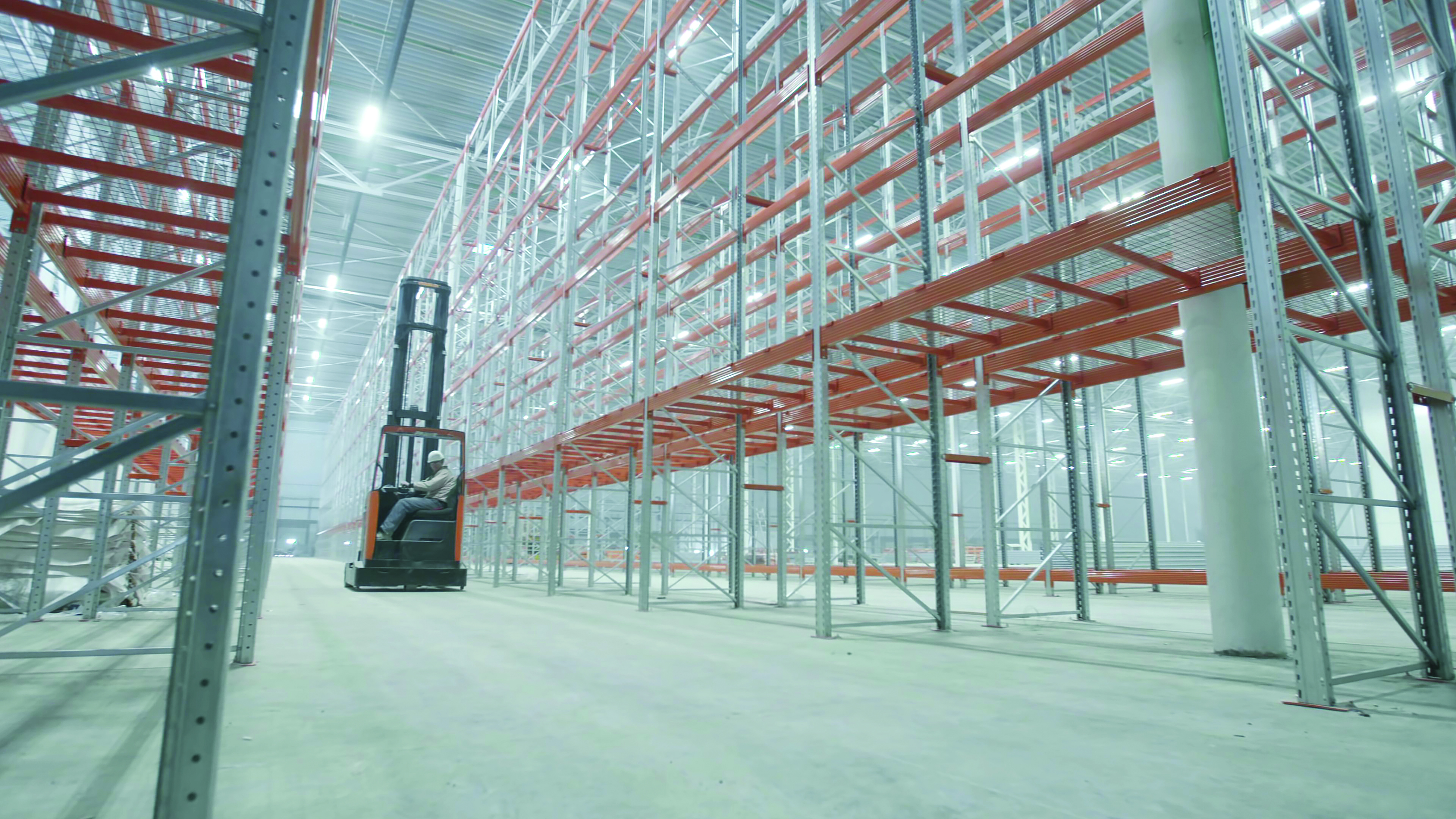
Observers predict a “choppy” next 12 to 24 months in the industrial sector thanks to over-building. iStock photo
Speculative construction of new industrial facilities has ground to a halt in Greater Boston, as lower tenant demand and recent overbuilding have created a glut of vacant high-bay warehouse space across the region.
Officials warn it could take 12 to 24 months to fill the millions of square feet of available space on the market today – and just as long before the speculative sector can rebound in earnest.
But there’s good news for the industrial real estate market in general, industry executives agree.
First, there are signs demand by larger tenants for class A distribution/warehouse space may be picking up a bit, according to industry sources.
Second, the region’s industrial sector is in far better shape than Greater Boston’s battered office and life sciences markets.
“There’s been a rise in the vacancy rates. But it’s really only getting back to a more normal state,” said Jeffrey Myers, research director at Colliers International in Boston.
Too Many Higher-End Warehouses
Robert Byrne, executive vice president at CBRE in Boston, said oversupply is a temporary condition.
“We’re not in super-bad shape,” Byrne said. “I’m still optimistic that we may be nearing a turning point.”
But before talking about turning points, challenges galore still confront the industrial sector, particularly for higher-end distribution/warehouse facilities.
According to recent third-quarter reports by CBRE and Colliers, there’s respectively anywhere from 19.4 to 26 million square feet of available industrial space across Greater Boston.
That includes class A and B warehouse space, as well as manufacturing and flex-space facilities.
Included in that available space is about 7.4 million square feet of speculative class A “high-bay” distribution space, according to both brokerage data.
According to Colliers, in the Boston region’s West market alone, along Route 2 and Interstate 495, roughly 3.7 million square feet of industrial space was delivered last year. However, nearly one-third of that space remains vacant today, including high-bay products such as the 617,000 square-foot development at 75 Plain St. in Hopedale.
And another 1.6 million square feet of speculative space is currently under construction in Greater Boston, according to CBRE data.
Not surprisingly, the supply-and-demand imbalance – along with higher construction costs and higher interest rates – has forced developers to pull back on speculative projects.
Two years ago, there was 6 million to 7 million square feet of speculative class A warehouse space in the development pipeline.
But after a dramatic falloff in demand by larger e-commerce tenants and the subsequent rise in vacancy rates, speculative groundbreakings fell to zero this past quarter, said CBRE’s Byrne.
“We’ve seen an enormous slowdown since in 2023 and 2024,” he said.

Boston-based Marcus Partners recently completed a full-building lease for 124,000 square feet at 206 Mechanic St. in Bellingham. But local speculative development projects have ground to a halt following a drop-off in demand from big e-commerce tenants. Photo courtesy of Marcus Partners
Vacancies Slightly Exceed Historic Norms
According to Colliers data, the shift has been enormous, from an overall industrial vacancy rate of 5.6 percent in 2022 to 12.6 percent in the third quarter of 2025.
As bad as that may look, today’s vacancy rate is only slightly above the sector’s historic pre-COVID norm of 12 percent – while millions of new square feet have been added over the years.
In addition, lease prices have only dipped a few cents per square foot over the past year, with rates now ranging between $14.52 and $15.20, according to third-quarter data from Colliers and CBRE, respectively.
The bottom line: The industrial market isn’t in full contraction mode.
There’s still activity in the build-to-suit construction and leasing spheres.
According to CBRE, some of the build-to-suit projects underway include Prologis’ approximately 845,000 square foot distribution center for UPS on Centennial Drive in Grafton and EIP’s 604,800 square foot facility for Home Depot on Theodore Drive in Westminster.
Meanwhile, many tenants are signing renewal leases – without any reductions in their space requirements, according to CBRE.
And many companies are signing new leases as well.
Among others, Marcus Partners recently announced new lease signings, totaling 236,000 square feet of logistics space, at two of its class A facilities in Andover and Bellingham.
But Ryan McDonough, chief investment officer at the Boston-based Marcus, said it hasn’t been easy on the class A warehouse leasing front.
“The demand is weak,” said McDonough, whose firm also owns a class A logistics property in West Bellingham. “There have been signings. But the market is slow in general. You have a bunch of headwinds out there.”
But some see hope on the horizon.
‘Choppy’ Two Years Ahead
CBRE’s Byrne said he’s encouraged by increased interest by larger tenants in class A facilities across the region.
Without naming names, he said three large entities are looking for 1 million square feet of space in the area.
Meanwhile, tenants searching for 200,000 to 500,000 square feet are also active in the market, he said.
“It’s not yet translated into actual leases,” Byrne said of tenant interest in new spaces. “It still needs to convert into financial action. But we expect to see hopefully significant signings in late 2025 and early next year.”
But will it be enough to fill existing vacant space, mostly class A distribution properties, and maybe spark speculative construction again? No.
“It’s going to take a while to come back,” Byrne said. “You’re unlikely to see any new [speculative] groundbreakings for the next 12 to 24 months.”
Colliers’ Myers agreed that the market needs time to eliminate its current supply-and-demand imbalance.
“We may be seeing some stronger demand, but the bigger blocks of [high-bay space] are probably going to take longer to fill,” he said.
McDonough said national economic uncertainties are adding to the stresses facing the industrial market.
“I think it’s going to be choppy for the next 12 to 24 months,” he said of the industrial market. “I remain positive, but there are challenges ahead.”