Vivien Li
Watching Supreme Court Associate Justice Stephen Breyer recently on Stephen Colbert’s late night show was a reminder of the continuing evolution in public engagement and responsiveness by public officials involved in Boston’s waterfront over the past two decades.
While chief judge of the First Circuit Court of Appeals in the mid-1990s, Breyer and his judicial colleagues initially focused extensively on the design of a new building on the Fan Pier for its courthouse activities, but gradually came to appreciate and support greater public use of the John Joseph Moakley Courthouse site. After 9/11, when most public buildings were focused on increased security, the Moakley Courthouse was the exception in providing tables on the HarborWalk, additional outdoor seating, and new public art to further enhance the public’s enjoyment of the waterfront.
Many lessons were learned in the planning of the courthouse and applied to help redefine nearby projects. South Boston residents, for example, noted that the courthouse paid homage to the harbor with its grand glass wall, while at the same time seeming to turn its back on the South Boston community with its “fortress”-like brick facade. Sensitive to community sentiments, the Massachusetts Convention Center Authority moved forward with a building design that connects with the South Boston community on all sides. In the same spirit, the BCEC’s new, very popular “Lawn on D” has already been deemed one of the most successful efforts in connecting the community with innovative programming and public art.
The recent selection of the Society of Arts and Crafts as the future tenant for the nearly completed cultural space at 100 Pier 4 included greater public engagement. In the absence of an existing cultural facilities master plan (one is currently underway), the Boston Redevelopment Authority (BRA) and UDR, developer of 100 Pier 4, issued a request for interest, soliciting proposals for the state’s Chapter 91-required cultural space. A public meeting hosted by the BRA in July allowed finalists to present their proposals to a broad audience. Continued efforts to have open solicitation processes, with opportunities for public comment and interaction, will no doubt result in additional creative uses on the ground floors of new waterfront buildings.
Creating A Sense Of Place
Because development of the waterfront can take decades, some worthy proposals may have been ahead of their time. In 1995, at the urging of then-Boston City Councilor Diane Modica, the city of Boston sponsored a ferry between East Boston’s Lewis Mall and Long Wharf. Ridership was low due in part to the slow pace of waterfront development, and the ferry route largely duplicated the existing MBTA Blue Line route. Today, waterfront property owners are clamoring for ferry service linking the relatively affordable housing opportunities in East Boston with the many employment opportunities in South Boston, and no doubt other ferry routes will materialize with new developments in the years to come.
Over time, waterfront property owners have come to appreciate the value of waterfront programming in helping to create a sense of place. For more than a decade, Massport’s Piers Park, the city of Boston, the Friends of Christopher Columbus Waterfront Park, Friends of the Charlestown Navy Yard and the Boston Harbor Hotel have hosted free waterfront programs. More recently, Boston Properties’ efforts at Atlantic Wharf, The Fallon Co.’s sponsorship of numerous free programs at the Fan Pier and Summer on the Waterfront’s Labor Day Weekend fireworks have helped to bring more visitors and potential patrons to the water’s edge.
Thanks to the cleanup of Boston Harbor and the visionary leadership of many, Boston’s waterfront today is one of the most robust in the country. Continued partnership and cooperation between waterfront owners, public officials and community leaders and advocates will ensure that the best is still to come. n
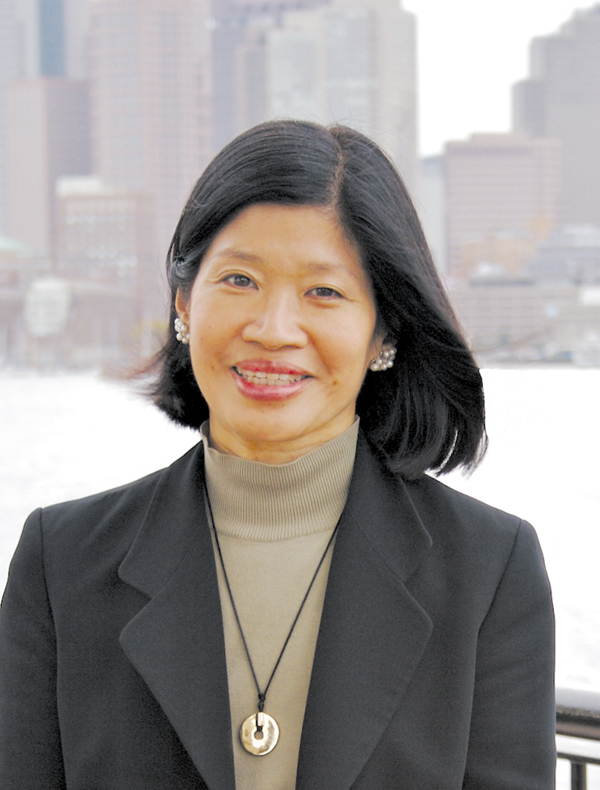
Vivien Li is president of The Boston Harbor Association, www.tbha.org. A long-time contributor to Banker & Tradesman, this is her final column for the newspaper.