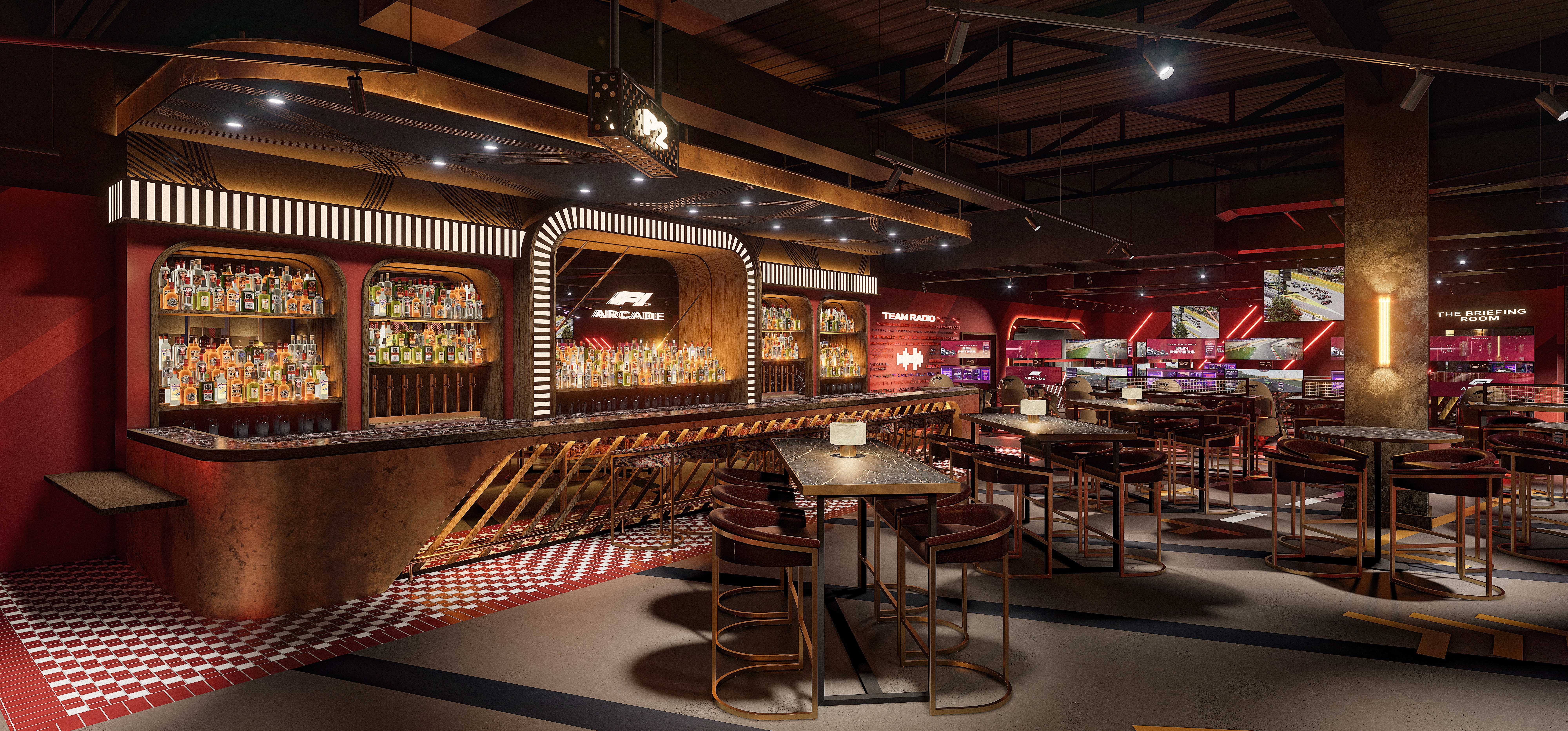
New entrants into Boston’s retail market such as the F1 Arcade Boston Seaport illustrate demand for experience-driven retail. Photo courtesy of F1 Arcade Boston Seaport.
Boston’s retail market is entering 2026 as one of the tightest in the country, but growth is becoming more selective. Leasing activity is holding and rents continue to rise, but tenants are being more deliberate about where they expand.
Space remains difficult to come by across much of the market, and that is unlikely to change in the near term. According to Marcus & Millichap, vacancy is projected to rise modestly this year but still sit near 3.5 percent, keeping Boston among the lowest of major U.S. markets. Limited new construction, with roughly 165,000 square feet scheduled for delivery, will do little to ease that constraint.
That lack of availability continues to support rent growth, particularly for well-located properties. Asking rents are projected to increase again in 2026, even as tenant expansion slows.
Retailers are adjusting to a more measured economic environment. A third consecutive year of job losses is expected to influence how tenants underwrite new locations, contributing to a more targeted approach to leasing across the market.
Leasing Activity Concentrates in Core Corridors
Leasing activity in Boston is still moving, but it is increasingly concentrated in a small number of submarkets.
In the urban core, Back Bay and the Seaport continue to attract the strongest demand. Retailers are prioritizing locations with strong foot traffic and higher-income consumers, and recent openings, including experiential concepts, reflect that shift.
New entrants such as Boston’s first Google store in Back Bay and concepts like the F1 Arcade in the Seaport point to continued demand for high-visibility, experience-driven retail. Even as overall expansion slows, these corridors continue to lease.
That pattern extends to the suburbs. Centers in the northern portion of the metro are expected to maintain vacancy below 3 percent, supported by limited new supply and steady demand from necessity-based and service-oriented tenants.
Outside of those pockets, leasing becomes less predictable. Slower employment growth and a more cautious outlook are leading some tenants to pause or scale back expansion plans. Deals are still getting done, but with greater scrutiny around location, co-tenancy and long-term performance.
Investment Activity Remains Focused on Stability
Buyers are still active in Boston’s retail market, but they’re being more selective about what they pursue.
Activity picked up over the past year, particularly for multi-tenant properties in the urban core and first-ring suburbs. Cap rates for these assets have held in a relatively tight range, with multi-tenant averages hovering around 6.5 percent. The focus is on properties with durable cash flow and established tenant bases, especially in areas where vacancy remains low and leasing demand has held. These assets continue to draw strong interest from both private and institutional investors.
At the same time, pricing is shaping who is active in the market.

Thomas Shihadeh
Owner-users have become more prominent, supported by a decline in average price per square foot over the past several years, while some investors are taking a more disciplined approach as they weigh interest rates and longer-term economic conditions.
Boston’s retail market may see some pressure on the demand side through the remainder of 2026, particularly as consumer spending softens. That could put some strain on leasing demand, especially as tenants remain more deliberate about expansion.
With the development pipeline so low, the market remains well insulated. Activity is still expected to move forward, just with a narrower path to execution.
Thomas Shihadeh is senior managing director and New England market leader for Marcus & Millichap in Boston.