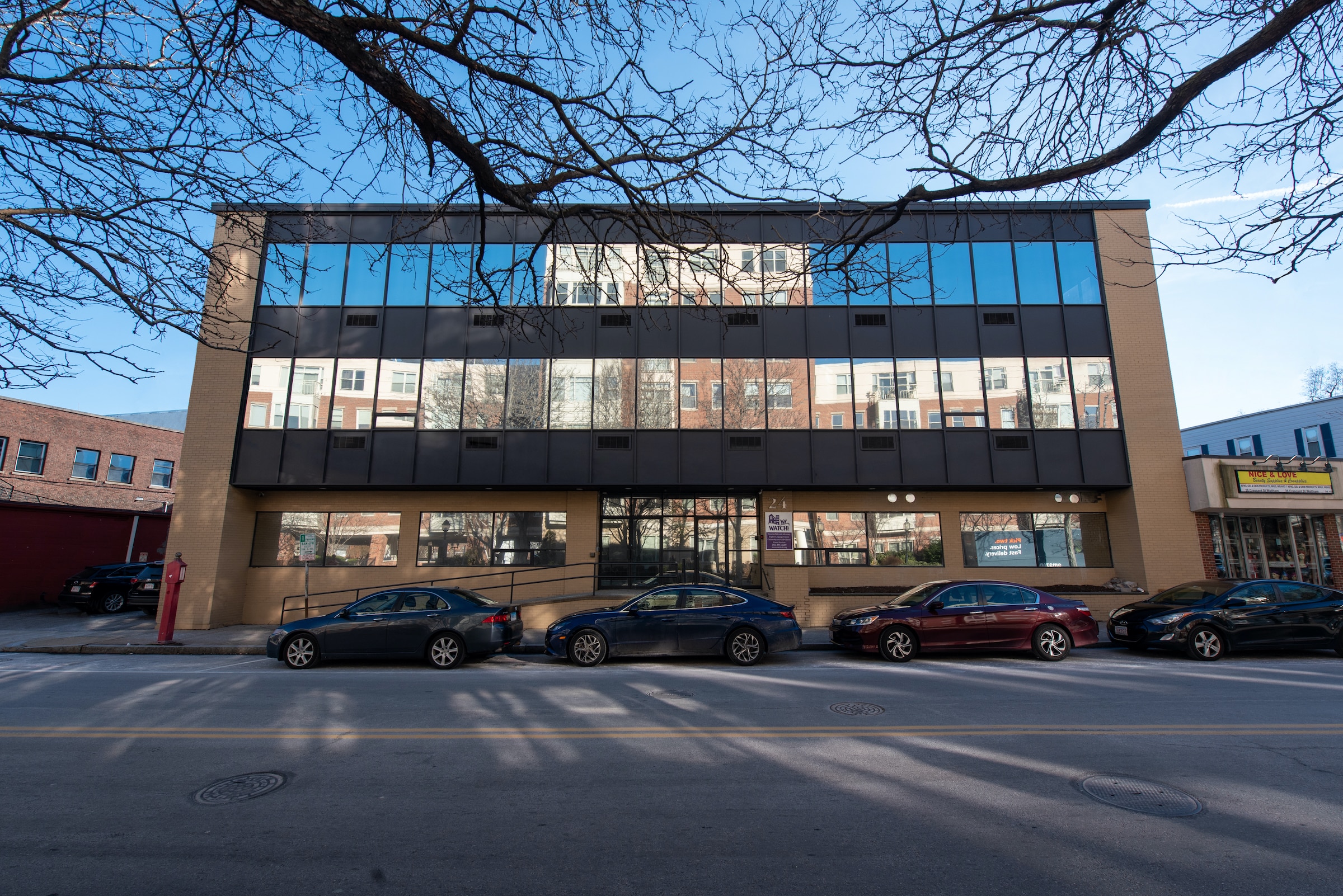
Photo courtesy of GDG Properties
A Waltham office building’s utility system was so inefficient that some areas needed to run air conditioning in the winter because of their proximity to its oil-fired boiler.
As commercial landlords swap out fossil fuel-burning systems for electricity, 24 Crescent St. in Waltham is the first office building to tap into Eversource’s clean energy retrofits program to offset the costs.
“We knew going in that it was a 60-year-old boiler and there was a history of ruptured water pipes throughout the entire building,” said David Gloski, founder of GDG Properties which acquired 24 Crescent St. in 2022. “It was crazy what was going on.”
The need for capital improvements took on new urgency not long after the acquisition, when a burst pipe caused $500,000 worth of damage throughout the 20,000-square-foot building.
Gloski tapped into Eversource’s deep energy retrofit program, which offers qualifying properties a $1-per-square-foot rebate to offset the costs of replacing fossil fuel-fired systems.
Combined with a $240,000 rebate for the electric heat pumps, the Eversource program helped to cut the cost of the $540,000 retrofit project in half, Gloski said.
To qualify, commercial properties must reduce greenhouse gas emissions by at least 40 percent through projects such as electrification of heating and cooling systems, ventilation upgrades and building shell improvements. They also qualify for reimbursement of energy assessment costs and a 50-percent rebate on detailed technical assessment studies.

“The premise is to drive decarbonization in the commercial and industrial sector, and it’s not easy to do that,” said Tilak Subrahmanian, vice president of energy efficiency and electric mobility at Eversource. “When you get into large buildings with very large engineered systems, it’s not trivial to replace them.”
Some suburban communities including Newton and Watertown are considering ordinances modeled upon Boston’s Building Emissions Reduction Disclosure Ordinance (BERDO), which seeks to reduce carbon emissions from the building sector through retrofits or alternative compliance payments.
The incentives, part of an Eversource program approved by state regulators, are paid primarily through a surcharge on the utility’s overall rate base.
“Hopefully, some of the other people behind us take advantage of this,” Gloski said. “We all pay the extra fees into our rates.”