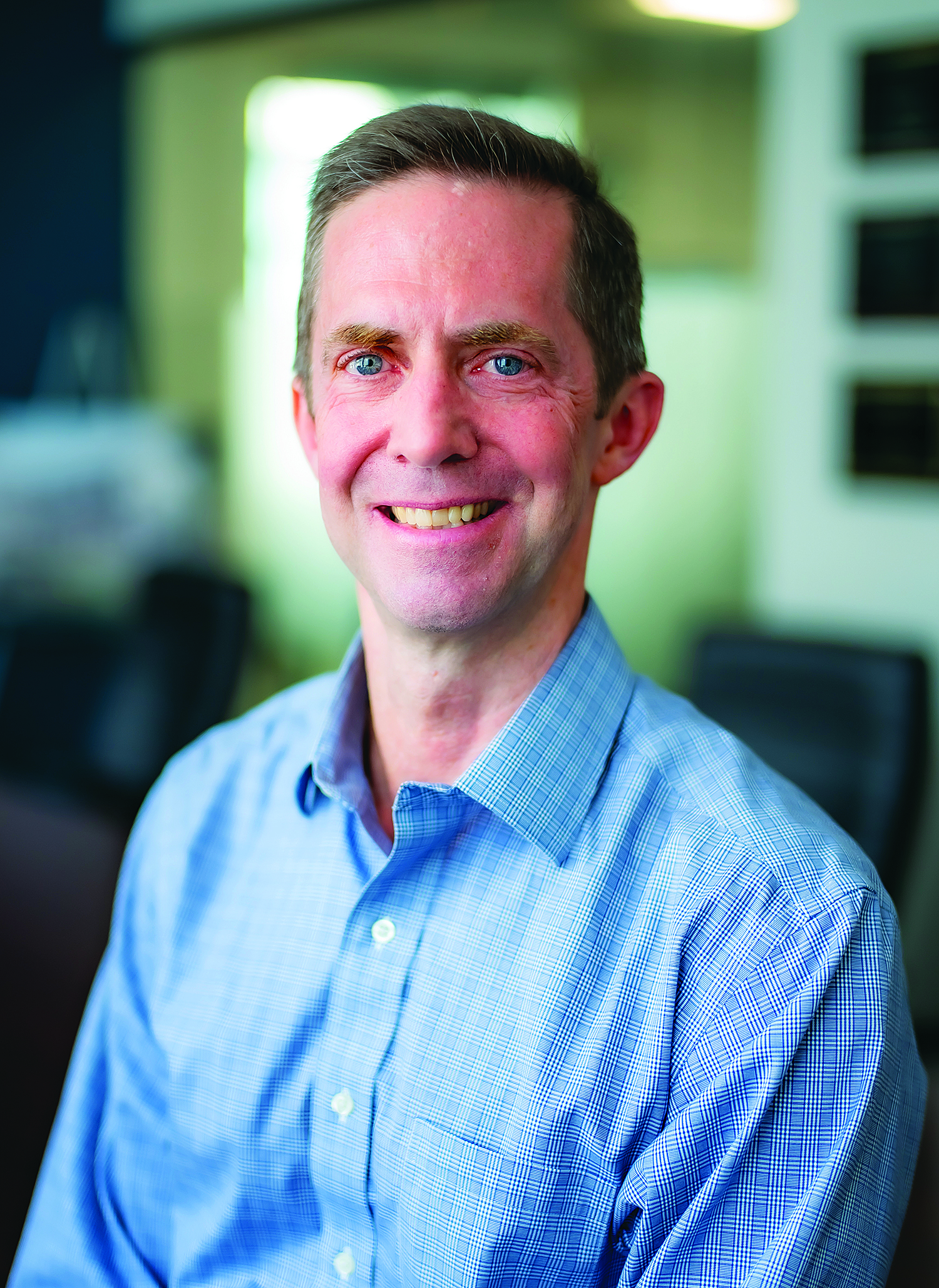
Photo by Andy Ryan | Courtesy of the Planning Office of Urban Affairs
William Grogan
President, Planning Office for Urban Affairs
Age: 55
Industry experience: 31 years
Nonprofit developer Planning Office for Urban Affairs and its leader William Grogan will be at the next frontier of housing development in Massachusetts if the YIGBY Bill passes. Short for “Yes In God’s Backyard,” the bill would let religious groups build mixed-income housing on land they own by right, with a density bonus if the share of affordable units are higher or are more deeply affordable. The measure passed the House of Representatives this month but awaits action in the Senate.
POUA, affiliated with the Archdiocese of Boston, is set to welcome the first residents to its latest building at 41 LaGrange St. in Boston this month. That high-rise is a follow-up to an earlier, 46-unit affordable and supportive housing project it jointly developed on a neighboring parcel with day shelter and homelessness services organization St. Francis House
Q: Do congregations typically approach POUA or do you go looking for them?
A: It typically occurs both ways. In several instances, we have had faith-based organizations approach us and indicate that they have excess land and excess buildings and they want to do something that’s consistent with their with their mission. Their numbers may be dwindling if it’s a faith organization, but they want to do something that’s consistent with their mission, but also preserve the legacy of their service. One of the things that’s really attractive about it, from our perspective, is these organizations are rooted in the community and they often see firsthand what the needs of their congregants, neighbors and residents are.
Q: How did JGE Development and POUA’s 217-unit Drexel Village project in Roxbury come about?
A: That’s a great example of how these come organically out of faith-based organizations and out of the community. Saint Catherine Drexel Parish underwent a strategic planning process in terms of how they can position the parish to respond to the needs of the community. The parish approached us about seven or eight years or so ago, and we initially worked with them to see how we could utilize that property to also leverage the adjacent property that was owned by the city of Boston. Ultimately, that adjacent property went out through a request for proposal process. We were able to combine both properties and create a development that could have a much greater impact than either one of the properties could have by themselves, but that vision grew out of Saint Catherine Drexel Parish and the parish’s desire to have a multi-generational impact and incorporate housing, open space and parish programming for after-school daycare, for its food pantry and other services.
Q: What sensitivities come up when partnering with a religious group?
A: In some cases where we have developed on excess land, the church is still in operation, and we need to make sure that parishioners are able to get into and out of the church, making sure that it doesn’t affect their day-to-day operations. We need to make sure that we accommodate special events that may be happening at the church, such as a wedding or in some cases a funeral where there’s larger parking needs. And in some of those situations, it has required us to pause construction while those events can occur, because we need to make sure that we’re continuing to be respectful of the faith-based organization, their continued operations. We found by building that in, early on, into the site planning and development planning process, that we can accommodate that flexibly, that we’re collaboratively advancing with them.
Q: Does POUA name a congregation’s project manager or representative?
A: That’s exactly right. We’re working with the Sisters of Jesus Crucified in Brockton [to build 106 rental units] and a lot of that early predevelopment coordination – in terms of what the site plan will look like, what the parking arrangements will be – is all coordinated with a project manager who’s representing the sisters to ensure that we’re having regular communications. I’m actually going down to the property tomorrow to walk it with a couple of representatives of the sisters to make sure that we’re clear in terms of where the property lines are, where parking is, so that they can feel comfortable that they’re going to continue to have the same level of access they had previously, and this won’t impede their use of the balance of the property.
Q: How does POUA structure these deals? Does the land get subdivided? Do you ground-lease?
A: It does vary from faith-based organization to faith-based organization. In some cases where the faith-based organization is going to remain longer-term, but they have excess land, typically it will be a ground-lease arrangement, so that they are retaining control of the underlying fee. In other cases, the faith-based organization has made the determination that they want to move on, and they want to sell the property, but they may want to sell it in stages. You can structure arrangements to meet the different needs of a faith-based organization. And we’ve had success in creating creative approaches in order to do so.
Q: POUA recently got its certificate of occupancy for its 41 LaGrange St. project in Chinatown. How did co-developing with St. Francis House influence the building program?
A: We’ve partnered with them so that when we provide permanent housing for individuals, they can provide services to support individuals who are who are moving into the into the housing units. The 41 LaGrange St. project is a 19 story, 126-unit mixed income project that will provide 70 units of permanent housing with those supportive services. St. Francis House is right next door and able to provide them with access to services for residents who may need them. And then there’s another 56 units of workforce and mixed-income housing. We’re excited to be welcoming the first residents this month. The project has been over 10 years in the making from when we first acquired the property from the Boston Young Men’s Christian Union.
Q: If the YIGBY legislation passes, what should a developer know about trying to partner with faith-based groups to build housing?
A: One of the things you need is, is patience, flexibility and, unfortunately, resources. I think that it does take an experienced developer’s assessment to help advise faith-based organizations, and also to collaborate with them to make sure that what’s being developed is consistent with their mission and focus. A lot of the faith-based organizations that have approached us see this as a social justice issue and wanting to make sure that they’re able to continue to give back to the community and reusing their property in this way is a way of doing so but it still needs to be feasible to accomplish that result. And I think that’s something that we’ve found can be successful when you have the right focus and experience.
Five Little-Known Facts About Grogan
- He first volunteered at the Pine Street Inn
- He and his daughter are sack race champions
- It’s his 10th Pan-Mass Challenge ride
- His family calls him an entertaining karaoke singer
- He loves cannolis from the North End