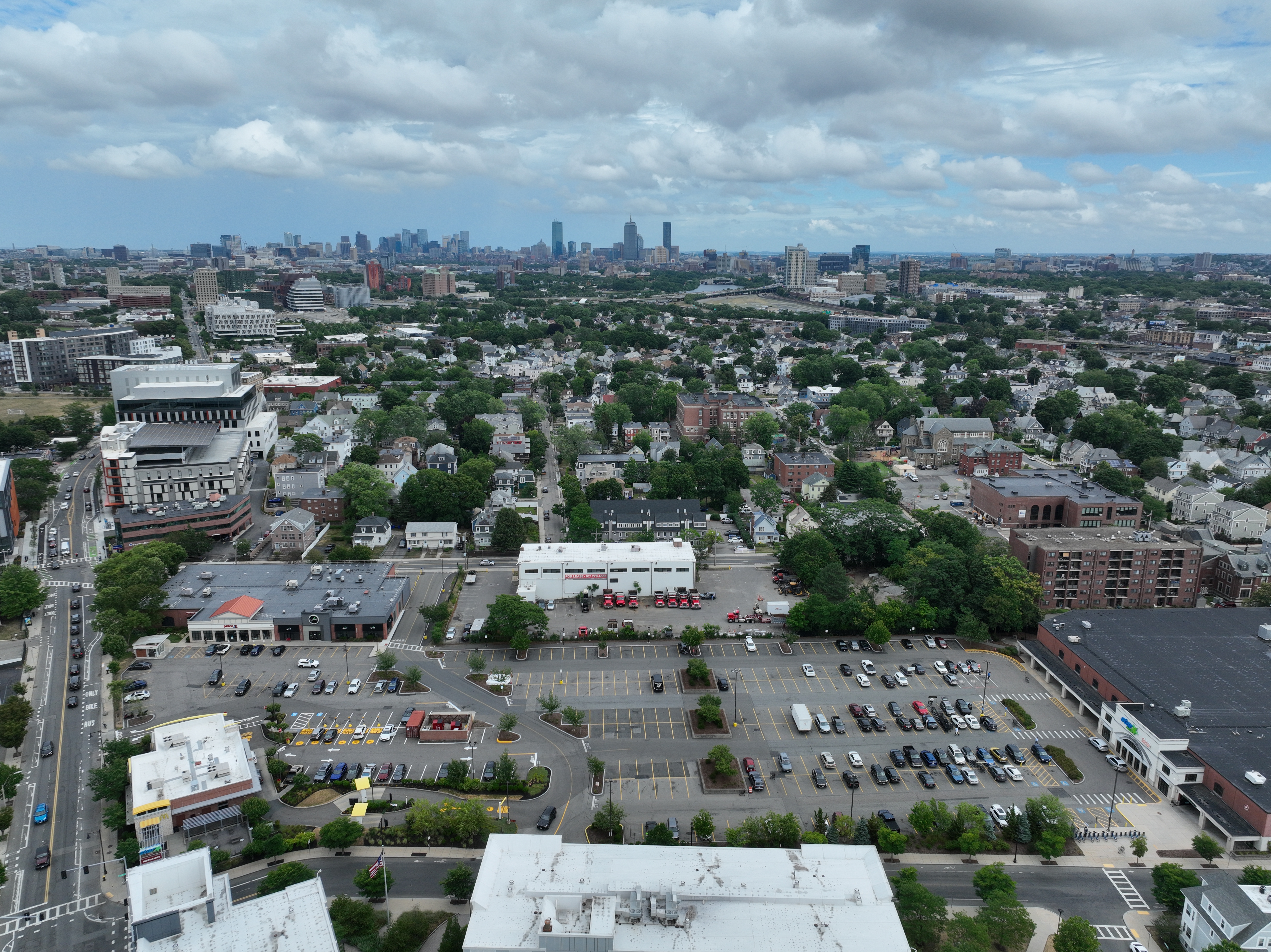
Urban Edge Properties acquired the Brighton Mills shopping center on Western Avenue in Allston for $39 million in October 2025. Photo courtesy of CBRE
Retail is in the spotlight as one of the most desirable product types in real estate. There are several reasons for this, but most important is the significant imbalance between supply and demand.
Retailers, particularly nationals, are expanding at an impressive rate – but less retail inventory exists than in decades past due to the significant amount of retail that was decommissioned in the years leading up to COVID, which you might remember as “the retail apocalypse.”
Nationally, the retail availability rate dropped to 4.8 percent at year-end. In many markets, there is literally not enough available space to meet the level of tenant demand. We anticipate this challenge to remain permanent given the high cost of constructing retail and a lack of excellent sites.
Capital is looking at retail as perhaps the best risk-adjusted investment in today’s market, with the office and multifamily investment markets in Massachusetts remaining somewhat challenging for investors.
Battle-Tested Operators
Many ailing national retailers were eliminated during COVID, which freed up space for new, vibrant tenants.
Fresh concepts are absorbing much of today’s available space, particularly in the supermarket, off-price and retail services sectors. The most in-demand retail product types today are grocery-anchored shopping centers and small shop strips. Well-located urban corridors and established suburban hubs are also seeing strong activity, supported by daily needs, discounters and service-oriented tenants.
In New England, relatively few shopping centers have been available for sale in 2025 and so far this year.
An enormous amount of investor capital is now chasing a limited number of investment opportunities. This has led to significant pent-up demand, frustrated capital, tremendous interest and aggressive pricing for the few properties that have been offered for sale.
Given the large amount of capital coming into the retail sector, we anticipate strong bidding and aggressive pricing for high-quality retail assets in New England and beyond.

Nat Heald
Institutional Capital Seeking Acquisitions
A consistent theme has emerged across the country: More capital, particularly institutional, is flowing into the retail sector at a pace that we have not seen before.
Retail investment volume increased 28 percent in 2025 over the 2024 amount, signaling increased buyer engagement.
Investors – whether they are private or institutional – want exposure to retail. We are tracking many investors who are increasing their allocation to retail, along with a steady flow of new capital from cross-border and institutional buyers who have not historically invested in the retail sector. We expect this dynamic to continue.
Looking ahead, we fully expect the retail investment market to stay healthy and robust throughout 2026 and beyond. Retail assets, when they can be found, have proved to be very sound investments.
Nat Heald is executive vice president in CBRE’s Boston office and leads its retail investment sales practice in New England.