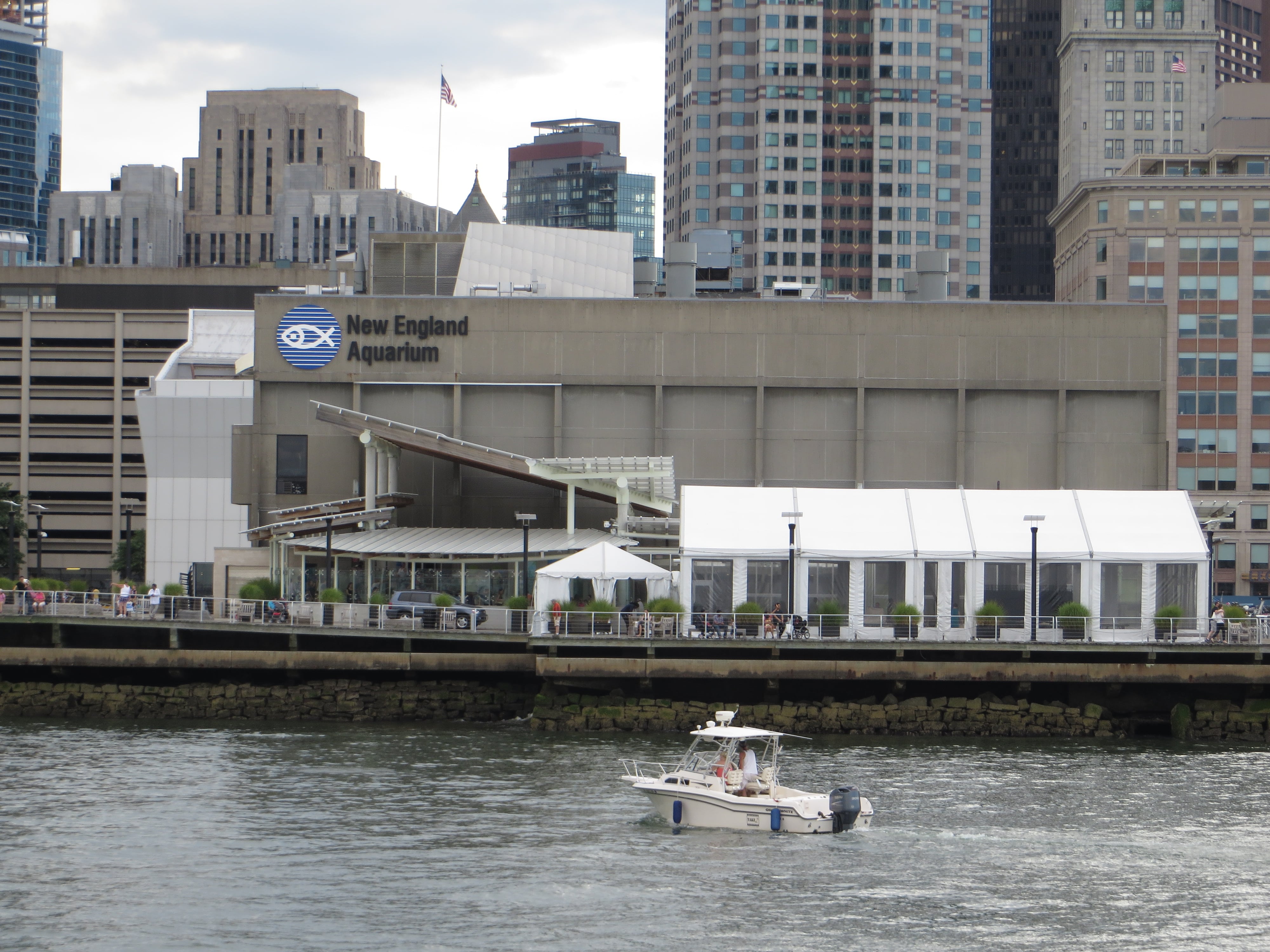
Photo by Steve Adams | Banker & Tradesman Staff
The New England Aquarium became the first property in Boston to receive a reprieve in complying with a new building emissions ordinance, after executives described the energy-hungry requirements of its Central Wharf facility and potential decarbonization costs.
Boston’s Building Emission Reduction Disclosure Ordinance requires owners of large and mid-sized commercial and residential buildings to reduce greenhouse gas emissions, principally by reducing emissions generated by building systems, purchasing renewable energy credits or paying a fine to the city.
The city’s decision means the Aquarium will be allowed to emit more carbon dioxide than it would otherwise under the 2025 deadline, but less than it currently does. The Aquarium would still have to eliminate its greenhouse gas emissions by 2050 along with other buildings covered by the BERDO law.
The Aquarium’s request is the first hardship compliance plan to be reviewed by the BERDO Review board, and was approved Tuesday after a lengthy discussion.
Ferris Batie, the Aquarium’s vice president of campus operations, told board members that the aquarium’s unusually high electricity use is a function of the pumps, filters and chilled water systems that serve its 50 marine life exhibits.
To reduce its carbon footprint, the Aquarium plans to purchase “e-steam” from utility Vicinity Energy, which would provide 15 percent of its heating requirements starting next year and 100 percent by 2035, Batie said.
“They are confident in their product and having it available for us,” Batie said. “We are comfortable with it right now. If we do have some issues, we will make sure we let you all know.”
In comparison, buying and installing electric boilers would cost $1.1 million along with $400,000 in additional annual energy costs, Batie said.
The “e-steam” product flows through an expanding underground network of pipes serving parts of Boston and Cambridge. Vicinity’s power plant in Cambridge’s Kendall Square installed an electric boiler in 2023 as it decarbonizes the energy generation facility and expands its service to additional customers.
The alternative compliance schedule gives the Aquarium higher emissions limits than other places of public assembly until 2039. As a condition of approval, the board required the Aquarium to submit an annual update on its emission reduction strategies.
The regulations apply to an estimated 6,000 buildings in Boston. Buildings comprise approximately 70 percent of the city’s greenhouse gas emissions, according to the city’s climate studies.
Real estate industry groups and institutions last year objected to the new standards, citing the burden of additional costs in a time of rising commercial vacancies and operational costs.
Beginning in 2025, the ordinance sets specific energy reduction goals for buildings 35,000 square feet and up, or at least 35 housing units. In 2030, the law begins to apply to buildings at least 20,000 square feet or containing 15 to 34 housing units.
To date, the city’s Environment Department has received 10 hardship compliance plan requests from building owners, spokesperson Stacia Sheputa said.
Editor’s note: This story has been updated to clarify the nature of the regulatory relief granted to the Aquarium.