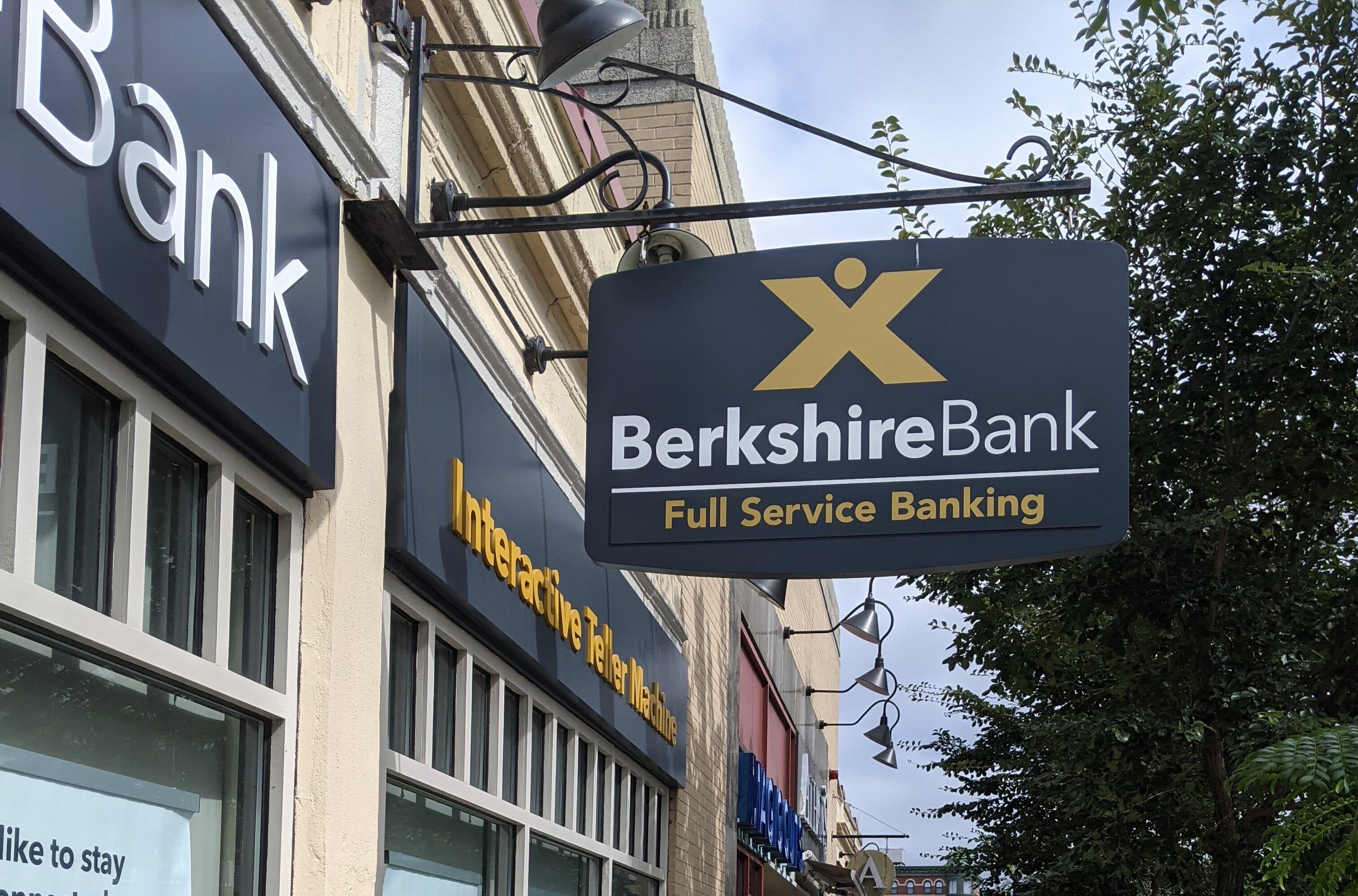
A Berkshire Bank storefront branch in Boston’s Brighton neighborhood. Photo by James Sanna | Banker & Tradesman Staff
While its executives wait for regulators to approve a proposed merger with Brookline Bancorp, Berkshire Bank executives got to bask in the glow of a strong quarterly earnings report.
In fact, CEO Nitin Mhatre told Wall Street analysts Thursday morning, it was the bank’s best quarter since launching a turnaround effort in 2021, spurred by a $554 million “goodwill impairment charge” the bank’s former CEO announced in the early days of the pandemic as bank stocks cratered amid that febrile atmosphere.
Berkshire’s second-quarter earnings report this year showed the bank’s earnings per share are up 25 percent year-on-year and a 3 percent increase in operating revenue and a 2 percent drop in operating non-interest expenses leaving it with a noticeable drop in its efficiency ratio, to 56.7 percent.
The bank reported very few delinquent and non-performing loans, an increase in its net interest margin to 3.27 percent, up 7 basis points this year.
“Our bankers’ dedication, resilience, and commitment to our clients have been the driving force behind our improved operating and financial performance. Together, we’ve navigated challenges, embraced change, and delivered results for our clients, shareholders and communities. I’m incredibly proud of what we’ve accomplished and excited to see what the combined company will achieve next,” Mhatre said on Thursday’s earnings call.
Slides from Thursday’s call showed 92 percent of the bank’s offices loans are still at least a year away from maturity, with 67 percent not set to come due until 2027. Berkshire reported 10.7 percent of its office loans were classed as criticized, but only 0.7 percent in non-accrual status, the latter concentrated solely in class B properties. And among buildings securing Berkshire office loans over $10 million, none have “significant” lease expirations before 2027. Office loans represent only 5.4 percent of the bank’s loan book, Berkshire executives said.
That could give the bank’s office borrowers breathing room to work out solutions. Efforts to reposition or demolish vacant or partially vacant office buildings in favor of housing, whether in downtowns or in suburbs, have largely stalled amid construction costs that have spiked nearly 73 percent since before the pandemic according to data from the city of Boston’s Housing Innovation Lab. And persistent high interest rates – and a Federal Reserve that seems intent on holding off on cuts to its benchmark interest rate, fearing a surge in inflation – have compounded the problem despite rents in Greater Boston that are among the highest in the nation.
Berkshire’s earnings presentation said 16 percent of its $516 million office portfolio was concentrated in Boston, with only “limited Financial District exposure,” and class A buildings represent 68 percent of the portfolio.
And the bank also has no exposure to rent-controlled buildings in New York City, which observers expect to face significant financial difficulties should mayoral front-runner Zohran Mamdani win and follow through on his pledge to freeze rents in those properties.
When asked about the bank’s pending merger, Mhatre and other Berkshire Bank executives didn’t have much news to report.
“We’re just waiting on regulatory approval and teams are working on the integration plan,” Mhatre said when asked.
President and COO Sean Gray said in his opening remarks that he’s “very pleased” with how much Berkshire and Brookline look set to save from rationalizing their technology stacks, post-merger.