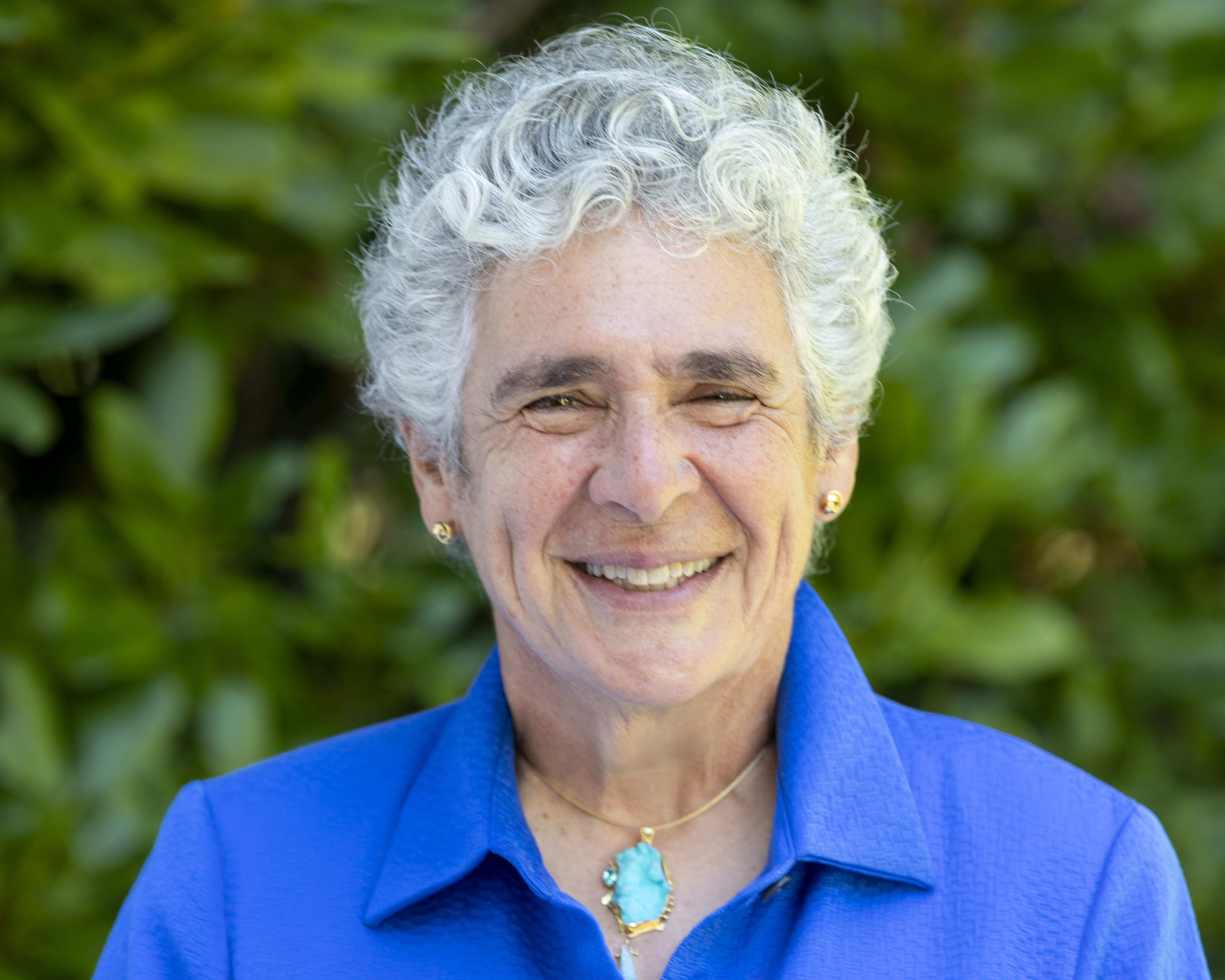
Photo courtesy of BlueHub Capital
Elyse Cherry
CEO, BlueHub
Industry experience: 40 years
Age: 71
For four decades, Boston-based BlueHub Capital has filled gaps in the lending environment for real estate projects in economically struggling communities. Its BlueHub Loan Fund originates approximately $100 million in annual lending for projects in low-income neighborhoods.
After specializing in commercial lending at law firm Hale & Dorr, Elyse Cherry founded the organization, originally known as Boston Community Capital, to focus on residential lending in low-income neighborhoods. The nonprofit community development financial institution that has lent over $3.2 billion nationally over four decades.
Q: What do the Trump administration’s proposed budget cuts to federal CDFI funds mean for lenders like BlueHub?
A: We have been the recipient of CDFI funds for years, both for technical assistance and housing and through the New Markets tax credit program. I’m not concerned with respect to BlueHub Capital, but I’m much more concerned about smaller CDFIs that really rely on that money to operate. None of this functions in a vacuum. And to the extent that there’s pressure on the industry, that will challenge all of us. The executive branch indicated its desire to zero out the program. Congress has indicated its desire to maintain it at current levels of funding. I think the challenge may be on the executive branch with respect to releasing that funding and making sure it’s available.
We [ended 2025] at about $80 million in lending. In Roxbury itself, in 2024 we did about $36 million. On the housing side, it’s really predevelopment and then construction lending. We also do commercial real estate, health care and workforce training. One of the ones we are really proudest of is a $19.5 million New Market tax credit to support Franklin Cummings Technical Institute and their new campus in Nubian Square. They are preparing Boston residents for the upcoming explosion in technology. We are often the early-stage capital lender, such as an acquisition loan, sometimes over 100 percent loan-to-value – certainly above the 80 percent that banks are willing to take on.
Q: What is your response to last year’s Superior Court ruling against the BlueHub SUN program, which buys properties in foreclosure from banks and sells shared appreciation mortgages back to the original owner?
A: We’ve been involved in the lawsuit for a long time. It was created in the Great Recession: Sell it to us at the lower price, and we’ll sell it back to the homeowner. The homeowner gives up some of the appreciation, or shared appreciation. The interim decision, and we are appealing it, has made it too risky for the moment to make loans to people who are underwater in Massachusetts. Right now in Massachusetts, that’s not such an issue. But if the market turns, anyone in the market will end up underwater pretty quickly. There are a number of people in foreclosure who can pay the full amount of the debt, but nobody will lend. We are still offering our refinancing loan product, which allows homeowners in foreclosure the rare opportunity to refinance into a new mortgage they can afford. The issue is of shared appreciation. It’s an interim ruling, so it has many steps to go.
Q: Your organization has advocated for changes in state law to support “homesharing” arrangements. How does that change the traditional landlord-tenant relationship?
A: What we are talking about is the relationship between the landlord and tenant: lease or at-will. If the relationship breaks down, it takes forever. By the time you get through the legal process, you could be looking at a year. What we’re trying to say is: Massachusetts has a couple of issues. Homesharing would help serve lots of people who come here to go to college, but it’s too expensive to get housing and they go somewhere else [after graduation]. We have older people in large homes, and they need help staying in those homes: mowing the lawn, or getting to grocery shopping. We’re starting to think about: Could we combine those two populations and find a way to provide lower-cost housing for young people at the start of their careers before they can afford rent and ownership, and older people who could use a hand.
But there are a number of impediments [legally]. Does your homeowner policy include coverage for someone paying rent? If there’s a problem and you can’t get along, is there a way to move somebody out more quickly? Is there a process to vet people? The challenge is the theory that we are all one lawsuit away from bankruptcy. We try to lay out a set of criteria that would help this whole process happen. The regulatory proposal is that the Executive Office of Housing and Livable Communities would create a set of regulations here. The idea is people who can’t pay a current market rent could pay $800 to $1,000 a month and share somebody’s living space. It really is meant to share a space and benefit both sides.
We actually think it’s moving along [in the Legislature] fairly quickly. We think in Massachusetts there are about a half-million empty bedrooms. Just 10 percent would be 50,000 people housed, and $25 billion that we wouldn’t have to build [in new developments]. The environmental folks are pleased about it as well, because that’s 50,000 units that don’t have to be built. It solves an economic development program, because people can’t stay here and take entry-level jobs.
Q: What new or expanded programs are you focusing on in 2026?
A: One thing we are working on is the One Percent for America program. It provides 1 percent-interest loans to people across the country seeking citizenship. Citizenship fees are high and may be going higher. Right now, citizenship fees range between $750 and $1,300, depending upon what you are applying for. This is a 1 percent loan. If you pay it off over the course of a year, you’re talking about $75 to $100, which is much more doable, particularly for lower wealth families. Part of the challenge is: it’s hard to save in the family structure for something like citizenship. The women are trying to save and don’t necessarily have the authority to say no to the brother-in-law, for instance. If it’s a loan, you don’t have the cash.
Q: How many states is BlueHub currently authorized to do business?
A: It’s 46 states plus the District of Columbia. We started in Boston’s neighborhoods 40 years ago, and we’ve lent better than $3 billion. One of the great things is each one of our dollars leverages between $4 and $5.
Cherry’s Five Favorite Cuisines to Cook:
- Persian
- Indian
- Chinese
- Eastern European/Ashkenazi Jewish
- Middle East