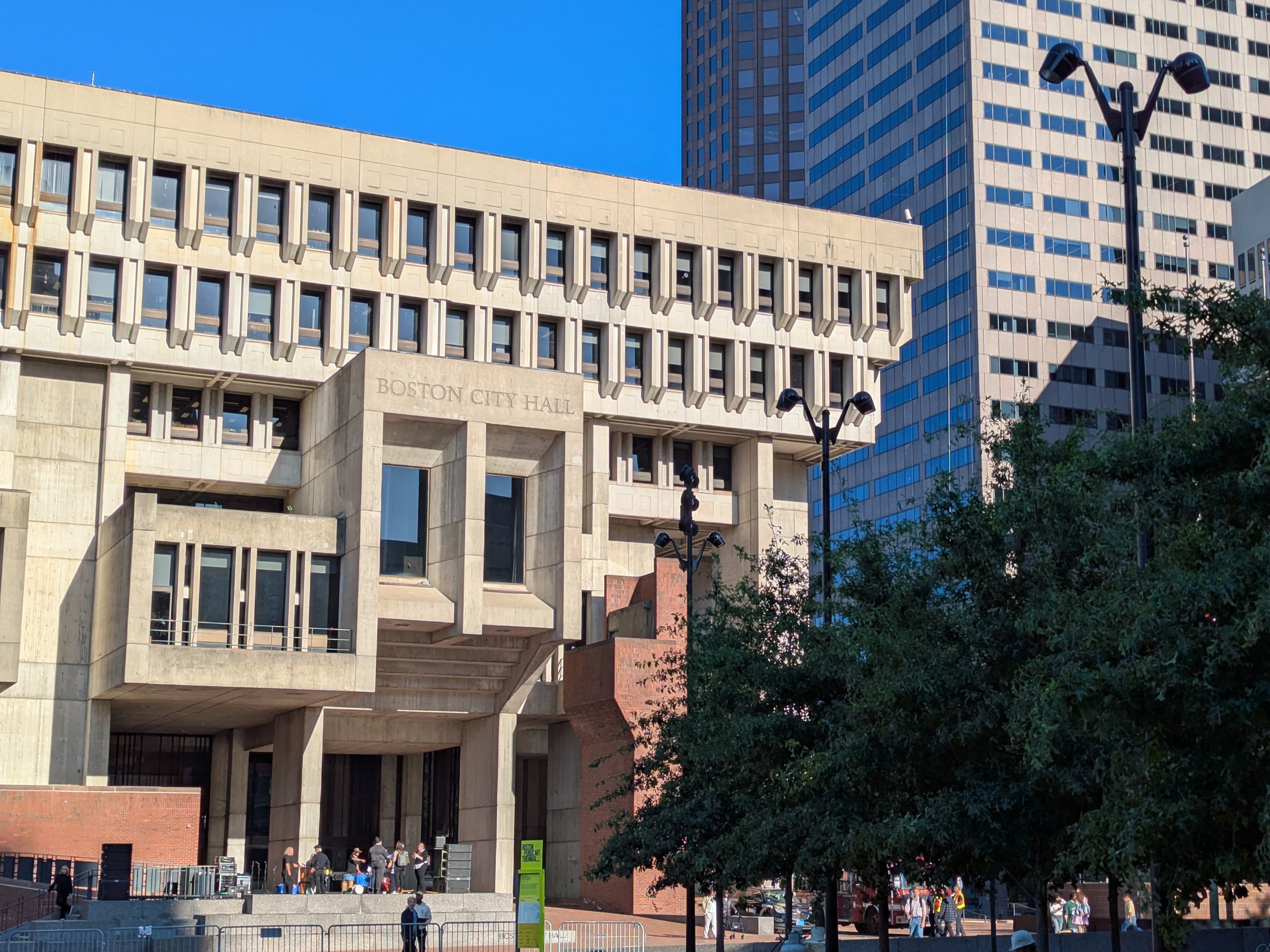
Photo by James Sanna | Banker & Tradesman Staff
Boston city councilors are examining whether to place significant new training requirements on the unarmed security guards who protect everything from downtown office buildings to hospitals.
Introduced by at-large City Councilor Henry Santana last week, the proposed ordinance would require security companies pay employees to attend 40 hours of nonprofit-provided training when first hired on conflict deescalation, overdose response and mental health crises, plus eight hours of additional training every year. Security companies would have 90 days to send existing workers through the training if the ordinance passes.
The proposal comes as downtown residents push the city to improve public safety downtown following a fatal fight on Boston Common. Unarmed guards are often the first to respond to disturbances, Santana said during a council hearing Tuesday morning, and should have training commensurate with that.
“This isn’t just a conversation about training. It’s about public safety, worker protecting and our responsibility as a city to make sure our city is properly protected,” he told colleagues.
The measure would also be important to improve the economic and career prospects for security guards, who are often entry-level workers “from our Black and brown communities,” at-large City Councilor Ruthzee Louijeunne, a co-sponsor, said during Tuesday’s hearing. Santana and fellow councilors Rev. Minard Culpepper of Roxbury and Ed Flynn of South Boston shared their personal stories from having worked second jobs as security guards, often without much or any training.
But several councilors pushed back on what they characterized as an attempt to rush the measure through – a perception Santana said was incorrect, saying his recent medical leave of absence prevented him from filing the bill sooner.
The ordinance would go into effect within 30 days of its passage, but city staff testifying at the hearing said they were “still figuring out” what systems and additional resources they’d need to set up the measure, and were only in the very early stages of researching other cities’ experiences with similar legislation. The city’s four-person Office of Worker Empowerment would be in charge of certifying training programs and employers.
“This ordinance would take effect 30 days after passage but it requires the city to develop a permit system,” at-large Councilor Erin Murphy said. “How can businesses legally comply when none of those systems are already in place?”
Councilor Sharon Durkan, who represents Beacon Hill, Back Bay, Fenway and Longwood, said she’s also heard from a range of businesses confused as to whether the training requirement would cover workers like apartment front-door staff and bar bouncers.
Santana and Louijeunne promised additional hearings and work sessions to refine the law’s text and add testimony from the city’s private security industry.
The proposed ordinance also comes after the contract governing workers at several unionized security companies represented by labor union 32BJ SEIU expired July 31, and a year after a union member security guard was murdered on the job in Manhattan.