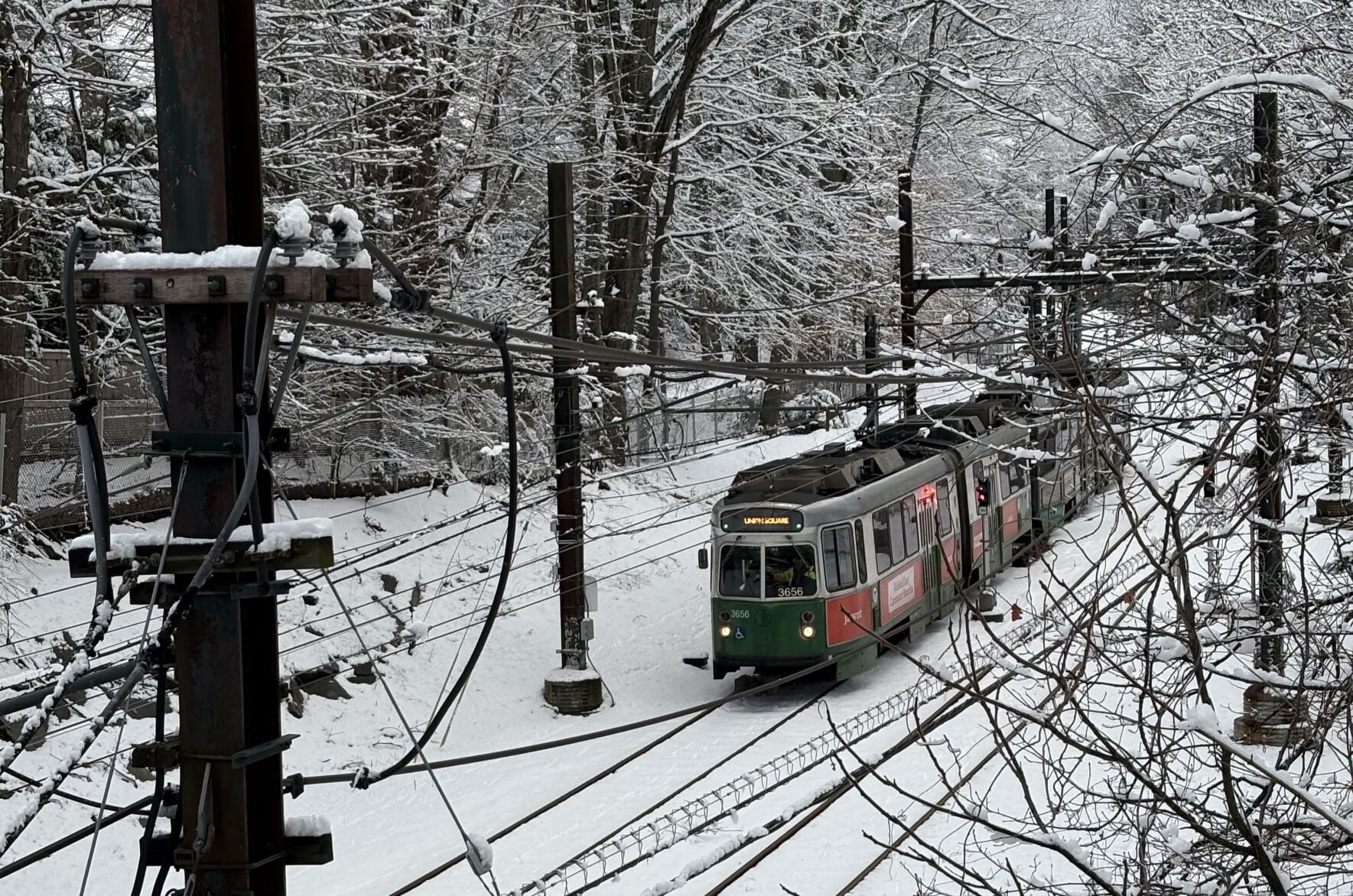
A Green Line trolley makes its way through the snow following the Feb. 23, 2026 blizzard. State House News Service photo
The MBTA restored full service two days after a February blizzard, with General Manager Phil Eng crediting hard lessons from January’s storm.
“It’s been some week,” Eng told the MBTA board Thursday, calling the rapid restoration a testament to round-the-clock work by operations, stations and maintenance crews. “Two days after, we were running full service, which I don’t know if many people would have believed that we could have done just a few years ago.”
The Sunday-to-Monday storm brought heavy snowfall, strong winds and whiteout conditions, prompting ferry suspensions and reduced service during the height of the event. Eng said buses and trains continued operating for essential riders, while National Guard and Massachusetts Emergency Management Agency personnel assisted statewide response efforts.
The February storm followed a January system that dropped roughly 23 inches of snow, accompanied by frigid temperatures and persistent light blowing snow that created prolonged service challenges. Eng acknowledged that some of the same vulnerabilities – aging infrastructure, antiquated signals and decades-old railway cars – were exposed again this winter.
“Some of our infrastructure, some of our equipment, is the same equipment that we had back in 2015 and maybe even the previous storm, 1978,” Eng said, referencing Red Line cars that are 40 to 60 years old.
On the Red Line, moisture in air lines on older Type 1 and Type 2 cars contributed to delays during the January storm. Blowing snow repeatedly fouled switches, particularly in exposed areas, as train movement pushed drifts back onto cleared track.
For February, Eng said crews pre-positioned snow fences at known trouble spots, gave heightened attention to vulnerable switches and adjusted fleet deployment to sideline the most failure-prone Red Line cars during reduced service.
“We’re not the same T that we were before,” he said. “We will continue to get better.”
Despite the progress touted by Eng and his team, public comment reflected continued frustration among riders.
Kunal Patel expressed outrage about what he called persistent, systemic service failures on commuter rail lines, citing a pattern of equipment shortages, signal failures and staffing issues. He noted chronic delays and frequent cancellations, described a lack of accountability, and demanded refunds for every day service is delayed more than 15 minutes or canceled. Patel also called for an audit of line performance and a return of the on-time guaranteed refund policy.
Joseph Cotton said his son waited at least 30 minutes for a Worcester-to-Boston train without meaningful updates. An anonymous caller urged the T to “hire competent management” and invest more in communication and reliable service rather than fare gates.
A Greater Boston resident said a recent Red Line trip from Downtown Crossing to Central Square took 54 minutes due to a disabled train, stressing the need for clearer communication and alternative service options. A caller who identified themselves as “Alex,” of Ashburnham, described riding a commuter rail train without heat that later broke down for an hour at Shirley Station, urging officials to implement promised improvements as soon as possible.
Eng acknowledged riders have “been through a lot this winter” but said the agency is moving in the right direction, bolstered by state funding and a renewed focus on rebuilding core infrastructure.
“We know on any given day one thing goes wrong, and it affects a lot of people,” he said. “That’s why we’re rebuilding our infrastructure.”