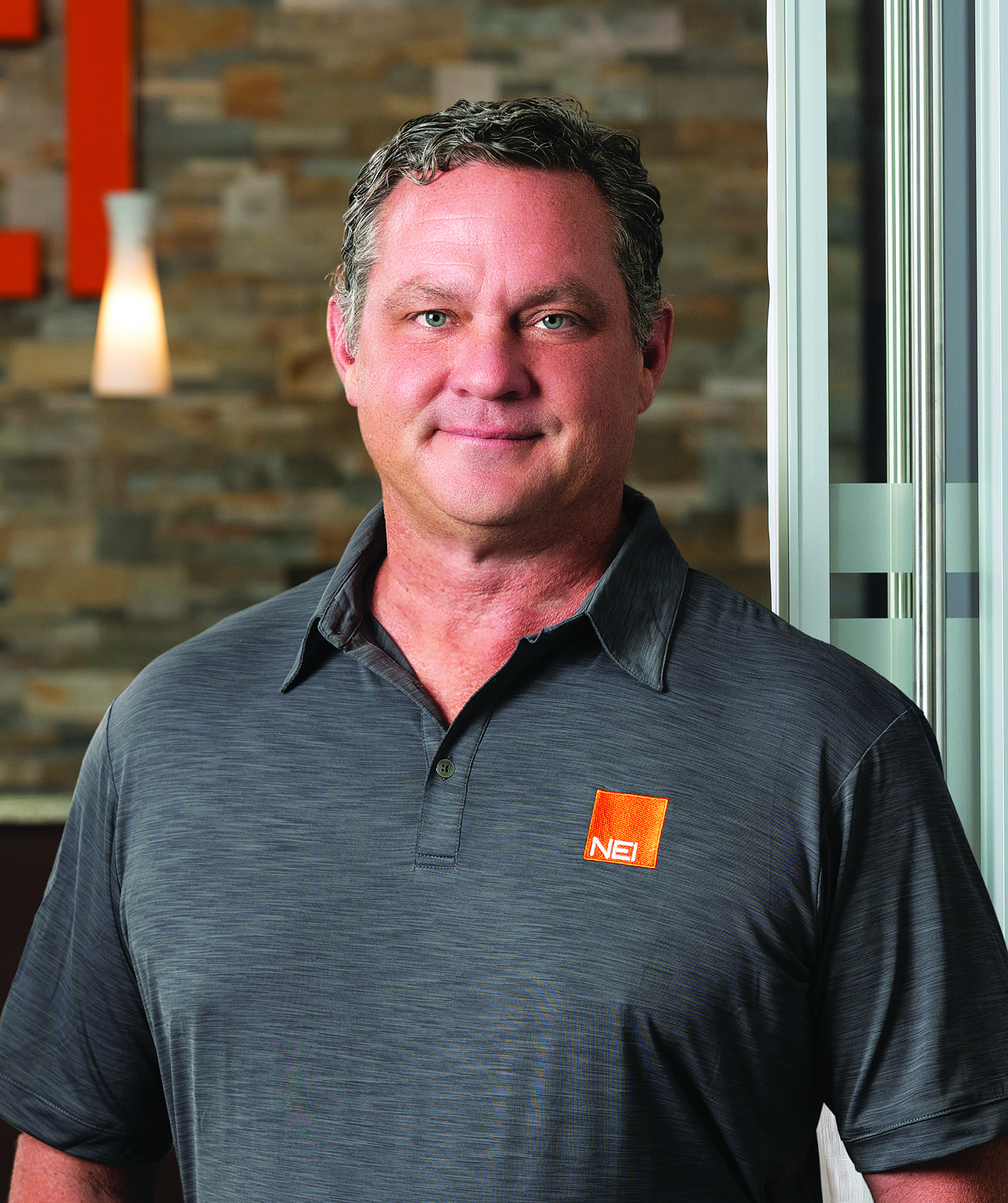
Photo courtesy of NEI General Contracting
Joe Rettman
President, NEI General Contracting
Age: 54
Industry experience: 40 years
In his time with NEI General Contracting, Joe Rettman has seen it grow from a flooring and painting company to one of the biggest contractors building affordable housing in Massachusetts. Now, he and NEI are helping other contractors grow, too.
The company set up the nonprofit WORC2 training center in Roxbury’s Nubian Square four years ago in part to close what Rettman and NEI staffer André Barbour saw as a gap in how people without a personal connection to the building trades learn how to succeed. It’s work that’s critically important to the future of the state economy: Research by MassINC and the state Executive Office of Housing and Livable Communities shows that Massachusetts’ construction workforce is aging rapidly, and needs to be expanded to keep up with housing construction and other needs.
NEI’s WORC2 center serves both high school students and, unusually, subcontractors hoping to learn skills needed to grow their businesses. The center advertises classes in things like Passive House construction techniques and social media marketing, as well as business counseling services.
Q: How often does NEI encounter construction issues?
A: If there’s an uptick in building permits, there’s definitely going to be a major shortage of workers. The trades are aging out – electricians, HVAC, plumbers. There has also been, though, an uptick in vocational school enrollment. I think people are shifting back towards the trades and it’s happening at a pretty rapid pace because, let’s face it, supply-demand. That’s capitalism. If there’s nobody doing work, wages go up and eventually people realize “Oh, I should be doing that.” That’s going to be helpful over the long-term.
Q: What roles on a job site are most frequently understaffed?
A: It’s pretty systemic. General labor for drywall, cleaning, painting: that labor is somewhat unskilled, so it’s easier to come by, compared to your licensed electricians, plumbers, HVAC [technicians]. Those are the ones that have difficulty staffing up. You can’t just go out and get an electrician’s license. And then what happens is a lot of the sub[contractors] end up stealing each other’s employees and paying them more.
Q: How does that affect the work NEI does?
A: I have a perfect example from today. We have a job in Springfield where we have to be done in two weeks. I just got a call from the general superintendent that the plumber is completely understaffed. We’re now going to be paying, on a time-and-materials basis, another sub to help the first sub complete their scope of work.
Each sub has their number of employees, but they can’t scale quickly. So, we wind up cobbling together smaller subs to complete a contract. But it gets complicated working under someone else’s license. You need the lines of communication to be open to get things done. It needs to be done amicably
Q: Shifting gears to the apprenticeship program, when did you first get the idea to do this?
A: We’re working in all these inner-city neighborhoods: Roxbury Dorchester, Mattapan. We’re building in these communities on a regular basis and it just seemed like we needed to do something for them. We came up with the WORC2 center. It’s a multifaceted kind of thing. We bring kids out on job sites and give them OSHA training. We give them exposure to the trades to help them figure out if this is something to do, and we do that in cooperation with vo-techs like Madison Park High School.
There’s a second component, continuing education classes for subs. Showing them how to use a better contract. Bringing in insurance professionals to show them a better way of getting insurance. Showing them better methodologies to manage their labor forces. It’s a two-pronged approach to give them exposure and gets them into the construction industry, then we’re working with subs who are needing to grow.
We’re trying not to compete with the vo-tech schools or the unions that have their own training programs. We’re in a niche for people who have no avenue to get into the construction business.
Q: Most of the workforce training conversation focuses on the former group, so why include a focus on subcontractors, too?
A: A lot of these smaller, inner-city subcontractors are minority-owned businesses. They don’t have a lot of opportunities for mentorship. What we found is that, if we can help mentor them and help them understand how to hire and train and retain employes, and do that in an efficient way, it’s another way to increase workforce development. There’s a lot to that trade knowledge: how to do things efficiently – and importantly what not to do. That knowledge comes with experience and needs to be handed down.
Q: How long did it take to set up? What was that process?
A: It’s a work in progress. Initially it was eight months to 12 months to pull everything together. We’re ending our fourth year, going into our fifth. Once you start the process, the continuing education, you get feedback from the people in the classrooms, you get feedback from some of the people who run the sessions for us. The most expensive part was the rental and the build-out. We probably spent $250,000 on the build-out and we also have a full-time director working there. They also use our staff sometimes, as they’re knowledgeable construction officials.
Q: How easy is this to replicate? Would you urge others to follow your lead?
A: It’s a bit of effort to keep it all together, to keep it fresh and live, and have varied events and classes so we’re not doing the same thing every time. NEI has an office in Florida, in Orlando. We also have an office in Houston, Texas. The idea is that once we get this up and running and streamlined, maybe we open another operation like this in one of those cities.
The ongoing expenses are about $300,000 a year. We get some grants, but NEI funds the shortfall. That can be $150,000 to $200,000 a year. That’s probably why we don’t see a lot of similar centers. They’d have to be privately funded until you can find a way to support the ongoing operations of the program. My personal perspective is that we’re making a living in these neighborhoods making a living, so who cares if you have to give some of your profits back to these neighborhoods because they’re helping you.
If not replicating, getting on board – maybe helping out at this particular facility. It’s a nonprofit. We don’t own it. And a lot of people who attend are restrained by public transportation. If there are other areas of the region, like the North Shore, where we could have another facility, we’d be interested in that.
Rettman’s Five Favorite Musical Artists
- Lucciano Pavarotti
- Beethoven
- Almost any EDM artist
- Frank Sinatra
- ACDC