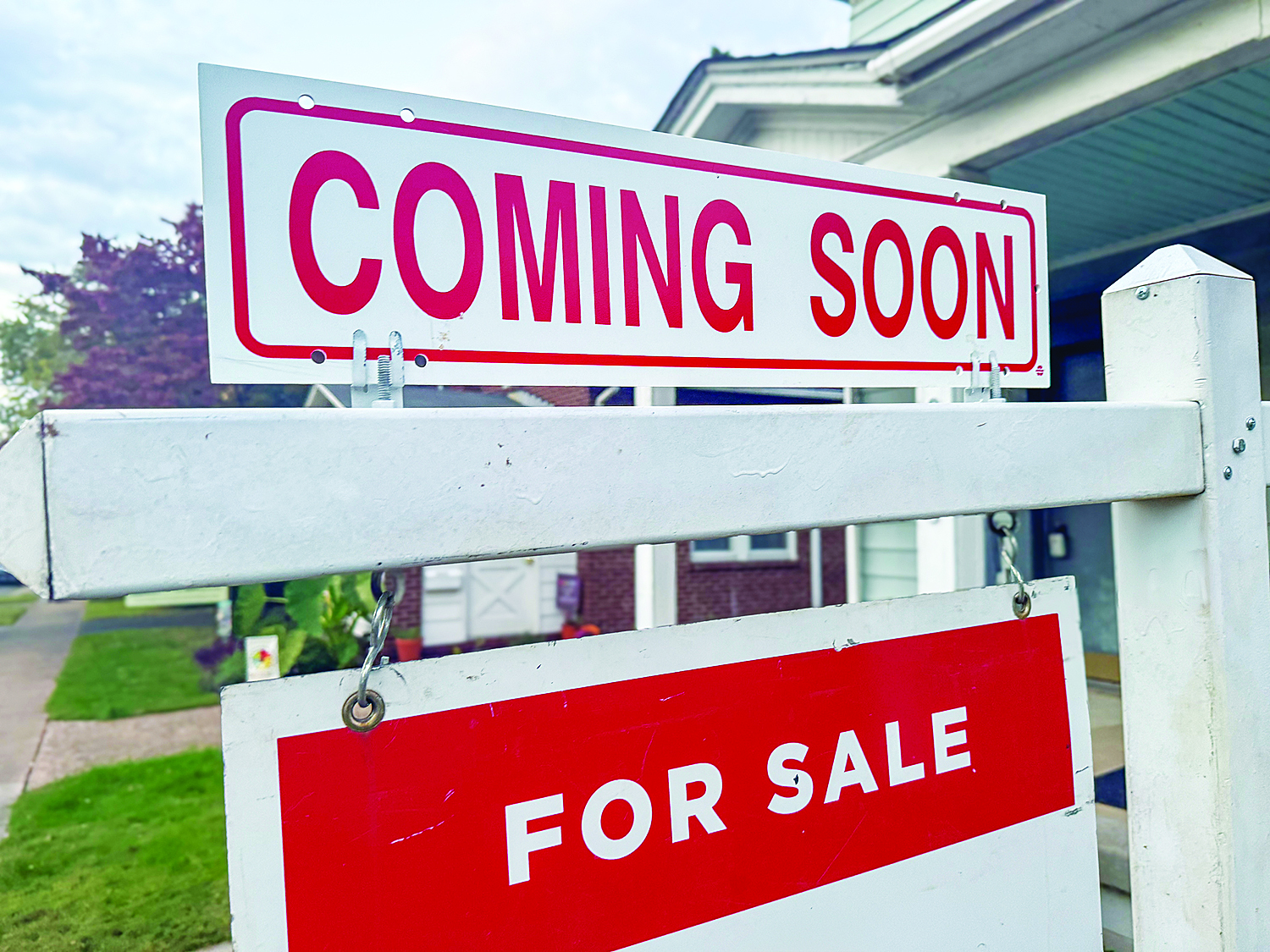
Real estate leaders in Massachusetts expect the home-search process to get more complicated as the nation’s biggest brokerages and portals race to roll out private listings. iStock photo illustration
With the biggest brokerages and listings portals in America suddenly racing to roll out expanded access to private listings, top brokerage leaders in Massachusetts expect the home-search process to get more complicated.
Redfin and Zillow both started 2026 by adopting some type of private listing feature.
Redfin moved first, partnering with Compass – the biggest proponent of private listings in the real estate industry – to bring these listings to its own portal in late February, without showing days on market, price history or home valuation estimates.
Zillow launched Zillow Preview less than a month later. The feature makes pre-market home listings visible on Zillow and Trulia. At least 29 brokerages, including prominent brands like Keller Williams, RE/MAX and HomeServices of America have announced they’re participating.
“Redfin and Compass share a belief that giving sellers more flexibility in how they introduce their homes to the market can increase confidence to list, helping bring more listings online for buyers,” a statement from Redfin read. “That means more inventory for buyers, more flexibility for sellers, and more opportunity for agents in our networks.”
The moves shocked many. Zillow had previously been a leading advocate against private listings, and was embroiled in a high-stakes lawsuit with Compass over the practice. But competition in the marketplace is driving the increased adoption of these types of listings, said Gibson Sotheby’s International Realty CEO Colleen Barry.
“It does seem to be, to me, more than anything, what I would call ‘portal wars.’ It’s just a competition over who’s going to gather the consumer’s eyes,” she said.
Sotheby’s International Realty, the brokerage brand Boston-based Gibson is affiliated with, is part of Anywhere Real Estate. That company was purchased by Compass in early January.
What Does the Data Say?
The larger adoption of private listings will likely impact both sides of the transaction in Massachusetts, research suggests.
Without price history – where repeated reductions could hint at a seller desperate for a buyer – and automatic property value estimates appearing on a listing, there would appear to be the opportunity to net a higher sale price.
A March paper published by University of Georgia professor Darren K. Hayunga found a homes that were never publicly listed on an MLS sold for 1.7 percent more than comparable homes that didn’t, an effect that multiplied when looking only at luxury properties.
The paper analyzed more than 700,000 residential transactions in the Dallas-Fort Worth metro area that took place between 2020 and 2022.
For home-sellers, the allure of not having to have a home rack up days on market, and thus appear “stale,” is appealing. In a market like Massachusetts, these potential benefits could go part of the way towards easing its persistent lack of housing inventory.
Redfin produced research in early March claimed that offering sellers the ability to test out pricing strategies through private or “coming soon” listings could boost inventory by 6 percent to 12 percent in some markets.
Some data suggests private listings’ benefits aren’t universal. According to a study conducted by Bright MLS and released last spring, the median time to contract for standard listings that closed from September 2024 to February 2025 was 20 days. The median days to contract for listings that started as an office exclusive was 37 days.
Under National Association of Realtors rules in effect during that period, office exclusives had to be put on a multiple listings service within 24 hours of being marketed.
The Bright MLS study did note that generally, homes at higher price points were more likely to be marketed as an office exclusive listing. In the study, 20 percent of office exclusive listings were priced at $1 million or more, compared with 14.2 percent of public listings within the same brokerages.
The study found no price advantage to listing as an office exclusive compared to on the open market, something Hayunga’s March paper corroborated. Other research from the past decade, including by Zillow economists, found that sellers who bypassed the MLS in several markets actually sold for less than peers who didn’t.
Critics Flag Competition Worries
Private listings critics say this is because the practice reduces competition for home listings.
“Sooner or later, there’s limited, if any, competition within the real estate world,” Miller Samuel President and CEO Jonathan Miller said. “You have one broker that dramatically controls the market and that usually ends badly. There’s not open competition. You’re basically removing competition from the market itself, and it becomes a self-fulfilling prophecy.”
Getting the highest return on an investment can be crucial for the typical home seller. A common refrain from critics is how a home purchase is typically the largest investment that a household will make in their life.
By not maximizing how many eyes are on a property, there is the potential that sellers leave money on the table said Lamacchia Realty owner and CEO Anthony Lamacchia.
“That every buyer gets to see it and the sellers know their property got maximum exposure,” he said regarding the value of the MLS. “To be fair, you should give all buyers a shot and as a seller, you want to know that all buyers got a chance to see it to know that you got as much money as you can.”
Lamacchia is a shareholder in MLS PIN, the largest multiple listings service in Massachusetts.
Will the Buying Process Fragment?
The clearest likely effect of different brokerages’ moves to put their private listings on dueling portals is the fragmentation of the home-search process, executives say. After a period of increased transparency and accessibility, now the process will become more complicated.
“There are a number of concerns for buyers when there is this disagreement happening and a division of where you’re going to see different listings,” Barry said. “One of the benefits of those aggregate portals was that it was one place to go to find out what was on the market, and now we’re starting to see that fracture.”
Additionally, with a lack of information regarding price, the taxes that a buyer pays on a property could be affected, as buyers might face a higher tax bill than expected.

Sam Lattof
“Now, market value is being modified or adjusted based on the lack of public disclosure in price discovery,” said Miller, whose company performs appraisals and real estate market research. “So you have things like tax assessors and appraisers that are doing an appraisal for a mortgage, and if you have values that are too low or not market value – that are inconsistent – you can have problems with high taxes, low taxes because the market value is no longer like this neutral point in the sand.”
Along with gathering the eyes of consumers, Zillow and Redfin are also looking to win over agents, he said.
“If the biggest agent in the market is doing something that no one else is doing, well, everybody else is forced to do that, or fade away,” Miller said. “All the brokerage firms are competing for real estate agents and if a real estate agent believes that a private listing is going to help them sell more property, even though there’s no evidence of that, then everybody else is going to try to keep up.”
Top agents are utilizing private listings and feel that there can be a benefit in a low-inventory environment according to Lamacchia. Still, the wider adoption of private listings could make their job more difficult, he said.
“When inventory is low, it’s more tempting to hoard a listing. When inventory is higher and it’s harder to sell a property than the natural temptation is to list the property everywhere,” Lamacchia said. “It’s going to make agents’ jobs more difficult in the long run, because everything’s not going to be in one place.”