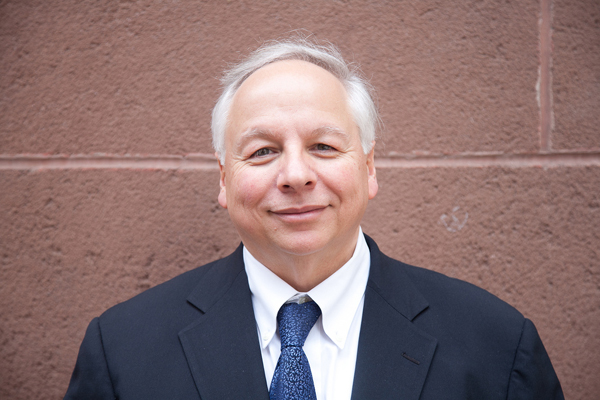
Rick Dimino
Mayors and municipal governments in Greater Boston are taking important steps to address best uses for their city streets, with the fundamental goal of moving commuters more effectively on buses. This leadership at the city level can result in shorter travel times and more reliable service for commuters, and can take us closer to a real Bus Rapid Transit network. There are over 400,000 bus trips each weekday in the MBTA system. Bus Rapid Transit service, or BRT, is common – and popular – in urban environments throughout the world. It can be successful here in the Boston area if we build upon the creative thinking at the local level and support BRT service in few simple ways.
In Massachusetts, most streets are controlled and managed by municipal governments, while the buses are owned by the MBTA or a regional transit authority. City mayors have the authority to repurpose the use of their city roads to potentially create bus-only lanes or, through restrictions on street parking, create an additional travel lane during peak commuting times. These recent actions showing the vision and potential of a BRT network along some locations. A year ago in Everett, Mayor Carlo DeMaria partnered with the MBTA for a pilot program on the Broadway corridor. The city temporarily prevented the use of 130 metered spaces only during the morning commute hours, then set up orange cones and enforced access to this new lane. The trade-off for Everett was the loss of some city revenue from parking meters, but it improved travel time of commuters who enjoyed a faster ride on the bus.
The city of Boston recently tested a similar idea in Roslindale for two days, but the results were clear right away. Commute times were almost 25 percent faster when buses traveled in the pseudo-dedicated lane along Washington Street between Roslindale Square and Forest Hills. A longer pilot program is planned for this spring, and we will be able to see if travel times decrease and ridership grows because of this effort. Also in Boston, Mayor Marty Walsh is improving transit signal prioritization systems along Commonwealth Avenue in Boston for buses.
Careful Changes Produce Big Results
These projects show more than just the relationship between commute times and the use of a dedicated bus lane. They demonstrate that careful changes can produce big results, especially to meet the needs of commuters, businesses and communities outside of Boston’s central business district.
There are three pilot BRT projects planned for 2018, supported by the Barr Foundation. One route will happen in Arlington, an additional pilot for Everett and also a corridor-wide plan through Watertown to Cambridge. These pilot plans will include a temporary dedicated bus lanes, advanced communication to synchronize traffic signals for traveling buses and some changes to station platforms for quicker boarding and disembarking.
These projects may not meet the official definition of “gold standard” BRT service that riders can experience in Europe and Latin America – such as off-board fare collections, permanent right-of way lanes and roadways that prevent any traffic turning in across a bus’s path – but these pilot plan ideas will benefit more than 30,000 bus riders on these bus routes in 2018.
BRT service and a high-performing bus network are necessary to keep pace with the growth of our economy and future transit demand; they are also cost-effective. Best practices of BRT can be tested without the lengthy construction schedule that is required for improvements to subway lines and stations. Dedicated lanes – or at the very least a pilot of dedicated lanes – should be on the agenda of every municipality with a bus route.
Boston’s most recent transportation master plan, Go Boston 2030, included recommendations for BRT improvements such as a focus in the Longwood Medical area for connections to Red Line MBTA stations, Silver Line BRT plans from Dudley Square to Downtown Crossing and improvements in Brighton’s Oak Square neighborhood. If implemented, some of these BRT routes would also help address long standing transportation equity issues.
There is even some consideration of establishing a dedicated bus lane from the area near from North Station to South Station along Congress Street and continuing into South Boston on Summer Street. While this would never be mistaken for a North-South Rail Link, testing a BRT corridor can be explored for thousands of dollars in the immediate future, whereas an underground rail connection needs years of planning, billions of dollars and further study to determine the cost-benefit analysis.
Testing routes with a few orange cones, dedicated bus lanes and a willingness to rethink the possibilities of bus service, we can see some BRT-type routes that would make a difference to commuters at a minimal financial cost to taxpayers. Mayors are leading the way and we should continue to test new ideas for our bus riders.
Rick Dimino is president and CEO of A Better City.