
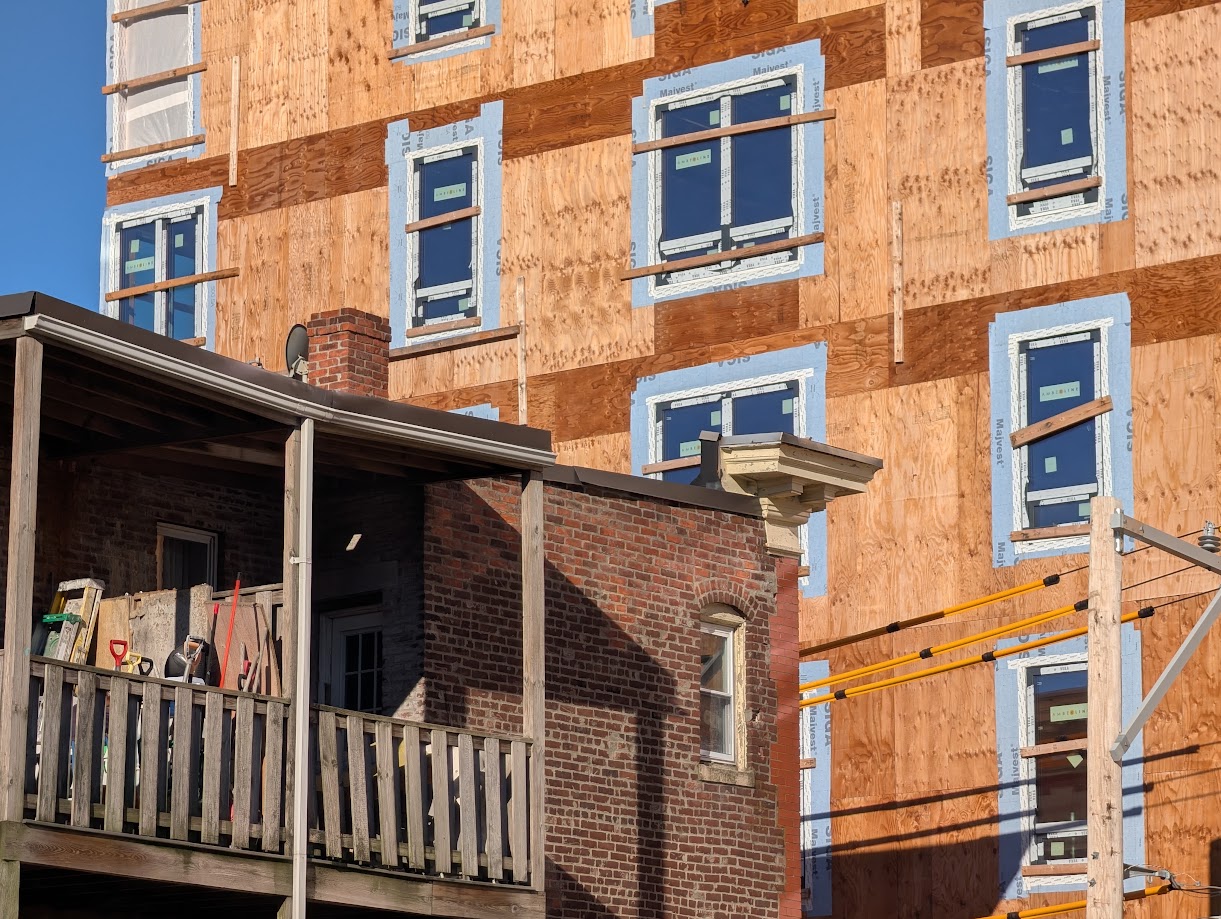
It’s unclear whether Opportunity Zone incentives, alone, can rekindle stalled projects. In Chelsea, officials are also layering in plans for additional incentives. Photo by James Sanna | Banker & Tradesman Staff
Cambridge’s Kendall Square high-tech mecca, an industrial district in East Somerville and vacant parcels next to Market Basket in Chelsea have little in common beyond a 617 area code.
Now the three neighborhoods – and 101 other census tracts across Massachusetts – are poised to be certified as federal Opportunity Zones, designed to spur real estate and business investment in low-income census tracts.
The Healey administration nominated the state’s maximum allotment of 104 tracts, as the federal program prepares to reboot on Jan. 1. Economic development experts are poring over the selections and assessing whether they can move the needle in a far more challenging environment than when the original program launched in 2017.
“Things have changed a lot,” said André Leroux, program director of the MassINC Gateway Cities Innovation Institute. “We were in a low interest-rate environment, construction costs were a lot lower, and it didn’t seem this tool was really necessary to make projects in emerging markets pencil out. Now we are looking for every tool possible to help close the gap.”
Subject to approval by the U.S. Department of Treasury in coming weeks, the new Opportunity Zones will enable real estate investors and operating companies to defer paying taxes on capital gains for five years – and potentially roll over gains into new investments.
Unclear Benefits from First OZ Round
The Opportunity Zone program dates back to 2017, and was designed to provide financial incentives for private investment in low-income neighborhoods, as defined by household income and poverty rates.
As it approaches expiration on Dec. 31, a lack of reporting requirements have made it difficult for researchers to gauge its effects. But some researchers say it tended to sweeten the pot for investors in areas that already were thriving, rather than those most in need of incentives.
“It seems as if a lot of the investment took place in areas where there was already gentrification, or a favorable development climate,” said Tracy Hadden Loh, a fellow at Brookings Metro, a research group for the Brookings Institute.

In Somerville, for example, the original Opportunity Zones included the Assembly Square area, where national retail developer Federal Realty Investment Trust was building out its 5 million-square-foot Assembly Row project. The project includes high-end residential buildings such as the 24-story Miscela apartment tower, which opened in 2021 and currently lists rents starting at $2,850.
“The first round included Assembly Square, which was based upon the 2010 [census] and the old days when Assembly Square was kind of a dump,” said Joseph Darby III, a Boston attorney who represents Opportunity Zone investors. “By 2018, it wasn’t much of a dump anymore.”
This year, Somerville Mayor Jake Wilson renominated the Union Square/East Somerville tract. It includes USQ’s 3.8 million square-foot mixed use development in Union Square, which has completed just one lab building and an apartment tower so far. It also includes the Brickbottom section of East Somerville, and its incipient a life science cluster anchored by the 10 Chestnut lab building that opened in 2022, attracting several Kendall Square researchers and biotechs.
“The city is looking at every tool available to bring about the dense mix of residential and commercial projects the community has envisioned here,” the city’s input form to the Healey administration stated.

Somerville Mayor Jake Wilson renominated the Brickbottom district for another round of Opportunity Zone designation. The industrial district started to attract Kendall Square researchers and biotechs following construction of the 10 Chestnut development in 2022. Photo courtesy of Principle Group and the city of Somerville
Chelsea Layers Financial Incentives
Opportunity Zones on their own may not be enough to move the needle on stalled or potential real estate developments. The city of Chelsea is offering a menu of incentives as it seeks to attract investment.
“It’s not like this alone is going to be a game-changer,” City Manager Fidel Maltez said.
But developer-friendly zoning changes, a recent reduction in the city’s inclusionary zoning requirement for multifamily projects, and additional incentives such as the state’s Housing Development Incentive Program (HDIP) could move projects in the city’s three nominated Opportunity Zone tracts over the finish line.
“We are trying to be as flexible and predictable as possible,” Maltez said.
The city already has begun talks with Demoulas Super Markets about a proposal to build two apartment buildings totaling 162 units on parking lots next to its Mystic Mall shopping center, part of the potential West Chelsea/Beacham and Williams Corridor OZ.
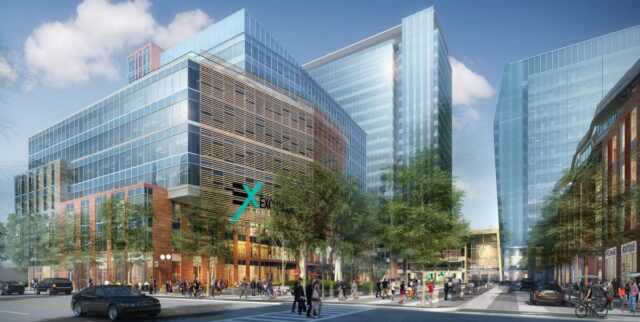
The Healey administration’s nominations for future Opportunity Zones in Boston include numerous stalled real estate projects, including the 1.6 million square-foot Exchange South End lab project in South End. Image courtesy of Stantec
Worcester Bets on Biomanufacturing
Under federal eligibility criteria, Healey could nominate up to 104 of 414 eligible census tracts in Massachusetts.
“Each of the communities has a different aim: maybe it’s residential development, maybe it’s commercial,” said Paul Mathews, CEO of the Worcester Regional Research Bureau. “It depends upon what’s planned and permitted on the municipal level and leverages the program and tax benefits.”
The previous round catalyzed downtown multifamily development near Worcester’s MBTA commuter rail station.
The seven nominated tracts in the next round include an area that has been the focus of Worcester’s attempts to expand its life science industry: the Reactory, a biomanufacturing park built on the former Worcester State Hospital property near UMass Chan Medical School.
“The designation is helpful because we have the Reactory, and that should leverage some activity there,” Matthews said.

Steve Adams
Boston Tracts Include Approved Housing
In Cambridge, Healey recommended Kendall Square and a large section of the Massachusetts Institute of Technology campus, reflecting opportunities for researchers to commercialize developing technologies.
Healey’s nominees for Boston include several areas that include large but delayed development projects, including the Dorchester Bay City project on Columbia Point, the Exchange South End lab development in South End, the On the Dot project on Dorchester Avenue in South Boston and the Blair lot project by Nubian Ascends Partners in Roxbury.
Another new entry is the Newmarket industrial district, where Business Improvement District leaders have sought to attract investment after adding security programs to deal with public drug use and crime.
Healey also nominated the North Brighton neighborhood, where more than 2,500 housing units have been approved, but many remain unbuilt because of rising financial hurdles in recent years.
It wasn’t clear which census tracts were nominated by Boston and Cambridge officials to the Healey administration. Neither Cambridge nor the city of Boston have responded to public records requests from Banker & Tradesman seeking their recommendations.