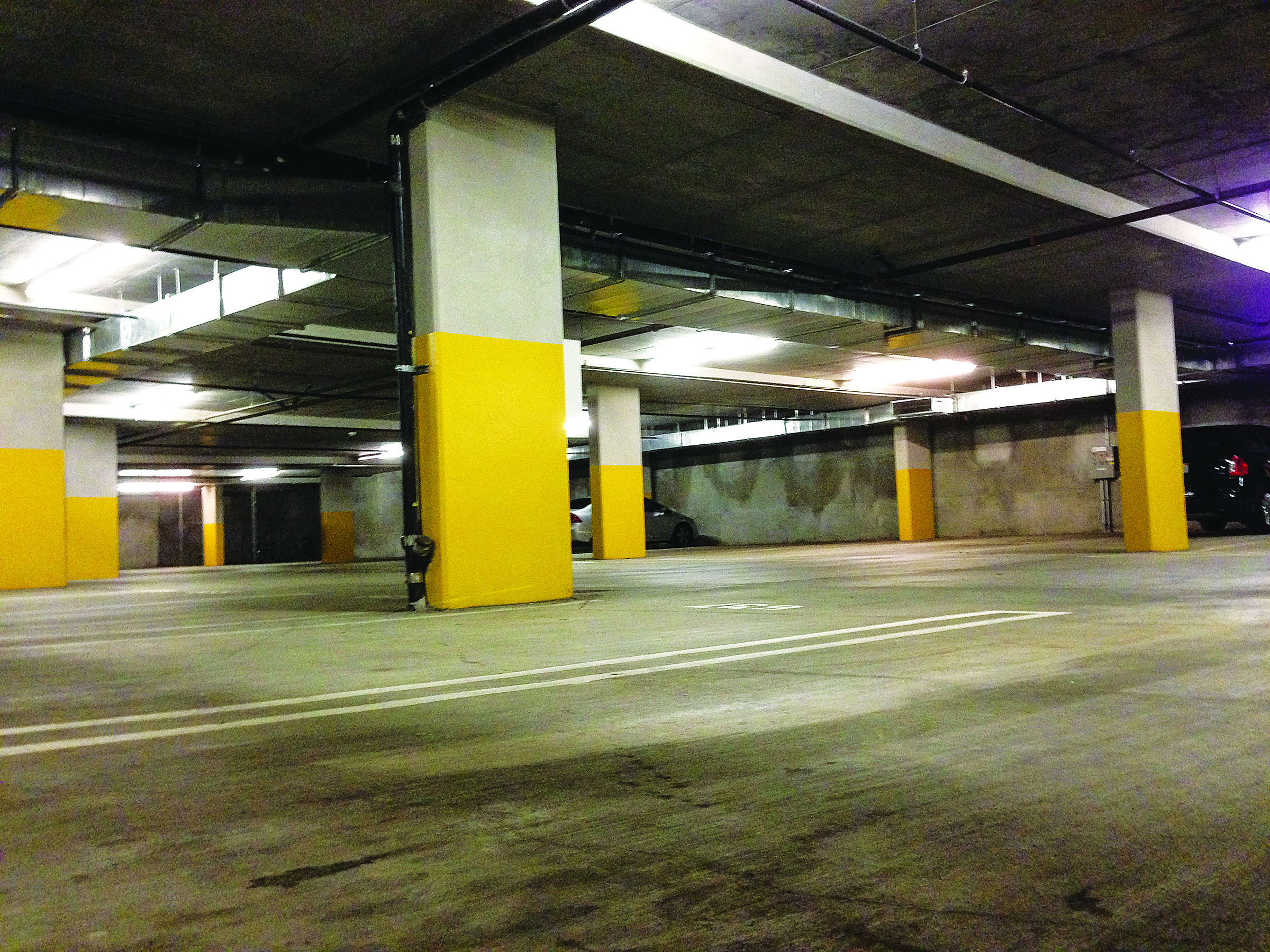
Underground parking can cost up to $100,000 per space on some sites, keeping new housing developments from breaking ground. iStock photo
With estimated costs to build underground parking on some development sites exceeding $100,000 per space, multifamily housing developers have powerful financial incentives to ask for relief from land-use authorities.
In a climate in which many projects struggle to complete financing packages, a growing number of developers are returning to city officials seeking permission to scale back or eliminate on-site parking. And officials appear to be increasingly receptive to the argument.
City Realty Group received approval in December to eliminate 109 parking spaces from Allston Square, a 344-unit development in the Boston neighborhood of the same name, leaving just 38 spaces. The project was approved in 2023 but has faced financing challenges related to site work, including underground parking.
“That has definitely had a positive impact in how [investors and lenders] view the project and how it pencils,” Cliff Kensington, City Realty Group’s chief development officer, said of the reduction.
Another Allston project approved in 2022, the 111-unit 90 Braintree St., is seeking approval to remove 59 underground spaces in favor of a first-floor mechanical stacker system.
And developers of the 300,000 square-foot, mixed-income Drexel Village project in Roxbury are seeking to eliminate a 60-space underground garage in favor of 22 surface spaces, citing significant construction cost constraints.
Affordable Projects Got Relief First in Boston
Led by then-City Councilor Kenzie Bok, now CEO of the Boston Housing Authority, Boston eliminated parking minimums for all-affordable housing projects in 2021. But the city has been slower to extend the same logic to all residential projects, despite recent discussions by the current City Council.
Communities including Cambridge, Salem and Somerville have eliminated parking minimums in recent years.
The debate pits some existing neighborhood residents who fear competition for on-street parking against transit advocates seeking to reduce car dependency, and housing developers looking to control costs.
“The city is trying to drive [parking ratios] down, and the neighborhoods are trying to drive it up. So it’s a little bit of a push-and-pull with the neighborhood groups and the city,” said Joey Arcari, principal at South Boston-based Monarc Development, which acquired the Marian Manor nursing home in South Boston this month for a potential apartment conversion.

Marian Manor. Photo courtesy of EVO Real Estate Group
In seeking parking relief, developers point to proximity to public transit and the city of Boston’s own avowed goals to discourage dependence upon motor vehicles in studies such as the Allston-Brighton Mobility Plan.
Boston city councilors have begun discussions of a zoning amendment eliminating parking minimums for all residential projects.
“This discussion is really about removing a veto point to housing,” District 8 Councilor Sharon Durkan said at a December hearing. “It’s outdated, it’s a one-size-fits-all mandate that slows down the process and stops housing from moving forward.”
Councilors heard four hours of testimony for and against the measure, before referring it for further study.

Developers of the 300,000 square-foot Drexel Village multifamily project in Roxbury are seeking to eliminate an underground parking garage approved under their original plans, citing construction cost constraints. Image courtesy of JGE Architecture + Design and The Architectural Team
Statewide Rollback Sought by Some
In the meantime, a growing movement seeks to roll back parking requirements on a statewide level, including a panel appointed by Gov. Maura Healey to study ways of boosting housing construction.
The Unlocking Housing Production commission endorsed the idea unequivocally, citing research by Metropolitan Area Planning Council that 40 percent of the parking spaces in eastern Massachusetts are unnecessary.
“It has the potential to be impactful across the state,” said Susan Gittelman, executive director of Brighton-based B’nai B’rith Housing, a regional nonprofit developer. Gittelman is a regular contributor to Banker & Tradesman’s opinion section.

Steve Adams
In 2023, California banned parking mandates near transit statewide, while Washington state in 2024 capped most residential projects at a 0.5 spaces per unit. Supporters of such measures argue that market realities will still force developers to build parking – just the correct amount to attract tenants, and no more.
In Massachusetts, the “YIMBY bill” sponsored by state Reps. Andy Vargas and Kevin Honan and state Sen. Brendan Crighton seeks to eliminate parking requirements for residential projects across the Bay State. But it would not apply to the city of Boston, where zoning is controlled under a different state law, Abundant Housing MA Executive Director Jesse Kanson-Benanav said.
Affordable housing developers in Boston celebrated in 2021 when the zoning code eliminated parking minimums for income-restricted projects. They had argued that the requirements hamstrung their ability to complete financing packages, and reflected outdated land-use strategies.
Boston-based Beacon Communities has had success building affordable housing projects with no parking in Pittsburgh, and now is poised to duplicate that strategy in Somerville. The 299 Broadway/15 Temple St. development, located on a former Star Market property, will include 319 apartments, and no resident parking.
“The more space we give up to cars, those are spaces that we’re not providing housing. And in a housing crisis like we’re facing right now, we need to focus on building as many homes as we possibly can,” Beacon Communities CEO Dara Kovel said.