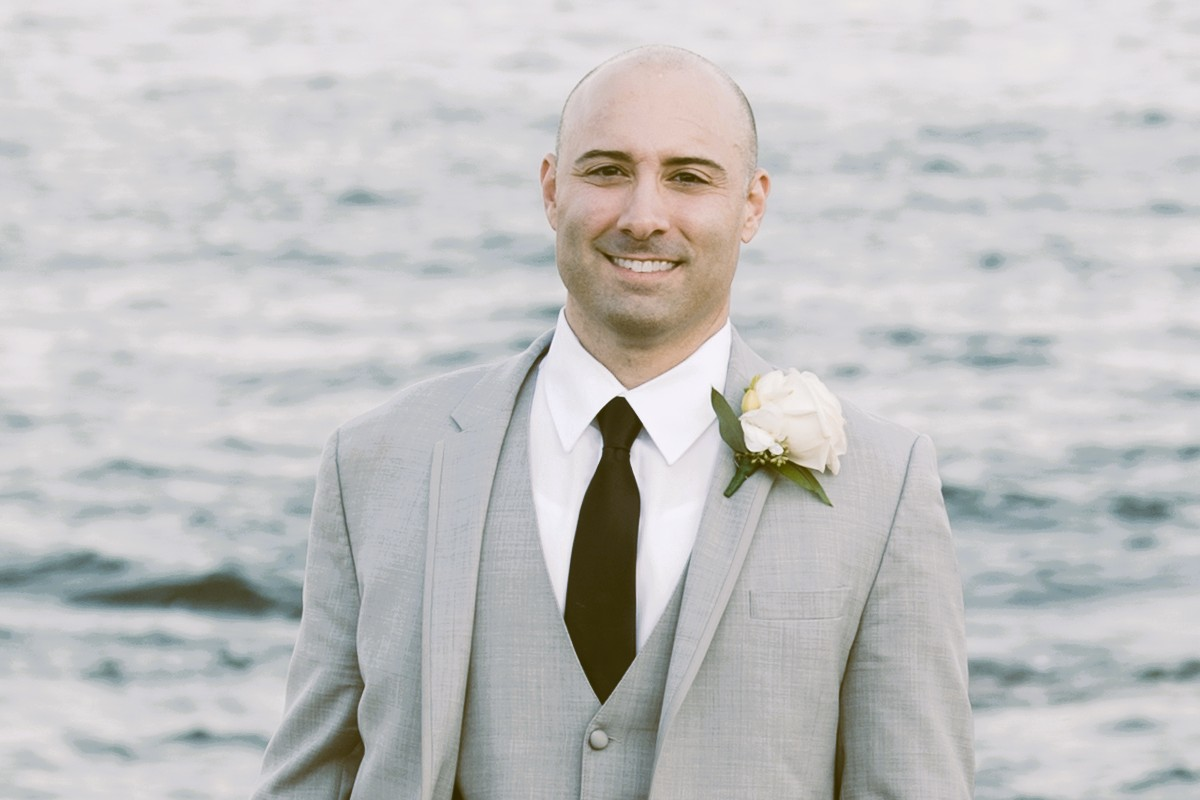
Photo courtesy of Christian Simonelli
Christian Simonelli
Executive director, Boston Groundwater Trust
Age: 47
Industry experience: 27 years
In the 1980s, some Beacon Hill homeowners discovered that foundations were becoming unstable. The culprit: declining groundwater levels in parts of Boston created through filled land, exposing wooden pilings to air and destructive bacteria. Leaders came up with a solution in the Boston Groundwater Trust, which turned 40 this year. The independent agency monitors groundwater levels in the affected neighborhoods through 805 wells. And Article 32 of the Boston zoning code requires that new buildings in the affected areas be equipped with recharge systems that capture precipitation and funnel it back into the ground. Executive Director Christian Simonelli joined the organization in 1999 after studying environmental and civil engineering, and was named executive director in 2014.
Q: During your recent walking tours of Back Bay and Beacon Hill, what did participants want to know about the Trust?
A: A lot of the people there were curious as to the structure and how we were established. We were obviously established by the [Boston] City Council. And where our funding comes from: through the Environment Department and the Water and Sewer Commission. And then it was, “What about my house? Does my house have any history?” And we walked them through all that: the data collection that we have.
Q: What’s the story behind the trust’s governance structure?
A: We were set up as an independent trust because, at the time, the city administration wanted to have an independent agency on the outside collecting the data and taking the readings. And then the trust was reinvigorated in 1997 under Mayor [Tom] Menino. We got some funding from the city, and then in discussions we had with the city, they said, “Since you’re a trust and you’re separate from us, you should file for 501(c)(3) status and allow you to receive donations.” So we did that in the early 2000s and were approved as a nonprofit in 2005.
Q: What are the current requirements for new construction to comply?
A: You’re replumbing your roof drains into an engineered system. You hire an engineer to design a recharge system. The engineer will look at the site, develop a plan, submit those plans to the Boston Water and Sewer Commission, the Water and Sewer Commission will review those plans, provide some feedback, and then approve those plans based on the design. To handle larger storms, the systems are tied into the nearest storm sewer. So if we have a big event, that recharge structure, which is basically a dry well, can’t handle the rain. There’s an overflow that ties it into the storm drain.
Q: What was the impetus for some changes this year in Boston zoning as it applies to properties in the Groundwater Trust Conservation District, the GCOD?
A: We had looked at all the applications that come in for GCOD with the city. The majority of the cases are for people that are just doing substantial renovations, gut rehabs. They’re triggering the Article 32 requirement, but they’re not having an impact on the water levels negatively, because they’re not digging down. It’s not like they’re constructing a whole new building. So, we said we can administratively approve them. They need to have sign-off from the Water and Sewer Commission, and they need to have the engineer sign a no harm certification letter, but we don’t need to send them to the Board of Appeal. So rather than it being a burden to someone to wait all that time, we said, “We can streamline this.”
Now the cases that go before the ZBA are the ones that are going to be paving, digging down or going to be building out. Those are the ones that would allow the opportunity for the public to comment. It was a drum that a lot of the residents had been hitting for a while. Investors want to flip a property and go on to the next one, or somebody says they want to move in here in six months. We heard those concerns, and we made the changes.
Q: Do rising sea levels affect the groundwater levels in the district?
A: We get asked that a lot. It’s usually right along the waterfront, and we see that in our wells that are tidally influenced. But as you get to the other side of the Central Artery, all of that is really confined and we don’t see any evidence of tidal influence. Our biggest concerns are these prolonged periods of drought. At this point in the year [June 25], we should have just over 20 inches of precipitation. We have 11, and a few weeks ago we had just nine. We’ve started to see, over the past five years more, prolonged periods of drought, and there’s less rainfall and snow melt that you have replenishing the aquifer to keep the groundwater table high. The good news is that when we look at the well data, the levels – while they’re down – are not the lowest they’ve ever been. We have fewer leaks in sewers and drains and tunnels than we’ve ever had before.
Q: How many monitoring wells do you have and how are you upgrading the technology?
A: We have 805 wells through the filled land areas of the city. We have some wells that have automated readers that take a reading every day. In addition to the manual readings that are taken six to eight times per year with a probe and measured tape that our field engineers make, we have about half a dozen locations that we’re upgrading to about 30 where we have essentially a cell phone in a well. It’s a little box that sits on top of the observation well, and an automated data logger measures the amount of water. When we have significant snowfall like we had this winter, we’re not physically able to get to the well.
Q: Beyond your recent walking tours of Back Bay and Beacon Hill, what is the Trust planning to commemorate its 40th anniversary?
A: It’ll culminate with an event in the fall where we’ll thank a lot of the people who were responsible for getting this institutionalized. The tours play a big part in letting people know we exist. People are walking on the sidewalk and they don’t know what’s under them. The goal is to really bring the underground to them, show them we have this infrastructure in the filled land areas of sewers and drains and tunnels that needs to remain sound. We’ll have more tours of additional neighborhoods. We’re thinking of the South End, Fenway, Bay Village, North End and East Boston.
Simonelli’s Five Favorite Movies:
- “The Godfather”
- “The Shawshank Redemption”
- “Goodfellas”
- “Jaws”
- “The Empire Strikes Back”