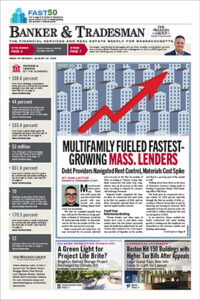
In a sluggish real estate market, where everyone and their brother seems to have refi’d, twice, back when rates were 3 percent, most lenders have been struggling to add more purchase volume to their originations. Has their quest finally led them to resurrect one of the old ghosts of the housing crash – the subprime loan?
Nationally, there have been recent signs of life in the subprime space. Real estate portal Zillow recently reported that more lenders have been offering subprime products in recent months. A year ago, a consumer using Zillow’s online mortgage market who had a credit scores between 620 and 639 (a subprime borrower) received an average of four rate quotes from lenders for every 10 received by prime borrowers (those with credit scores above 680).
This August, subprime borrowers were getting eight rate quotes for every 10 received by a prime borrower.
“Credit remains tight relative to most historic standards. Some market observers argue that the housing market will only sustainably recover once borrowers with riskier credit profiles are again able to access loans. [Our data] suggest that this is gradually beginning to occur,” wrote Aaron Terrazas, a Zillow analyst, summing up the findings.
Fannie Mae and Freddie Mac’s own guidelines have long accepted loans for borrowers with credit scores as low as 620. It’s been lenders’ own caution as they adjust to new regulations that has held the sector back – even though Fannie and Freddie will buy loans with credit scores in the 600s, the average score of their purchases is closer to 740 in recent months, as lenders impose their own overlays.
Non-bank mortgage lenders are beginning to see signs of the change, however. Danvers-based Mortgage Master, which lends in more than 20 states, says it now has access to a variety of products for consumers with scores in the mid-600s, including conforming loans.
“Sometimes it feels like that’s the only kind of loan we’re doing these days,” said Brian Koss, managing partner at Mortgage Master.
Ability To Repay Comes Into Play
Community banks, however, are more cautious. Heightened capital requirements make banks reluctant to keep riskier loans on portfolio, and with the wave of post-crisis forced buybacks still fresh in lenders’ minds – and in some case, still leaving divots in their balance sheets – most community banks are reluctant to play limbo with Frannie and Freddie’s credit limits.
“We prefer to stay in a higher range. If you do loans at the bare minimum, there’s a lot of repercussions. There is some bubbling up of wider FICO lending, but it isn’t widespread. I think with most lenders, their primary focus is to make sure the loans don’t come back to haunt them,” said Jay Tuli, senior vice president at Arlington’s Leader Bank.
Even for more adventurous lenders, compliance difficulties may still be holding back subprime lending. Responding to a recent survey by the Federal Reserve Bank, more than a third of lenders said complying with new ability to repay and qualified mortgage rules meant they were less likely to approve prime mortgage borrowers, and more than half said they were less likely to approve mortgages for jumbo or other “non-traditional” borrowers.
The difficulty often arises in properly documenting an applicant’s income to meet today’s burdensome regulations.
Unlike a few years ago, when overlays were so tight he would have had to turn away customers with anything less than sterling credit, Koss says Mortgage Master can now usually find a product that works for subprime borrowers. But if such a borrower is a small business owner, freelancer or investor, proving that they have the ability to repay the loan can be tough.
‘It’s the people who have done it before who have the most trouble. They’re the ones asking, ‘Why do you want all this stuff?’” said Koss. Often, his loan orginators feel less like they’re preparing a loan file and more like they’re preparing a case file, “in case you get sued,” he said.
Former Fed chair Ben Bernanke admitted this month that his own application to refinance his mortgage was recently turned down, and observers have pointed to the ability to repay rules as the likely reason – though Bernanke can command six figures for a single speech, he’s not getting a regular pay slip these days, and the fitting a loan into ATR guidelines for applicant without a steady salary can be tricky indeed. That sentiment is echoed by the Fed’s survey – 40 percent of lenders said not being able to evaluate the borrower’s current and expected income was the most important reason they won’t underwrite non-traditional loans, and another 55 percent said it was “somewhat” or “very” important.
Email: csullivan@thewarrengroup.com