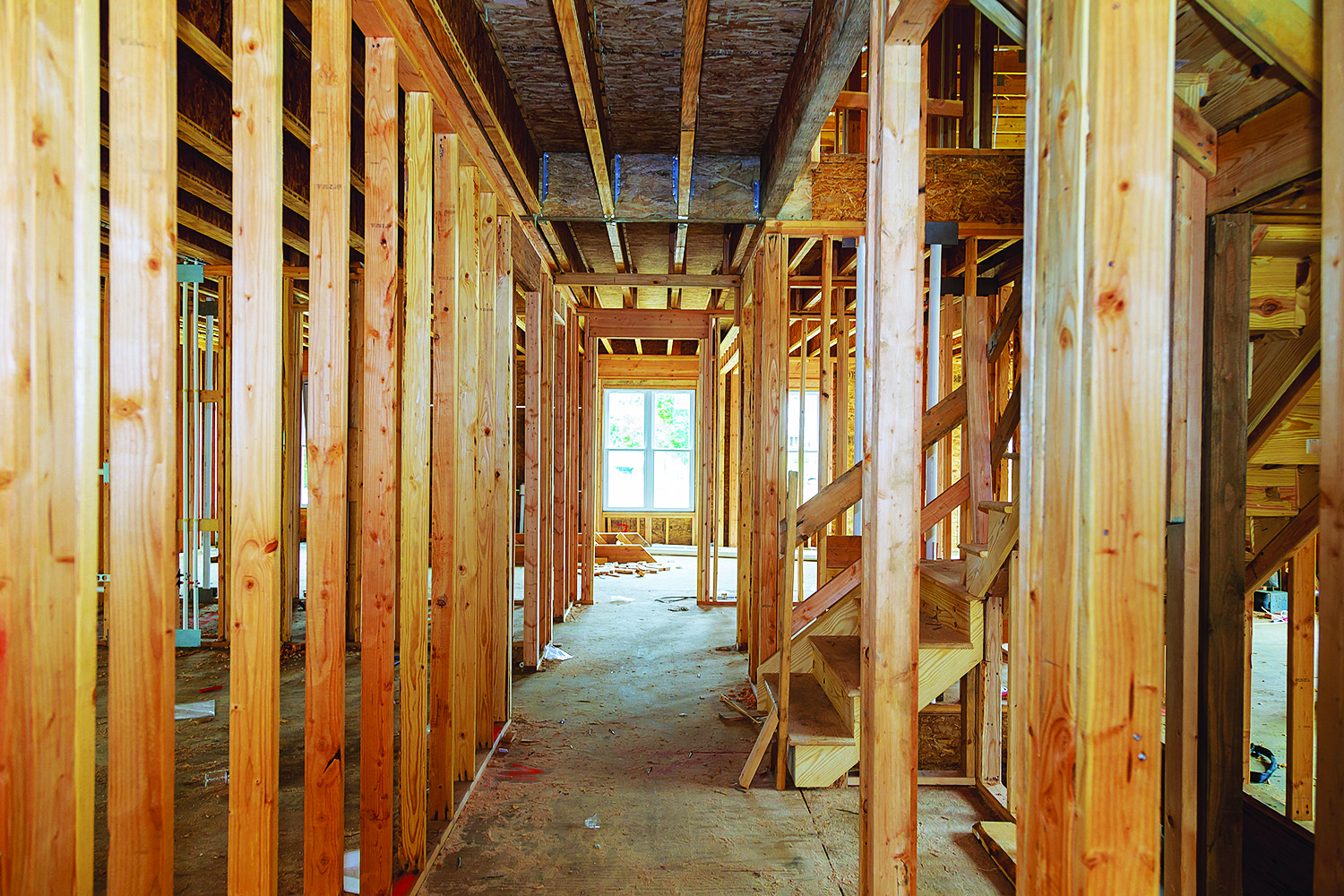
Data from around the world keeps showing there’s light at the end of the housing-costs tunnel – if only we supercharge the construction of new housing. iStock photo
Just call it a tale of many cities.
From the Twin Cities in Minnesota, to the metropolises of Europe, Asia and Africa, rent control has devastated new apartment construction, studies and experience show.
And it’s not just new construction that takes a hit, but also the existing rental inventory as landlords skimp on repairs and take units off the market they can no longer afford to rent at government-dictated prices.
The experience of Minnesota’s two largest cities offers a particularly worrisome cautionary tale for Massachusetts as a campaign takes flight to pass one of the nation’s strictest rent control laws.
Decades of chronic underbuilding in Greater Boston and across Massachusetts have driven apartment rents through the roof.
Yet against all the evidence, rent control activists are quick to insist that capping increases won’t kill new apartment construction.
In fact, supporters of a 2026 statewide ballot question are making the same old claims as they campaign for a rent cap that would extend from Cape Cod to the Berkshires.
Tell that to the residents of Minneapolis and St. Paul, Minnesota.
Twin Cities Show Rent Control’s Impact
St. Paul lowered the boom on landlords in 2022, capping increases at 3 percent in one of the strictest laws of its kind in the country.
By contrast, just across the Mississippi River in Minneapolis, city officials went all-out to boost housing construction, revising land use regulations that barred all new residential construction other than single-family homes, according to a recent Wall Street Journal story.
Guess which city built more housing and saw rent growth slow the most?
In fact, it wasn’t even close.
Apartment construction in St. Paul plunged by nearly 80 percent in early 2022 after the rent-control law went into effect, while developers pulled the plug on plans for new apartment buildings.
Over the next three years, St. Paul rents posted an average annual increase of 1.8 percent, the WSJ reports.
Meanwhile, Minneapolis saw apartment construction explode, with developers lining up building permits for thousands of new units in 2022.
And as for rents? They rose by an annual average of 0.7 percent over the next three years.
New-Construction Exemption No Help
Then there’s Montgomery County in Maryland, where a new rent control law took effect in July 2024.
Developers rushed to line up permits for projects totaling 2,093 multifamily units before the rent cap into place, well-known housing economist Jay Parsons noted in a post on LinkedIn earlier this month. That post leaned on data from the state of Maryland’s Planning Department and research by a Texas multifamily investor where Parsons is a partner, called Waymaker.
Since the new law, it has been a far different story, with building permits issued for 54 new units across the entire county during the first eight months of 2025.
Apparently, the concerns of developers weren’t assuaged by the new law’s 23-year exemption for new construction.
“Every investor is concerned about exit strategy. Who is the next buyer? That 23-year window might be a non-factor operationally for the first investor, but the looming expiration date wards off future investors – thereby reducing the property’s value,” Parsons wrote.
Now compare that to Massachusetts, where the proposed rent control ballot question exempts new construction for just 10 years.
Rent Control an International Failure
Meanwhile, German economist Konstantin Kholodilin published a paper last year in the Journal of Housing Economics which offers evidence that rent control has been a failure in most of the places it has been applied on the planet.
Kholodilin surveyed 100 studies by economists on rent control’s impact on specific factors in cities and countries across the world, including new construction and the quality of the existing stock, according to the libertarian Cato Institute.
Roughly 11 of the studies found that rent caps negatively impacted new construction, one found no difference, while four reported a positive impact.
Kholodilin found the same pattern when looking at studies on the impact of rent control on both the supply and maintenance and quality of existing rental units.

Scott Van Voorhis
The Only Way Out: Build
Contrast that with what’s been happening in several housing-friendly American cities over the last couple of years.
Developers are building so many apartments in Austin, Denver and Phoenix that a remarkable thing has happened.
Units in older, market-rate buildings are now cheaper in all three cities than subsidized “affordable” apartments, Bloomberg reported last week, citing CoStar data.
This follows several years where, most famously in Austin, a welcoming attitude to new homes has driven overall rents down year-over-year for three years in a row across all unit sizes.
To quote Parsons’ LinkedIn post, “The best, most effective and most proven solution: Build, build, build.”
Scott Van Voorhis is Banker & Tradesman’s columnist and publisher of the Contrarian Boston newsletter; opinions expressed are his own. He may be reached at sbvanvoorhis@hotmail.com.