A decade ago, few office tenants wanted to look twice – or even once – at the inner suburbs. Except for some great restaurants and The Arsenal on the Charles, it was a gritty landscape of railroad tracks and worn-out warehouses. Two brokers in our office executed occasional industrial deals, but that was the extent of it.
Somerville, Medford and Watertown now host some of the most convenient and well-traveled mixed-use developments in the region. And while the history and trajectory of these neighborhoods may be different, the overall theme is the same – evolve or become extinct.
Somerville’s Assembly Row is the poster child – long before Legoland and outlets, it was a shipping hub. A century later, it became home to a Ford assembly plant (hence Assembly Row) and then to a grocery distributor. An elevated highway eventually disconnected it from the rest of Somerville and by the late 1970s, it was declared blighted. By the 1980s, it had morphed into a department store-anchored strip mall which was shuttered two decades later. Now it’s where you go to enjoy a cocktail and an IMAX movie – at the same time.
It’s the theme of inner suburban evolution that sparks my conversation with Duncan Gratton, exclusive leasing agent of LINX, (a 185,000-square-foot creative office building in Watertown).
What type of tenant is drawn to inner suburban development?
When we started the project, we targeted companies in Cambridge and along Route 128. But so far, many of the prospects we’ve met are Cambridge-based – which makes sense. Nothing is available there and what is on the market is cost-prohibitive – especially for a younger company. LINX offers proximity to Cambridge and Boston at a more reasonable price. So far, tenants along Route 128 are more “all or nothing.” As in, they either want to move downtown or remain on 128.
How are you tackling the lack of immediate access to public transportation?
Proximity to a T stop is integral for employee recruitment – especially for companies with a younger workforce. We recognized early on that the lack of walkable T access could deter some tenants from considering this project – like it did in the early stages of the Seaport’s redevelopment. Our solution is to run a private shuttle from LINX to Harvard Square and the Red Line. Ten minutes and you are on the T.
When I think of Watertown, I think of Home Depot and Target. Obviously tenants are looking for walkable amenities – like onsite food. What’s in proximity to LINX?
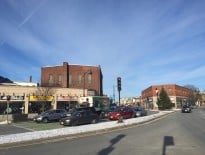
There’s a real authentic feel to the east end of Watertown. Two blocks north of LINX is Coolidge Square with the Town Diner, Uncommon Grounds and Red Lentil. Arsenal Street offers the Aegean, Panera and Branch Line, but there’s much more on the way with the pending redevelopment of the Arsenal project.
Watertown’s not a 24/7 destination yet. But it’s coming. This means it’s still a value for tenants priced out of the Seaport and Cambridge.
Ashley Lane is vice president of research for Cushman & Wakefield in Boston.