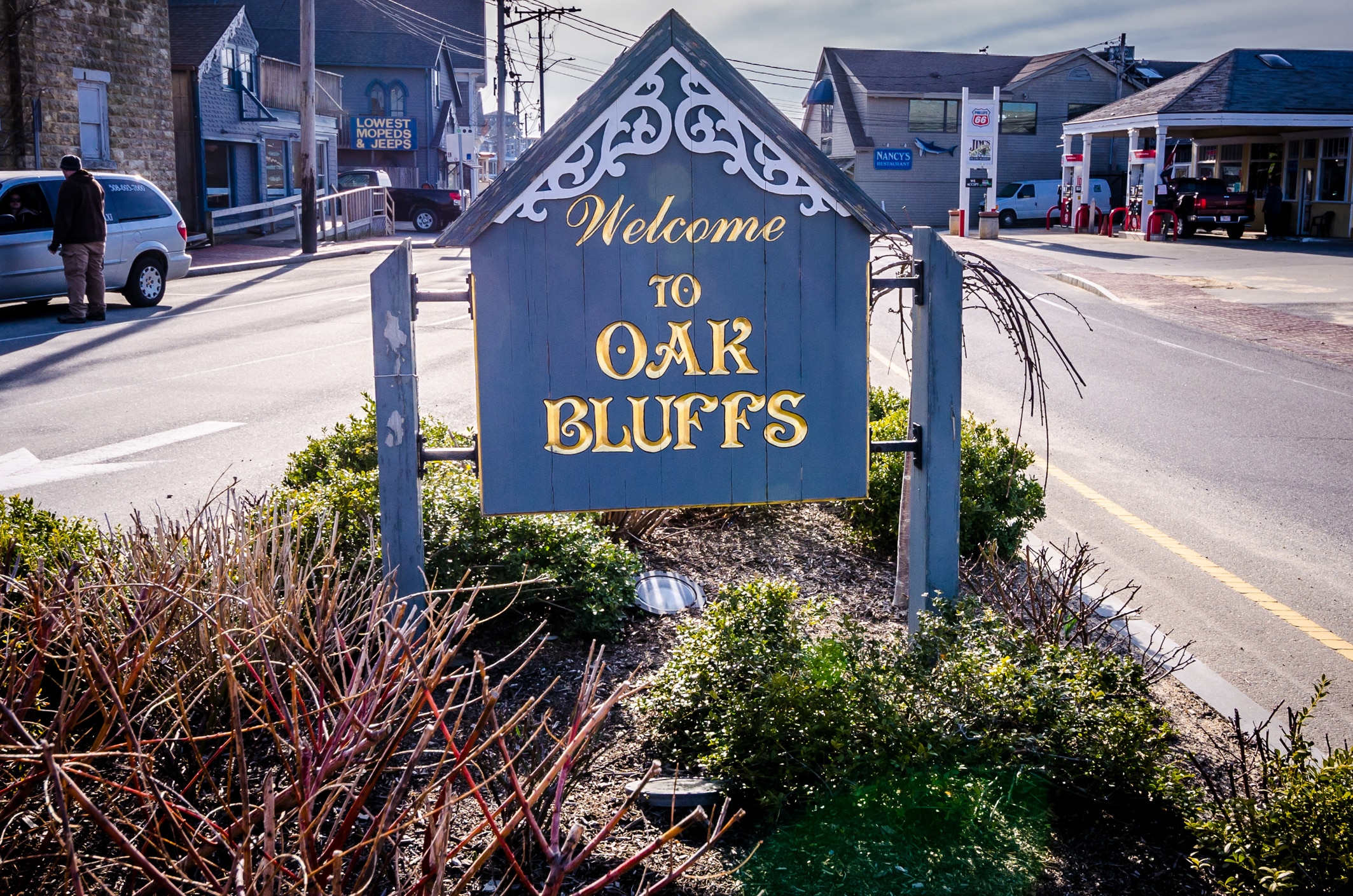
A sign welcomes visitors to Oak Bluffs, on Martha's Vineyard. iStock photo
A new transfer fee on real estate transactions on Nantucket and Martha’s Vineyard would generate over $13 million annually toward housing geared to the shrinking middle-class population, according to a research study.
State Sen. Julian Cyr, D-Provincetown, has repeatedly filed legislation enacting additional transfer fees, with revenues going toward production or preservation of year-round housing. The idea has also featured in debates over a “bold” package of housing legislation promised by Senate President Karen Spilka.
The new fees would generate $9.9 million annually on Martha’s Vineyard and $3.3 million on Nantucket, the Donahue Institute for Economic and Public Policy Research estimated in a study released today.
Researchers found that similar fees in the Hamptons section of Long Island did not have significant effects upon home sales or prices.
“After the fee went into place in 2023, we really didn’t see any dramatic changes in trends, compared with the neighboring towns,” said Kerry Spitzer, senior research manager at the Donahue Institute.
The study focused on the Hamptons because of its similar high-priced housing and seasonal real estate market, and existing 2 percent transfer tax that has been in place since 1999. In 2023, four towns added a 0.5 percent tax toward affordable housing,
The study found “no discernible difference” in transaction volumes and sales prices between communities that adopted the new fee and neighboring communities.
Nantucket already charges a 2 percent transfer fee on most real estate transactions, with proceeds going to the Nantucket Land Bank. On the Vineyard, a 2 percent transfer fee funds the Martha’s Vineyard Land Bank.
The study’s assumptions are based upon a new 2 percent fee on transactions over $1 million on Martha’s Vineyard and 0.5 percent on Nantucket on sales over $2 million.
The study lists several potential uses of the new revenues: acquisition of existing properties, paying homeowners to add deed restrictions for year-round housing, new construction of affordable housing, down payment assistance for public employees and a “lease to locals” subsidy to incentivize owners to rent to local residents rather than tourists.
Nearly 60 percent of homes on the Islands are unavailable for year-round occupancy, according to Laura Silber, island housing planner for the Martha’s Vineyard Commission.
“If we can target capturing units into a permanent year-round inventory before we lose them, in a really intentional manner, we’ll be on our way to stabilizing the situation. The transfer fee would fund that effort in a way no other revenue stream currently can,” Silber said in an email.
The study was commissioned by the Martha’s Vineyard Commission and the Nantucket Planning and Economic Development Commission.