
The Massachusetts innovation economy used to lead the nation. Now, from Silicon Valley to Ohio’s Silicon Heartland, everyone else is eating our lunch. iStock illustration
It’s time for Massachusetts to get its competitive mojo back, and fast.
Silicon Valley has been pummeling the Boston area’s once world-beating innovation economy for years and is now a class of its own.
Now we have a new and surprising rival for tech jobs and investment dollars: the “Silicon Heartland.”
That’s my takeaway from local tech entrepreneur Ian Cain’s provocative report, “Capital Is the Only Magnet,” on the rise and now decline of the Bay State’s once world-beating innovation economy.
Cain is co-founder of QUBIC Labs, a Quincy-based incubator for startups in the blockchain, AI and other tech sectors.
Former president of the Quincy City Council, Cain generated a flurry of headlines in 2024 when he launched a bid for the U.S. Senate, ultimately losing the Republican primary.
Now Cain has launched a high-profile campaign of a different sort. The veteran private equity and venture capital exec is raising the alarm about the Boston area’s decline as a leading center for tech and innovation, while laying out a vision for regaining its preeminence.
How Mass. Used to Win
It doesn’t feel controversial to say Greater Boston’s innovation engine has stalled out. Compare how much tech investment we’re getting compared to Ohio’s “the Silicon Heartland” – the latter is attracting hundreds of billions of dollars in AI and tech money – and you see how we’re in bigger trouble than we realize, Cain contends.
His 22-page report traces the rise of the Boston area as the nation’s leading research hub, followed by a gradual decades-long decline that he contends has begun to accelerate rapidly in recent years.
World War II and the Cold War catapulted Greater Boston from a sleepy backwater to the nation’s innovation engine in the 1950s and 1960s, culminating in the “Massachusetts Miracle” of the 1980s.
Cain outlines how the state’s congressional delegation worked to keep a “firehose” of federal defense spending flowing to local universities like MIT, while a Harvard University professor’s pioneering venture capital firm financed legendary startups like Digital Equipment Corp., founded by MIT researcher Kenneth Olsen.
Half a century later, the Massachusetts economy is stuck in the doldrums. Silicon Valley has long surpassed Greater Boston as the nation’s top innovation hub, and surprising new rivals, like Ohio, have emerged across the country.

A 1959 issue of Greater Boston Business Magazine contained two-page map of the region’s “Golden Semicircle” showing industrial parks and shopping centers springing up around the under-construction Route 128 highway. Image courtesy of the Boston Public Library/Digital Commonwealth | Public domain
We’re At a Disadvantage
We had a natural advantage over other states 70 years ago, when it was far harder to communicate over long distances. All those scientists at Harvard and MIT had to be in the Boston area to work together.
Today’s technological revolution is rewarding different advantages, Cain says.
The Buckeye State has some of the nation’s lowest electric rates, far less onerous taxes for businesses and a congressional delegation that parlayed billions in federal funding into a growing tech and AI sector that is attracting massive new investment.
Massachusetts has some of the highest electricity rates in the country, is actively deterring investment in new AI infrastructure and a tax structure that deters innovation by taking a big bite out of the check when startup founders decide to sell.
The Bay State needs an all-hands-on-deck campaign by elected leaders and university and corporate leaders, Cain argues in his report, which has sparked comments from everyone from a member of the congressional delegation to local tech entrepreneurs.
“The data is clear,” Cain writes. “Boston’s innovation economy is in decline relative to its competitors, and the decline is accelerating.”
Not Many Are Listening
Some in power in Massachusetts, at least, appear to be listening.
In a post on LinkedIn, Congressman Jake Auchincloss noted he had read Cain’s call to action “end to end.” The Newton Democrat called for a separate effort, similar to the broader one envisioned by Cain, that would focus solely on “biotech economic development, which has a massive jobs multiplier.”
Elton Lossner, co-founder and chief operating officer at Hazel, an AI firm that works on public procurement, noted that he recently spoke with other company founders in Massachusetts about where they would look to build in the future as their firms expand.
They all talked about New Hampshire or Maine as possible locations.
“Massachusetts isn’t part of the conversation anymore,” Lossner wrote. “The state is actively hostile to new business.”
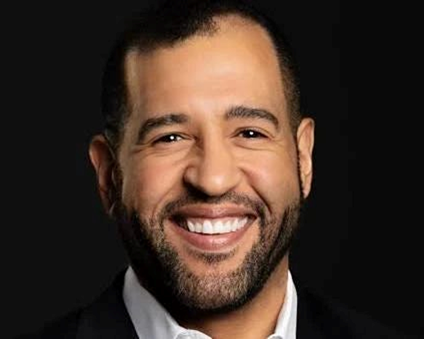
Ian Cain. Courtesy photo
Cain’s Prescriptions for Massachusetts
In order to regain its mojo, Massachusetts should take a look at Ohio’s playbook, which has helped it capture hundreds of billions in private and federal investment in cutting-edge tech manufacturing and AI data centers.
Ohio’s congressional delegation worked together to bring home $7.8 billion in CHIPS Act funding during the Biden administration, which it has parlayed into Intel’s $28 billion investment in two semiconductor fabrication plants.
There are also now roughly 100 data centers under construction or in the works, including a $500 billion complex for OpenAI in southern Ohio, about 60 miles outside Columbus.
Ironically, Ohio’s playbook is similar to the one Massachusetts used back in the 1950s and 1960s, when Route 128 was the nation’s tech mecca.
“Ohio’s transformation into the ‘Silicon Heartland’ did not happen because someone launched an accelerator in Columbus,” Cain writes. “It happened because coordinated capital at scale, tens of billions of dollars, was deployed with political alignment across federal, state, and private sectors.”
But replicating it could prove particularly challenging for the Massachusetts congressional delegation and other elected leaders, not to mention university chiefs.
What Can Be Done?
The most obvious barrier: To have any chance of wringing more dollars out of the federal government, the state’s congressional delegation would have to modify its approach to the Trump administration or, failing that, pray that Democrats take Congress and the White House in 2028.
“The federal dollars that built Route 128 and are building the Silicon Heartland came through an aligned political apparatus,” Cain writes. “The Massachusetts delegation is currently positioned to defend against cuts, not to compete for transformative investment. Whether this requires bipartisan outreach, strategic alliances, or simply a different theory of power, the current approach is producing declining returns.”

Scott Van Voorhis
At this point, that may be an impossible task. That said, Jason Kelly, co-founder and CEO of Ginkgo Bioworks, noted, in response to Cain’s paper, that there are more targeted initiatives the Massachusetts congressional delegation could undertake.
For example, the state’s delegation could throw its support behind a bipartisan bill that would subject deals by American companies with the Chinese biotech industry to federal scrutiny and push back against offshoring.
The state’s all-Democratic leadership team would also have to take a look at the Millionaires Tax, estate tax, and other levies aimed at the rich that arguably make Massachusetts less competitive in attracting or keeping startups.
“The founder who sells a company for $10 million in Massachusetts owes approximately $860,000 in state taxes,” Cain writes. “The same founder in Florida, Texas, or New Hampshire owes $0.”
“The message to founders,” Cain writes, is “unmistakable: Build here, but sell somewhere else.”
Scott Van Voorhis is Banker & Tradesman’s columnist and publisher of the Contrarian Boston newsletter; opinions expressed are his own. He may be reached at sbvanvoorhis@hotmail.com.