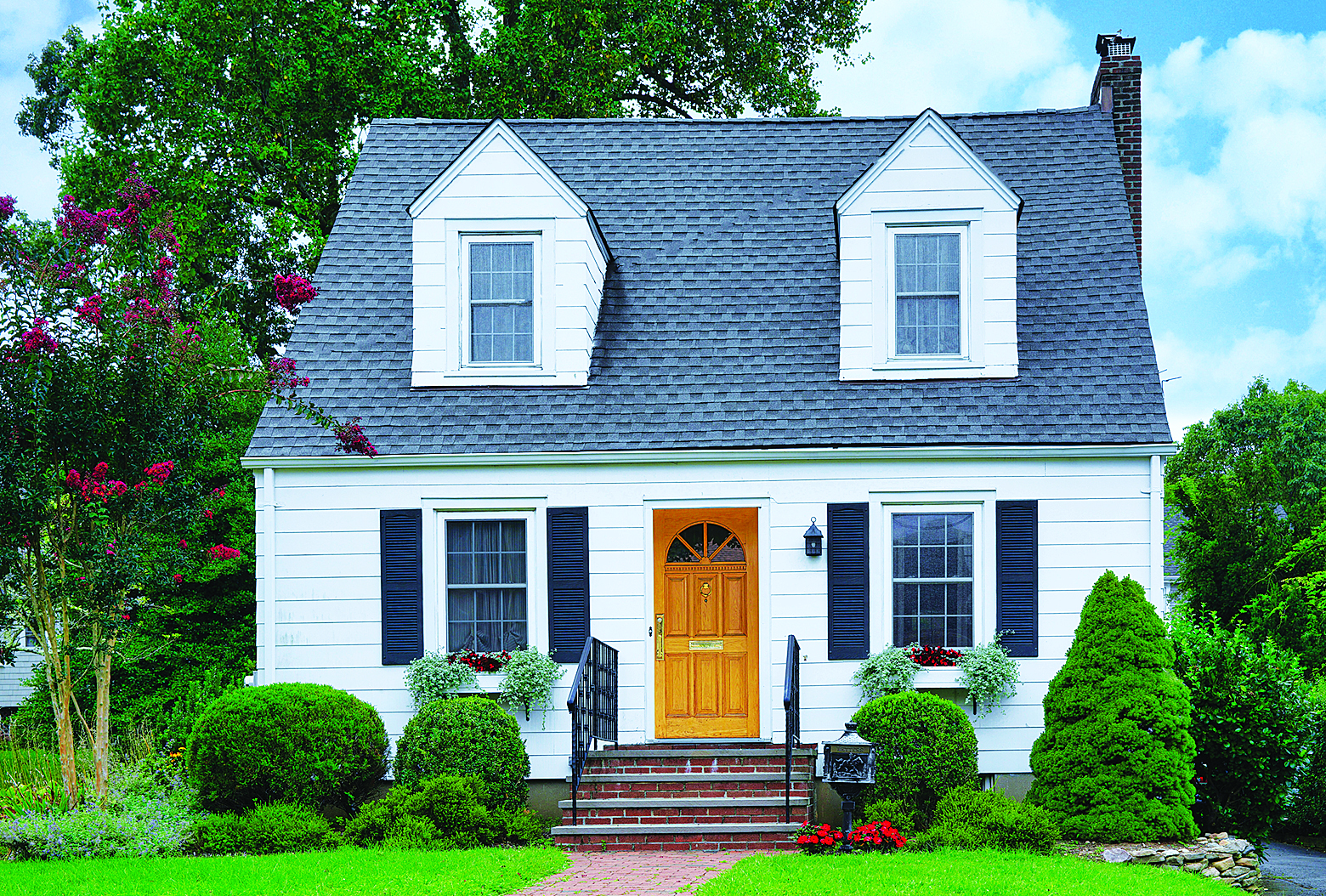
Small single-family starter homes would fill an important role in the market, and help get Bay Staters onto the property ladder. A proposed ballot question seeks to knock down big barriers to building them. iStock photo
Like many of her liberal and progressive counterparts in New York, California, Hawaii and Rhode Island, Gov. Maura Healey has taken to preaching the YIMBY Gospel of build, build, build, arguing that only by boosting housing supply can costs be corralled.
“The problem is we haven’t been building homes since the ’90s,” Healey said in her State of the Commonwealth speech last month. “That’s why prices and rents are so high. There aren’t enough homes to go around. So here’s the plan: build more and build faster.”
Yet at least in Massachusetts, there is a little-explored paradox at the heart of efforts to lower prices and rents by boosting construction of new housing.
Healey and other elected leaders love to point to runaway home prices to drive home both the urgency of the housing crisis and the need to ramp up construction.
However, Healey, like other Massachusetts governors and legislative leaders of both major parties over the years, has done little to boost the actual supply of smaller, more moderately priced single-family starter homes, and bring prices down.
The Politics Aren’t Good
Just take the Healey administration’s $5 billion-plus Affordable Homes Act.
You wouldn’t know it from all the rhetoric coming out of the Healey administration – including the slogan “More Homes, Lower Costs” – that the bill, with maybe a modest exception or two, has little to do with spurring single-family construction.
In fact, the vast majority of the money in the Affordable Homes Act will go towards spurring construction of new affordable apartments, or preserving already existing affordable rental units, and not single-family starter homes.
But if you think our pragmatic progressive governor, or her three, conservative Republican challengers, will suddenly recognize this gaping hole in the state’s housing production strategy, and rush to fill it, you would be sorely mistaken.
Here’s why: Both Massachusetts Democrats and Republicans would face backlash from die-hard supporters if they were to push hard to really ramp up single-family home construction.
Environmental groups, a significant part of the Dems’ base, hate single-family homes. And, for Republicans, it’s conservative activists who are opposed to state efforts to roll back onerous local zoning regs that keep the suburbs off-limits to newcomers.
The 5,000-Square-Foot Solution
Still, as next fall’s election looms, candidates for governor will find it increasingly hard to ignore the disappearance of the once-ubiquitous single-family starter home.
Andrew Mikula, a housing researcher, is leading the campaign for the statewide ballot question, Legalize Starter Homes. The proposal appears likely to clear some final procedural hurdles, and go before voters this November.
If it were to pass, the Legalize Starter Homes ballot question would stop cities and towns from deploying all-too-common mandates that all new single-family homes be built on 1-acre or larger lots.
It’s fairly modest as zoning reforms go, aiming to let single-family homebuilding return to something like the traditional roots that gave us bungalows, ranches and Capes.
It seems fairly modest as zoning reforms go, but it would give developers the flexibility to once again bring back the bungalows, ranches and Capes that built the modern American suburb. Cities and towns could still require minimum lot sizes of 5,000 square feet, but not the 43,000-square-foot-plus, 1-acre-and-up minimums that are the standard now.
No wonder young professionals are fleeing Massachusetts to states like Florida and New Hampshire, where simply buying a detached home is not such a herculean task. The equivalent of the population of Springfield and most of its biggest suburb – or 182,000 people – have moved out of the Bay State since 2020, according to a new Pioneer Institute report.
The ballot campaign’s hope is that, by making it possible to build modest homes on modest lots, developers don’t have to build McMansions just to justify the cost of a 1-acre lot. Instead, the cost of that acre could theoretically be split among eight, 5,000-square-foot lots plus a little left over.
Healey Dodges, GOP Candidates Stay Silent
It will be highly interesting to see whether the candidates back or oppose the ballot question, or attempt to dodge the question altogether.
So far, it’s the latter.
A spokesperson for Gov. Maura Healey said, in an email, that the administration is “reviewing the details of the ballot question. Governor Healey supports efforts to make it easier and faster to build more housing to lower costs.”

Scott Van Voorhis
I sent a follow-up question asking about the timeline for the governor’s decision on whether to endorse the starter home ballot question, but did not hear back by deadline.
Spokespeople for Republican candidates for governor Mike Kennealy and Brian Shortsleeve also did not respond by deadline to my same question.
I am hoping the candidates disprove my theory and start talking about the need not just for more housing, but specifically for single-family starter homes.
Better yet, it would be great to see at least one of the candidates for governor endorse the starter home ballot question.
But I am not holding my breath.
Scott Van Voorhis is Banker & Tradesman’s columnist and publisher of the Contrarian Boston newsletter; opinions expressed are his own. He may be reached at sbvanvoorhis@hotmail.com.