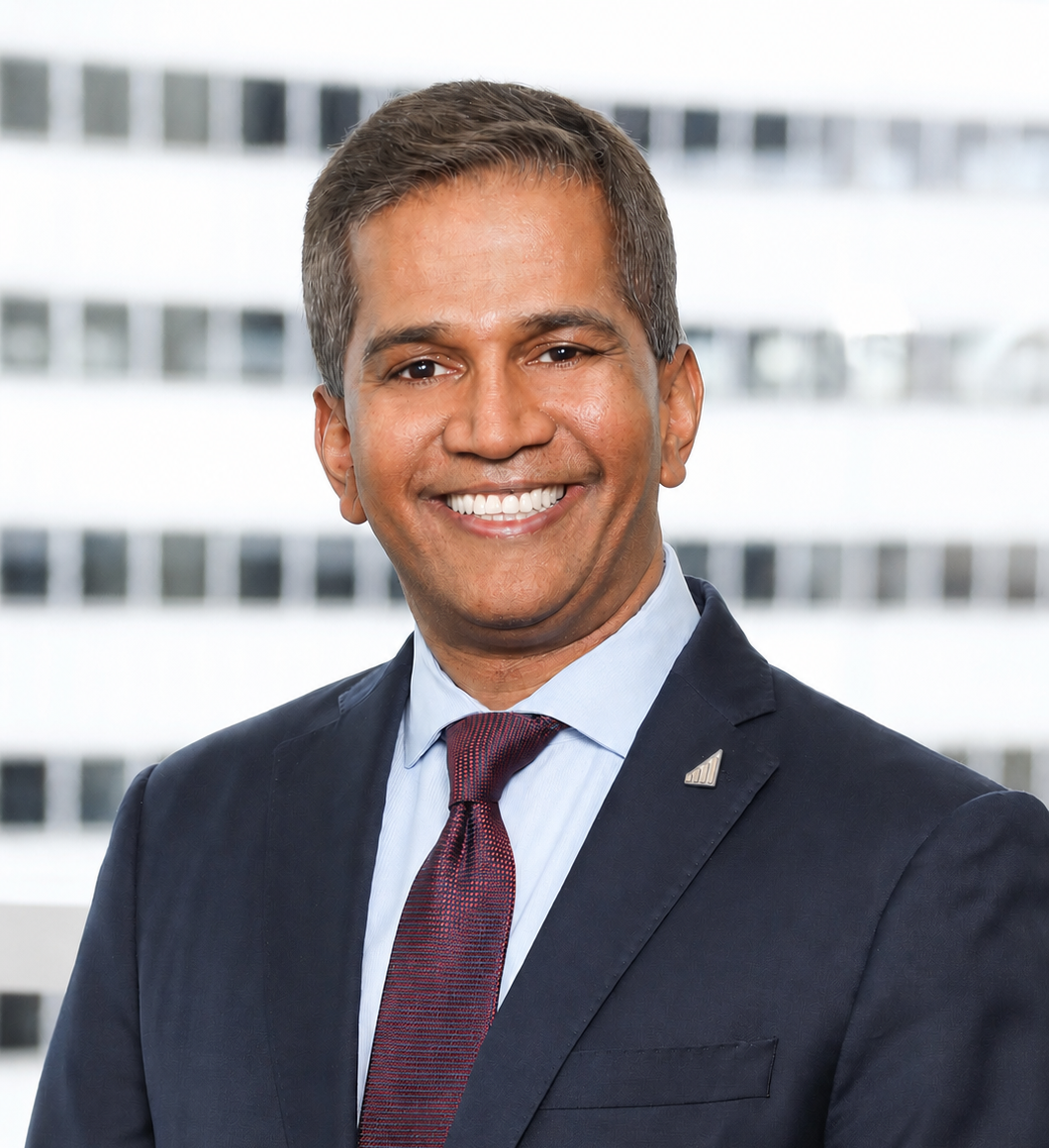
Photo courtesy of First County Bank
Nitin Mhatre
Chief Executive Officer, First County Bank
Age: 55
Industry experience: 31 years
Nitin Mhatre’s jumping from a $25 billion bank to a $2.3 billion bank after leaving Berkshire Bank following its merger with Brookline Bancorp. The attraction of the move, which also sees him relocate from Massachusetts to Connecticut? New ways to have a community impact as CEO of Stamford, Connecticut-based First County Bank, a more agile organization and the chance to build up the bank’s capabilities – something he called “fun.”
Mhatre got his start at Citibank in 1996, rising through the ranks over 10 years to head up what was then a $17 billion retail home equity business. Before becoming Berkshrie’s CEO in 2021, he spent 12 years at Connecticut-based Webster Bank as head of consumer finance and enterprise analytics, and then executive vice president of consumer and business banking.
Q: What led to you leaving Berkshire and what stood out about the opportunity to join First County
A: I was looking for an institution where I would feel that there is a tremendous alignment with values. I really enjoyed my spins at Webster and Berkshire Bank and both are very values oriented institutions. Speaking with First County and its board and some members of the management, and I also did my own kind of mystery shopping and meeting with some of the folks in the branches before I accepted this offer, and I felt like there was a perfect alignment with values. It is a very purpose-driven institution that has been around for almost 175 years. The bankers are very values guided, and they’re incredibly community dedicated. Many of the folks have been working with FCB, some of them for over 40 years. It really just feels like they enjoy being part of this institution, because they feel like they’re better connected with the community.
This is also a mutual bank structure, which is different than my previous bank that I worked in. I think that’s interesting in so many ways, because now you’re really entirely focused on colleagues, customers and communities, and not having to worry about shareholders and investors and activists and all of that stuff. Plus, all of the bank’s profits are reinvested back into its stakeholders, as opposed to giving back to shareholders. So, I think that’s exciting. The opportunity to come back to Connecticut and make a more direct impact in Connecticut and Fairfield County was also, personally, very gratifying for me. For all those reasons, it felt like this is the right place where my experience and passion and purpose intersect really well.
Q: What are the challenges when moving from a larger institution to a smaller one and how will your experience at a larger institution help you at First County?
A: I think for me, that has been an ongoing journey. I started at Citibank, which was back then, at $2.2 trillion bank. When I joined Webster, it was about $12 billion [in assets]. By the time I left, it was $35 billion. Berkshire, similarly, was $12 billion. By the time I left, it was $25 billion. Now First County is about $2.5 billion. So, to your point, it is a smaller institution by size, but I’m really more focused on the impact it makes in the communities.
The nature of the bank being mutual and the size lends itself to being more focused and more connected with the communities. In the last two weeks that I’ve been here, I’ve been meeting with various community organizations and partners, and not-for-profits, and everyone, to a person, would talk about how they’ve known First County Bank forever, some going back multiple generations. They say, “Oh yeah, First County Bank was my grandmother’s bank” and all of that stuff. I think that connectivity is solid, and deeper than all the previous institutions I’ve been to, because it’s in a smaller geographic area.
On the professional side, it always happens, the linkage between decision making and the outcomes is much more direct in a smaller institution. I think larger organizations, just by size and nature, become more bureaucratic, and there’s little bit of the red tape that comes in and silos that get built. In an organization this size, I think the decision-making and outcomes are much more direct and, to that extent, the impact that you can make through your team is much more direct. You’re more agile.
I think what may be an interesting challenge for me to grasp and grapple with is some of the infrastructure that you would take for granted in a very large institution may or may not exist. So, then I have to think about, how do I use my experiences to upgrade that infrastructure so we ready for the next 175 years, and what can we do for the next five to 10 years to build that? That’s actually fun. I enjoy that, and I think the teams will enjoy being part of that journey. Yes, it is a different size, but I think in terms of the connectivity with the community, the potential to make impact is actually better. I think where we have an opportunity potentially to do better is to upgrade some of the infrastructure and ability to serve clients even better. Investing in technology, investing in the data platforms will be crucial.
Q: How do the Massachusetts banking market and the Connecticut banking market compare to one another?
A: The high level both, in my view, are very competitive and very sophisticated markets. Connecticut is slightly different. I was at Webster for a long time, 12 years, so I know the market really well. I think Connecticut has – at least it feels like – a higher concentration of community and mutual banks as compared to Boston. All of them have, in different shapes and forms, a deep local dive where those relationships and trusts are built, whereas Boston has higher concentration of larger regional banks and national players, along with some tech-driven ecosystems. That’s the biggest difference. Where Connecticut banks can succeed, maybe a little differently or better, is by having that consistency and having that community engagement and delivering more personalized solutions for your bankers. That’s why First County Bank is well positioned, because they have been doing this in different shapes and forms for 175 years.
Mhatre’s Five Favorite Podcasts
- Harvard Business Review’s “Ideacast”
- Backbase’s “Banking Reinvented”
- Shankar Vedantam’s “Hidden Brain”
- Steven Bartlett’s “Diary of a CEO”
- McKinsey & Company’s “The McKinsey Podcast”