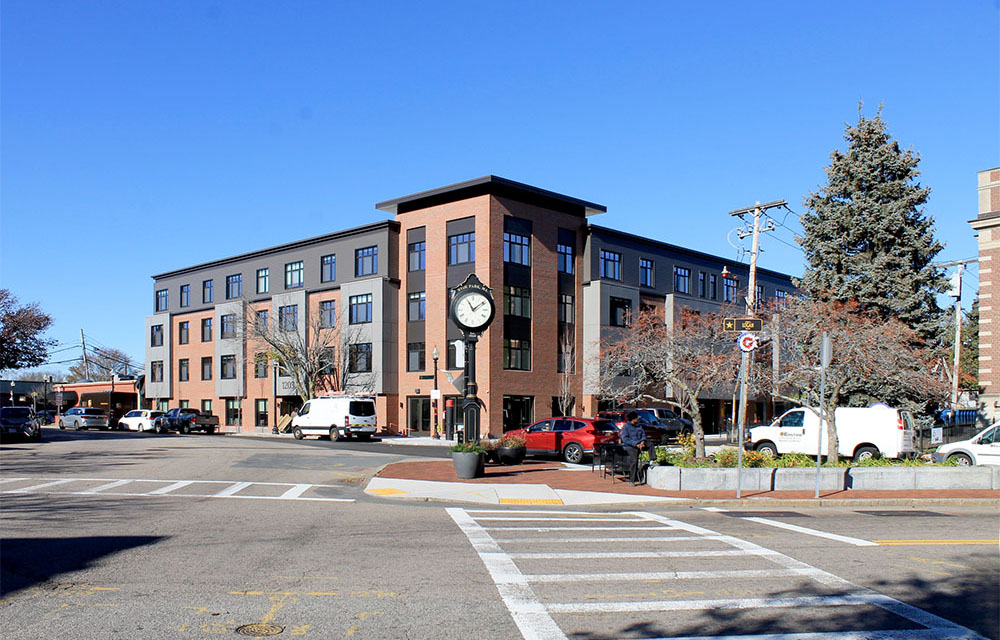
Logan Square Residences in Hyde Park includes 63 affordable one-bedroom apartments for adults aged 55 and older. Photo courtesy of JGE Architecture + Design
Massachusetts is fortunate to have forward-thinking leaders in city and state government who understand the urgency of creating more affordable housing. That leadership has helped cultivate a strong ecosystem of developers, designers, public agencies, and community advocates who share a common goal: building housing that serves residents who need it most.
But even with that shared commitment, affordable housing projects are becoming increasingly difficult to deliver.
Rising construction costs, complex regulatory frameworks, robust sustainability targets and shifting market forces can quickly make projects financially infeasible. Each requirement may be well intentioned, but together they can push projects beyond what the economics of affordable housing will support.
To keep projects moving forward, the industry must think more flexibly about how these requirements interact.
Affordable housing cannot be approached with a one-size-fits-all framework. Some requirements may need to operate on a sliding scale depending on project type, market conditions or external pressures. For example, when unexpected factors such as tariffs or supply chain disruptions increase construction costs, it may be necessary to reconsider other regulatory pressures in order to maintain project viability.
Early Engagement Reduces Pitfalls
Creating more opportunities for dialogue between the development community and policymakers is also essential.
At JGE Architecture + Design, we believe bringing planning officials, housing agencies, financial partners and developers together earlier in the process helps identify challenges before they become roadblocks. When key stakeholders are aligned early, projects can move through approvals more efficiently and avoid costly redesigns later.
Equally important is discipline during the design process.
Affordable housing projects benefit from value engineering from the beginning, not as a last-minute effort to cut costs, but as a strategic framework guiding decisions from day one. Design teams must understand the economic realities of a project and prioritize solutions that support both quality and financial viability.
While thoughtful architecture remains important, the primary objective must always be delivering homes that are durable, functional and economically achievable. That means selecting materials that balance aesthetics with longevity and cost-effectiveness and designing buildings that fit naturally within their neighborhoods without introducing unnecessary expense.
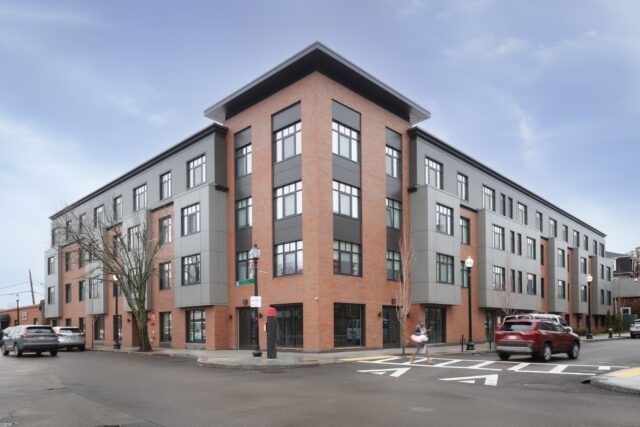
Located near municipal and civic institutions, the Logan Square Residences provide 55-and-over residents with connections to activities that support independence. Photo courtesy of JGE Architecture + Design
Revitalizing Hyde Park’s Logan Square
Logan Square Residences in Boston’s Hyde Park neighborhood illustrates how these principles can come together.
The development introduces 63 affordable one-bedroom apartments for adults aged 55 and older, along with ground-floor commercial space and a range of community-oriented amenities designed to support active, connected living. The project replaces a previously underutilized corner of Logan Square with a vibrant residential environment that strengthens the surrounding neighborhood.
The need for this type of housing is significant. Hyde Park currently has only 7 percent of its housing stock classified as income-restricted, compared with 10 percent in West Roxbury and 21 percent in Jamaica Plain, highlighting the neighborhood’s longstanding shortage of affordable homes.
Completed this winter after design began in 2021 and construction started in fall 2023, the 4-story affordable senior housing community was carefully planned to reflect both its neighborhood context and the specific needs of older residents.

Jonathan Garland
The building’s red brick masonry facade reflects the architectural character commonly found throughout Boston, further contextualized as a natural complement to Logan Square. Durable materials provide texture and visual depth while remaining practical from a construction and maintenance standpoint.
Designing for the daily lives of residents was equally important. Shared spaces such as the community room and lounge encourage social interaction, while a landscaped central courtyard provides a welcoming outdoor gathering place. Located near the Hyde Park Municipal Building, YMCA, public library and transit access, the building allows residents to remain connected to neighborhood resources and daily activities that support independence and well-being.
Logan Square Residences was also designed to meet Passive House certification standards and Boston’s Zero Emissions buildings requirements, creating an all-electric, high-performance building that reduces energy consumption while enhancing resident comfort.
Ultimately, the success of affordable housing depends on practical solutions. With thoughtful design, early collaboration and flexibility in how projects are delivered, we can continue building housing that strengthens communities and supports residents at every stage of life.
Jonathan C. Garland is president and founder of JGE Architecture + Design in Boston.