Photo courtesy of Beacon Communities
Dara Kovel
CEO, Beacon Communities
Age: 56
Industry experience: 35 years
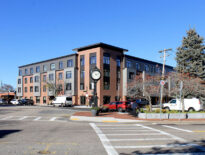
As a former Star Market property sat vacant in high-priced Somerville and financial hurdles delayed redevelopment, Beacon Communities stepped in to join a development team that’s creating 319 housing units in a mixed-income project at the 299 Broadway property. Dara Kovel was named president of Beacon Communities in 2015 and made CEO in 2019, where she oversees the company’s wide-ranging activities in the affordable housing industry. Kovel worked for developer Jonathan Rose Companies and the Connecticut Housing Financing Authority before joining Boston-based Beacon Communities in 2015.
Q: When did Beacon Communities join the 299 Broadway project?
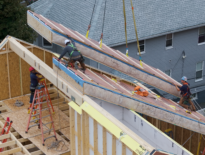
A: We’ve been working on that since late 2023. What happened in Somerville was that, with the soil conditions and the need for parking, a market-rate deal there turned out to not be financially feasible given construction costs and interest rates right now. And so, we were brought in to partner with Mark Development and Samuels & Associates, and to build 115 [income-restricted] units. That is the affordable component, and they are building another 175 units. So, we were able to take some of the risk away from the larger market-rate development, and now we’re going to have this amazing mixed-income community. I drove by it this morning. We’re building no parking for it. And that was, in fact, a differentiator of what makes things feasible. Across Boston, there’s been basically a freeze on development because of construction costs and interest rates. Obviously you need to provide parking for residents. But there’s such an incredible affordable housing crisis, and if you’re marketing a high-quality new unit at 50 or 60 percent of area median income, people will take that housing any day of the week, whether or not it has a parking space. We’re doing site work and then the two buildings will start to come out of the ground over the next six months.
Q: Beyond interest rates and inflation, what are the chokepoints in affordable housing financing right now?
A: Those are huge, obviously, and when you have a global oil crisis, that makes for skittish contractors and investors and lenders, so that does not make our work any easier. Much of the challenge that we face is certainly on zoning and related to finding the right site, getting it approved, and getting support for it. We face that in all of the eight states that we operate in, more so in some states than others. This may be a well-kept secret, but we have been very fortunate that at the federal level, in spite of other changes and cuts, affordable housing has really prospered last year, when what was called the Big Beautiful Bill passed in July. There was a change in how the tax-exempt bonds are being calculated, and that increased the ability to issue tax-exempt bonds all across the country by a very large margin. So that gave us more access to low-income housing tax credits. So that’s amazing. The ROAD to Housing bill is currently being debated in Congress, and should make it to the president’s desk, and that has many provisions in it that are supportive to affordable housing. But even with that increase in resources, we have to find the investors and lenders, and those still can be a challenge given the uncertainty of the marketplace.
Q: What zoning reforms help affordable developers in Massachusetts?
A: I want to talk about the MBTA Communities law, and our Attorney General Andrea Campbell has done an amazing job enforcing the expectations of the law. We’re going to be building 56 units in Newton that are in a MBTA community zone, and it’s by-right. Finding a site that you can build housing on by-right is almost like a unicorn. So, to have the MBTA Communities law passed and now in place allows us to build 56 units in walking distance to the [Newtonville] MBTA station without any long, extended [permitting] process at 793 Washington St. We’re going to be putting in for financing for that. It was owned by a partner of ours, Mark Development, and they wanted to sell it to us.
Q: What were the keys to your recent completion of the Beverly Village for Living & the Arts at the former Briscoe School?
A: That was a 93-unit adaptive reuse of a beautiful historic building, a very important part of the community, and we celebrated the completion of that last winter. We have a whole business line around adaptive reuse of historic buildings. For the adaptive reuse work that we do, it traditionally is a combination of federal low-income housing tax credits, and state and federal historic tax credits often make up the rest of the capital stack, as well as some soft financing from the state. Usually there’s some contribution, either through Community Preservation Act, or something else that comes into these deals at the local level as well.
Q: Has Beacon Communities’ focus changed since you joined the firm?
A: I joined in 2015 as the head of development, and became CEO in January of 2019. I would say that Beacon now has 50 years of history and an incredible brand and reputation, particularly in Massachusetts but now in many of our other core markets, including Connecticut, New York and Pennsylvania. I had the great privilege to stand on the shoulders of giants, and continuing to do incredibly high-quality housing, complex real estate transactions, owning and managing properties for the long term, and doing it with the highest standard of care has always been the company’s mantra, and I didn’t see any reason to change that. We’re just continuing to do great work and expand the places we do it as we grow.
Kovel’s Five Favorite Ways to Spend a Sunday Afternoon
- Napping on the couch
- Surfing in Rhode Island
- Reading the New York Times, cover to cover
- Preparing lunches for the coming week
- Resisting the urge to call her kids in L.A., who are probably still asleep