Image courtesy of New England Center for Children
Many teachers and staff at the New England Center for Children in Southborough lived in and around Boston before apartment prices escalated in the past decade.
“Then it started shifting further outside the city, and then it landed in Worcester,” said Michael Downey, chief financial officer for the nonprofit institution for autistic children. “Now it’s almost like they keep going west in order to find affordable housing. It’s very challenging for them.”
The organization’s search for expanded staff housing options closer to its Southborough facility is prompting a debate in Framingham over the reach of the Dover amendment, the 1950 Massachusetts law that restricts communities’ zoning powers over projects with educational or religious purposes.
Project Seeks Housing for School Staff
NECC has approximately 450 staff dedicated to the Southborough facility, which provides day and residential programs for 200 students. To address the housing crunch, it already owns approximately 20 single-family homes within walking distance of the Turnpike Road facility, and rents approximately 60 apartments in two complexes in Westborough and Framingham.
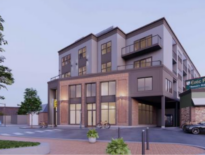
Downey was interested when Newton-based Pure Life Development, owner of 334 and 344 Salem’s End Road, approached him with the idea of redeveloping a 4.2-acre parcel containing a single-family home as 47 apartments for NECC staff and 103 parking spaces.
The property is located in a residential zone that prohibits apartments. Under the Dover amendment, multifamily housing can be constructed if the property serves an educational purpose.
That was the determination of Framingham Building Commissioner Fred Bray, who issued a ruling Nov. 25 that the project is covered by the Dover amendment. Neighbors appealed the decision to the Zoning Board of Appeals.
At a Feb. 11 hearing, an attorney for two abutters urged the board to overturn Bray’s decision.
Neil Glick of Wellesley-based Coren Lichtenstein LLP raised a series of questions about the history of the proposal and whether it falls under the Dover amendment’s protections.
On Dec. 22, Pure Life Development sold the property for $1 to Waltham-based Health Education Charitable Foundation Inc., an entity which was established in October and lists Xiongwei Zhou as manager.
“It’s clear that Pure Life suddenly decided about a month after that: whoops, it looks bad if we are the owner and landlord, and we need some kind of nonprofit entity as window dressing,” Glick said.
What Gets Dover Amendment Protections?
No educational activity will take place at the Framingham property, Glick noted, making it ineligible for Dover amendment protection. He argued that the property could eventually be converted into market-rate apartments.
“My clients will be stuck with a huge multifamily for-profit development sitting practically in their backyard with even less connection to Dover amendment purpose, if that’s possible,” Glick said at the hearing.
No off-site faculty housing projects have been upheld under the current version of the Dover amendment at a leased premises, he said.
An attorney for NECC, David Michel of Boston-based Sherin and Lodgen, cited rulings upholding similar projects under the Dover amendment. The Supreme Judicial Court ruled in 1966 in favor of Radcliffe College’s construction of parking as an integral part of the school’s educational function.
More recently, the SJC ruled in 2023 in favor of Hume Lake Christian Camps’ proposed RV park for staff and visitors in the town of Monterey.
“The SJC said all of this housing, whether it be for attendees or whether it be for volunteers or employees, they’re all in aid of the religious mission of the camp, and they’re all protected,” Michel said in an interview.
Michel also said court rulings have upheld Dover amendment protections for projects regardless of whether they’re owned or leased by the institution.
Case Could Got to Land Court
Under Framingham zoning, the ZBA has until April 2 to rule on the matter. A unanimous vote is required to overturn the building commissioner’s decision. If the board upholds the decision, the project would be subject to a minor site plan review.
Glick hinted that a vote against his client’s position would prompt an appeal in state Land Court.
NECC signed a 20-year lease for the property on Aug. 28 and signed an amendment in December reflecting the change of ownership.
If the project goes forward, NECC’s Downey said the organization would pay a fee per-bedroom to the owners.
“It gives us peace of mind to be secure and have that for a long time,” he said in an interview.