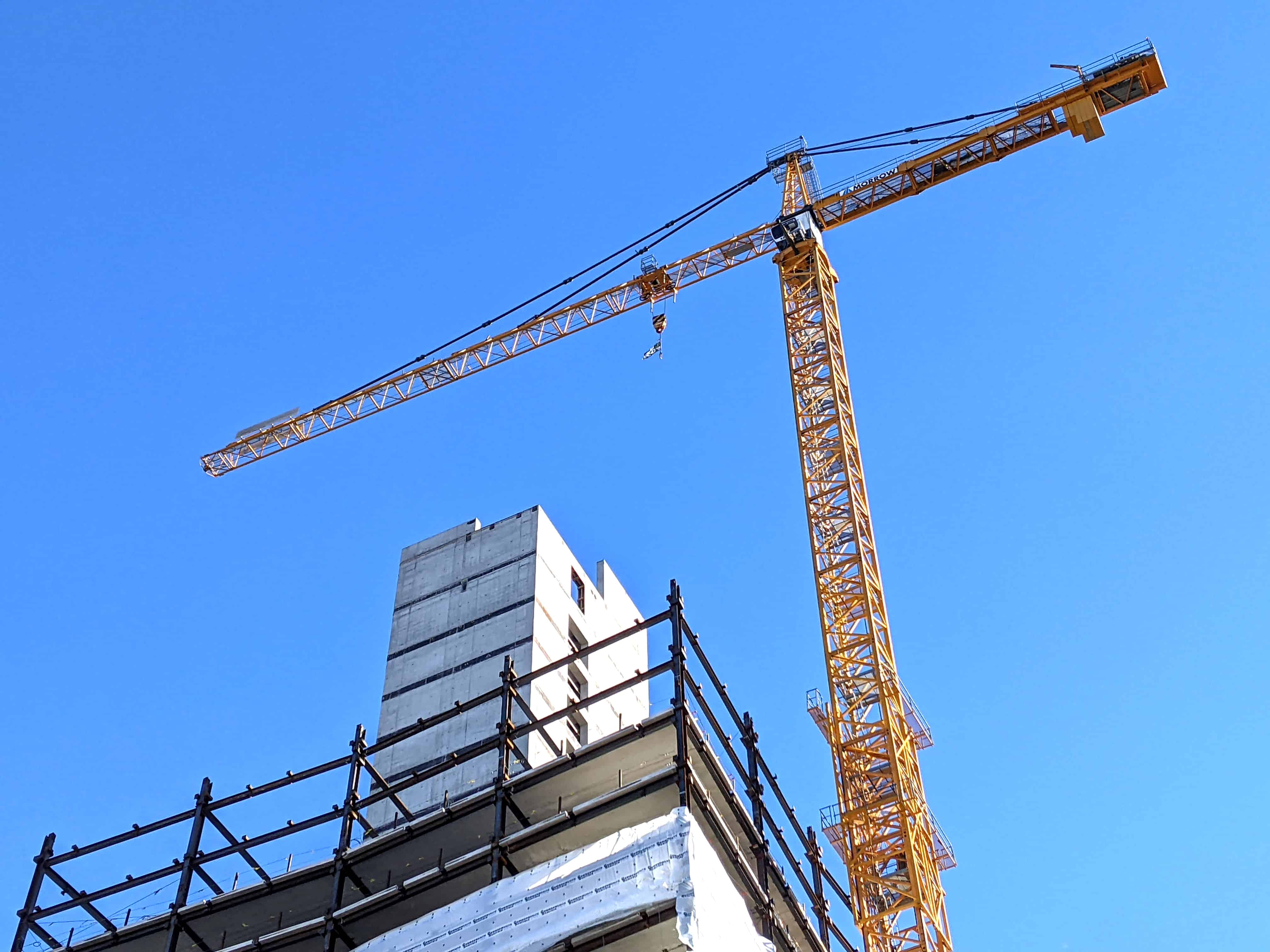
A crane towers over an apartment tower under construction at 10-50 Prospect St. in Somerville's Union Square on March 20, 2022. Photo by James Sanna | Banker & Tradesman Staff
Asking rents in Greater Boston increased on a year-to-year basis but saw drops compared to prior months as multifamily construction slows, even though availability of apartments increased slightly.
The median asking rent in the Boston metro area was $3,121 in August, up 8 percent from the same time last year according to a new analysis by economists at the brokerage Redfin. This August’s figure dropped by 1.2 percent compared to July 2025.
The median U.S. asking rent rose 2.6 percent to $1,790 in August, the largest increase since December 2022, Redfin found. The national median asking rent is now just $70 below the record high hit in the summer of 2022. Unlike Boston, nationally August marked the third consecutive month of year-over-year increases following roughly two years of declining or flat rents.
“Builders are pumping the brakes due to high financing costs, elevated construction expenses and weaker investor appetite,” Redfin Senior Economist Sheharyar Bokhari said in a statement. “With fewer new apartments coming on the market, renters have fewer options to choose from and landlords are regaining the ability to raise prices.”
The number of new apartments being completed nationwide fell to a seasonally adjusted annual rate of 385,000 in July, the most recent month for which data are available. That’s down 45.4 percent from an August 2024 peak of 705,000, according to Redfin.
In Greater Boston, permits for new apartments dropped below the pre-pandemic average in the last 12 months, a separate Redfin analysis found.
Building permits for only 11.1 new homes per 10,000 residents were issued in the region between July 2024 and June 2025, Redfin found. That’s significantly down from the average of 22.2 per 10,000 residents issued between July 2020 and June 2023, but still below the 15.3 permits per 10,000 residents issued on average between July 2014 and June 2020.
And a recent analysis by the Boston-based Pioneer Institute think tank found Massachusetts’ housing production rate in the last year was the sixth-lowest in the nation.
Overall, that’s leading to a tighter rental market, overall, that observers say is drawing investors looking to buy existing multifamily properties.
Greater Boston’s urban core is also in a unique situation, given that its rental market is influenced by demand from international students attending its many universities. Federal immigration policy has seemingly had an effect on the market, suppressing demand in a few neighborhoods like Mission Hill traditionally home to many students.
According to brokerage and apartment listings portal Boston Pads, the real-time vacancy rate in the city of Boston itself is 1.96 percent following the all-important Sept. 1 move-in date, an increase from 1.56 percent a year ago.