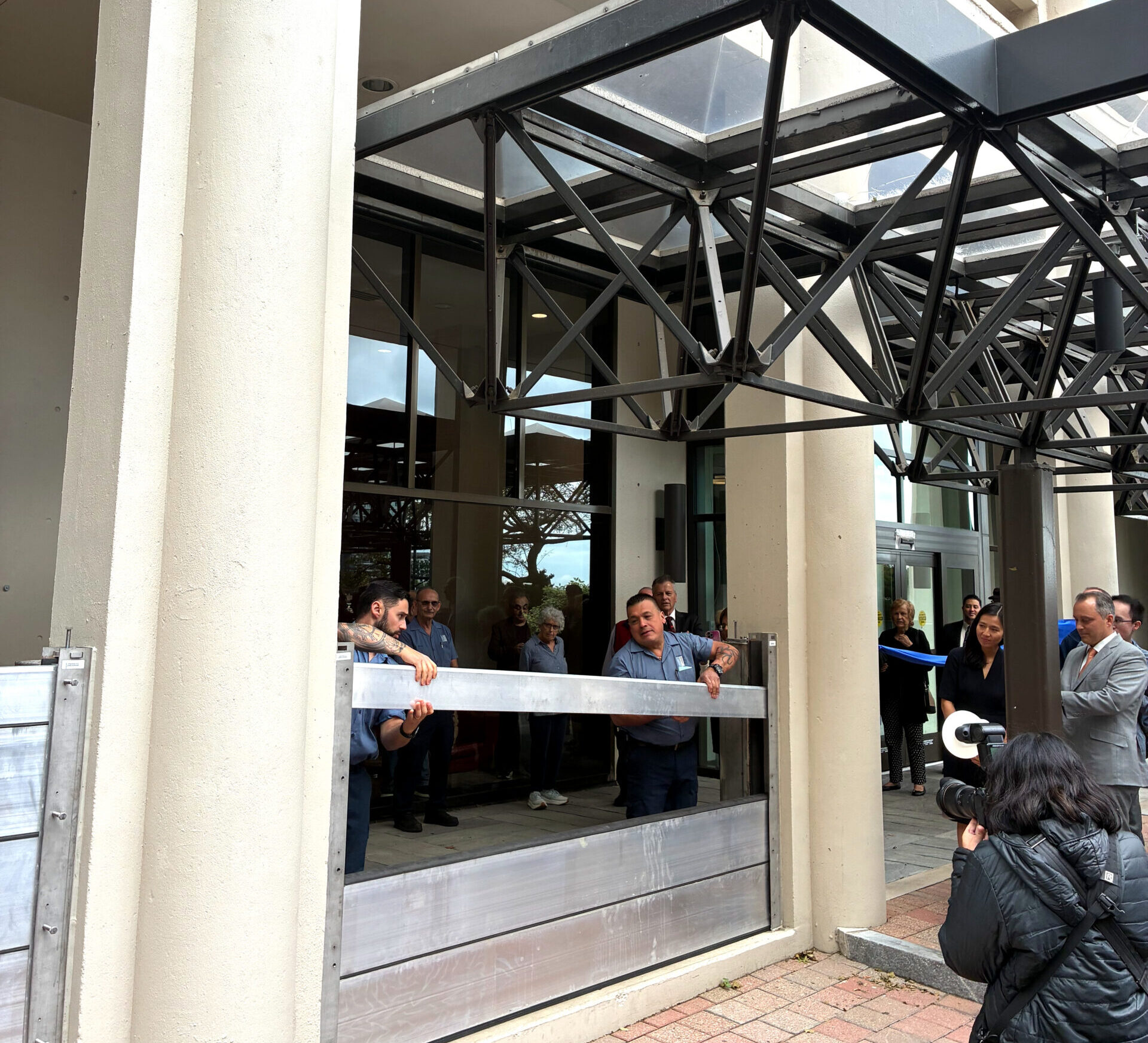
Workers demonstrate temporary flood barriers on downtown Boston's waterfront Harbor Towers condominiums during a media event on Sept. 30, 2026. Photo by Steve Adams | Banker & Tradesman Staff
The nor’easter in late September spared the Harbor Towers condominiums, located steps from the downtown Boston waterfront. Trustees say a recent $20 million investment ensures that the property will withstand coastal storms for decades to come.
“We had pretty universal buy-in that this was the right thing to do,” said Norman Meisner, a condo board trustee. “When you’re on the water with buildings like this, you not only are worried about safety and availability of your systems, but also worry about being able to insure the building, and increasingly that becomes a problem.”
Harbor Towers condo owners voted to pay for the project after a 2018 coastal storm nearly inundated the lobby of the East India Row tower closest to the waterfront.
Reading-based engineering firm Weston & Sampson, Elkus Manfredi Architects and Building Envelope Solutions were consultants on the project, constructed by Commodore Builders.
The project is designed to protect the buildings, completed in the early 1970s, for 50 years.
As storms approach, property managers will install temporary barriers that fit between the porticos on the ground floor of the 40-story buildings.
The project also added 16-foot-tall glass inserts on waterfront sides of Harbor Towers One, and required excavation of a 6-foot trench to waterproof the sides of basement walls and 25 openings where utilities enter the buildings.
The 18-month project began in 2024 and was funded through a one-time fee for condo owners. It’s the largest private investment by a condo association in coastal resiliency in Boston to date, Boston Chief Climate Officer Brian Swett said at a ceremony Wednesday focusing on the city’s climate resilience strategy.
When it was proposed in 2024, the project was so unusual that the city didn’t have a specific permitting process for flood resiliency, Swett said. Another 11 private property owners are now pursuing similar projects, Swett added.
In August, the Boston Children’s Museum began a $15 million project to protect its Fort Point building from flooding. And the New England Aquarium is spending $8 million on floodproofing and building system updates to its Central Wharf property.
Water levels in Boston Harbor are projected to rise 40 inches by 2070, according to city climate studies.
Boston officials acknowledged that private property owners will have to take the lead on flood defenses until a $10 billion project coordinated by the U.S. Army Corps of Engineers obtains funding and begins construction. The work is not expected to begin until the next decade, and would include 20 projects to block flood paths in the downtown, South Boston, Charlestown, East Boston and Dorchester neighborhoods.
Commercial property owners also have begun preparing for sea level rise.
At Atlantic Wharf, developer BXP has deployed temporary flood barriers during storms in recent years to protect the office and residential property.
During the city’s third annual “Deployables Day” media event Wednesday, the Boston Fire Department demonstrated the use of one of its two high water vehicles, which can traverse flooded areas and evacuate residents of flooded buildings surrounded by deployable flood defense equipent. The vehicles are equipped with elevated air intake and exhaust pipes, enabling them to be used in flood waters up to approximately 7 feet.
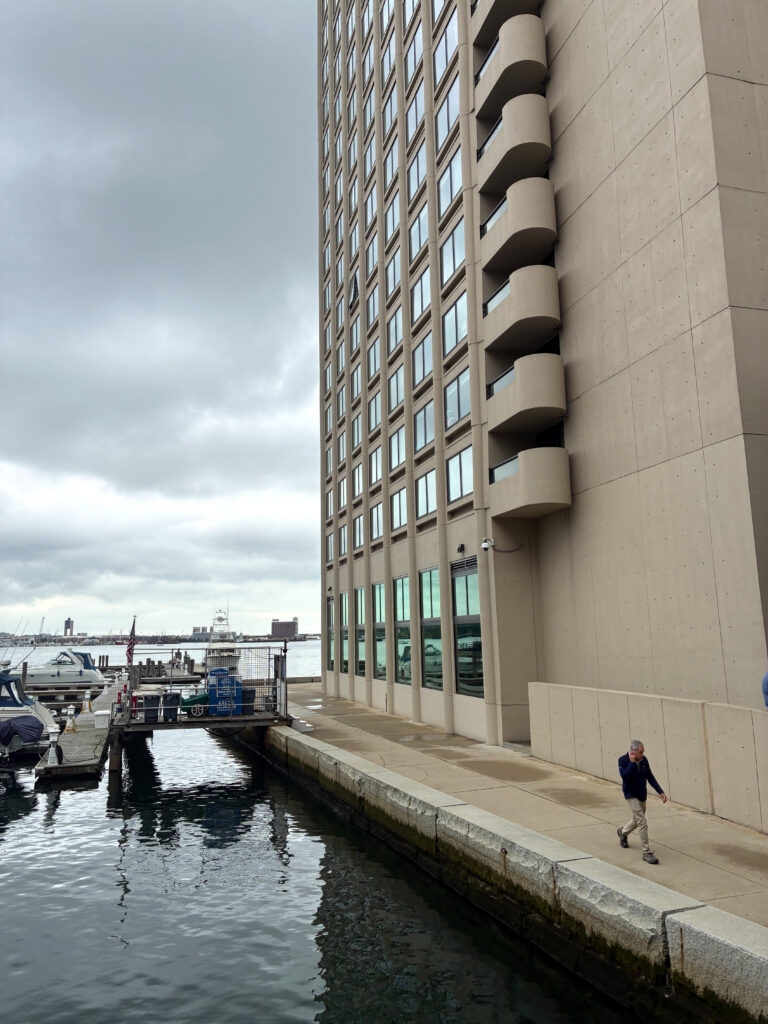
New flood proofing systems at Harbor Towers will extend the life of the property by a projected 50 years/Photo by Steve Adams | Banker & Tradesman Staff