
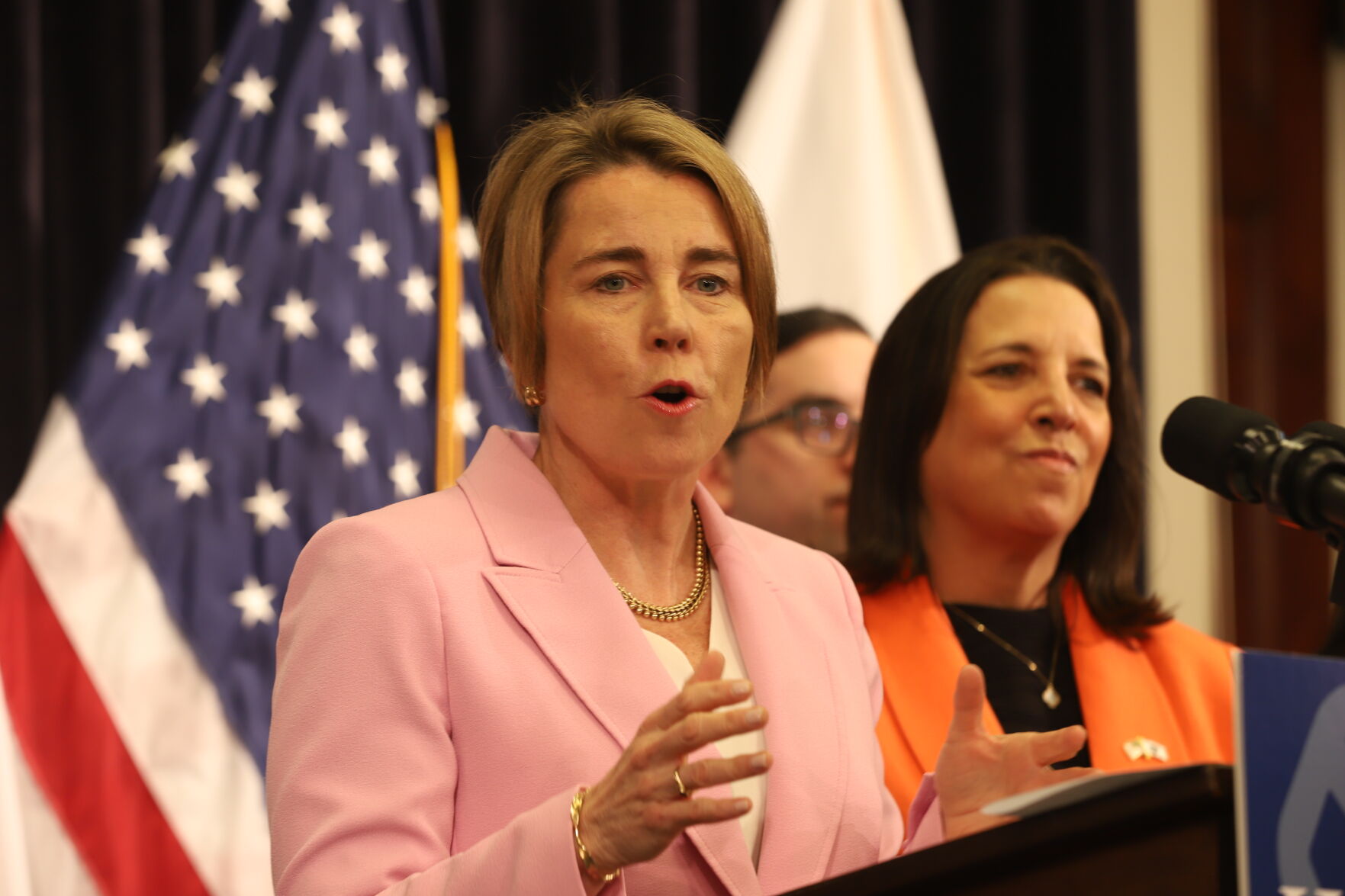
Gov. Maura Healey speaks at a State House press conference on April 28, 2026. Lt. Gov. Kim Driscoll stands behind her. Photo by Ella Adams | State House News Service
The campaign to legalize small-lot single family homes statewide picked up two high-profile backers Tuesday morning: Gov. Maura Healey and Lt. Gov. Kim Driscoll.
The pair’s reelection campaign announced the endorsements Tuesday morning.
Question 7 on the November 2026 statewide ballot, known as the “starter homes” ballot question, would make it legal to build a single-family home on a lot as small as 5,000 square feet wherever there is public water and sewer service in Massachusetts, in an attempt to push back on towns and cities that require large lots for new homes as a way to prevent development.
An analysis by the Tufts University Center for State Policy Analysis this summer predicted it would generate between 350 and 1,200 new single-family homes per year.
“Our administration is working every single day to build more homes to lower costs across Massachusetts. This ballot question will help move that work forward and make the dream of owning a home a reality for more residents,” Healey said in a statement released by her campaign. “By opening doors to first-time homeowners, we’ll help more young people afford to stay in Massachusetts and build their future here.”
A summer poll released Aug. 26 and another conducted in February found broad support for the concept among Massachusetts voters.
“Local communities depend on having housing options that working families and young people can actually afford. Maura and I are taking aggressive action to spur production and build the starter homes our statewide workforce urgently needs,” Driscoll said in a statement released by her campaign. “Supporting this ballot question will help break down barriers to homeownership, keep our state competitive, and allow our young people to stay and thrive in Massachusetts.”
So far, the highest-profile elected official to back the Legalize Starter Homes campaign was Newton Congressman Jake Auchincloss, as well as a small group of state senators. Healey’s and Driscoll’s endorsements come less than a day after prominent housing advocacy group Citizens Housing and Planning Association also declared its support.
There’s no organized ballot committee campaigning against Question 7, but the measure is opposed by the Massachusetts Municipal Association, the trade group representing the state’s towns and cities. The group criticizes Question 7 for removing local control over land-use decisions.
Republican gubernatorial candidate Mike Minogue has not indicated his support for or against Question 7 as of publication time, but features a pledge on his campaign website that, if elected, he would “eliminate the enforcement of the MBTA Communities Act.” The state attorney general’s office has the power to sue towns in state court to force compliance, but the state Executive Office of Housing and Livable Communities, part of the executive branch, has broad discretion to restrict state grant funding to municipalities if they don’t stay compliant with the zoning.