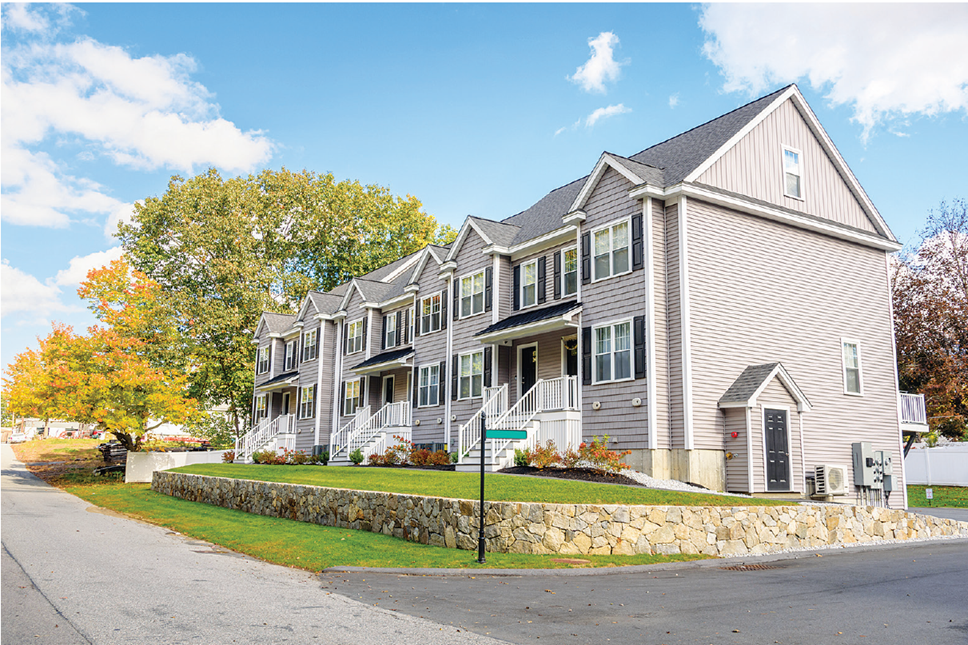
We must let go of the concept of a starter home as a single-family house on a single lot, and embrace the development of townhomes and condos, like this new build in Lowell. iStock photo
That we have a housing shortage in Massachusetts, and that it is getting ever more dire by the year, is not some arcane economics debate.
Rather, it’s a cold, hard reality, apparent to anyone who has either bought a home or rented an apartment in the last two decades, particularly in Greater Boston.
Even those with relatively healthy incomes have seen their share of cramped, aging homes and so-called fixer-uppers selling at prices that would get you a comfortable, spacious, and modern home in Texas and many other markets as well.
Whatever new construction we have seen has tended to be on the higher end of the market. A bevy of new towers has sprung up on the Boston skyline, boasting $5 million, $10 million, and even $30 million to $40 million condos, penthouses and luxury apartments with rents in the tens of thousands of dollars a month.
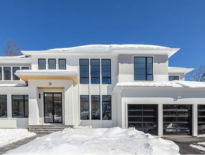
In the suburbs, this has taken the form of multimillion-dollar McMansions, with modest, ’60s and ’70s-era raised ranches, Colonials and Capes torn down to make way for them, along with a sprinkling of high-end apartment complexes with all the amenities.
And as developers have seemingly focused on building high-end properties, they have faced a backlash from both ends of the political spectrum.
Progressives have demanded that the new apartment buildings include ever-larger blocks of affordable units with below-market rents, while also demanding more government money be shoveled into public housing at a cost, in Cambridge anyway, of about $1 million per unit.
As for the NIMBY types on the right, they decry what they see as the hypocrisy of new developers agreeing to rent out 20 percent of units at below-market rates when the remaining 80 percent feature rents that the affluent can afford. They say cities and towns should have the power to block housing they see as degrading the community, especially larger, more urban-style projects.
A Growing Mismatch
What neither side can grasp, or frankly acknowledge, is that housing is the ultimate numbers game.
Cities in both red and blue states alike, such as Austin and Minneapolis, have shown time and again that when local regulations and zoning are rolled back, more housing gets built and prices and rents come down.
Now a new Pioneer Institute report lays out a roadmap for how Massachusetts can both boost the amount of housing while helping to ensure we get more homes that are smaller, suitable both for first-time buyers and empty nesters as well.
Massachusetts has a large and growing mismatch between the growing number of smaller households, made up of empty nesters and twenty- and thirty-somethings just trying to get their first apartment or home. In many towns and cities across the state, these smaller households outnumber smaller homes by a ratio of four to one, the Pioneer report notes.
Empty nesters looking for smaller homes, condos or apartments are coming up empty, while adult children in their twenties and thirties are moving back in with parents to save on rent.
“In 2024, most Massachusetts households consisted of either a married couple with no underage children or a single adult living alone,” writes Andrew Mikula, a senior fellow in housing at Pioneer Institute.
So what’s to be done? The report calls for sweeping reforms of local zoning rules to free up the market and enable developers and real estate companies to start building the smaller homes and apartments that both the young starting out, and the old looking to downsize, say they need.
However, with housing lots easily going for $1 million, we’ll have to let go of the idea that the starter home is a small, single-family, the report suggests. Rather, condos, townhomes and small apartment buildings, by default, have become the new starter homes for the young, and new landing spots for downsizing empty nesters as well.
But in order for that to happen, Beacon Hill needs to consider lifting the outright bans some communities have on townhomes, condos and apartment buildings.
That means passing legislation that would give developers a green light to build these types of housing units by right in most residential areas, eliminating the “long and discretionary reviews” that can leave new housing projects tangled up for years in red tape.
A Call to Voters
Pioneer’s other recommendations include reducing or eliminating regulations that also drive up costs, like lot size, rules related to lot dimensions, and requirements that every new housing unit include a minimum number of parking spaces.
For his part, the Pioneer’s Mikula already has one of those items on his to-do list, leading a ballot question campaign that would bar suburbs, cities and towns across the state from insisting on house lots larger than 5,000 square feet. As it stands now, many suburbs require that lots for new homes be at least an acre in size, or about 44,000 square feet.
The report’s suggestions surely won’t win over the Democratic Socialists who have become the Dems left wing. Many on the far left don’t believe – or simply don’t want to believe – that capitalism is the problem and that there is any market-based solution to the housing crunch.
So much as well for conservatives, angry and fearful that small towns will be overrun by new apartment buildings and townhomes. Whatever happened to the party of business and free enterprise?

Scott Van Voorhis
But it’s a good bet that there are far more voters in the sensible middle who are interested in solutions, not fighting ideological battles.
Here’s hoping they show up to vote this fall and pass that starter home ballot question, which would be a great start.
Scott Van Voorhis is Banker & Tradesman’s columnist and publisher of the Contrarian Boston newsletter; opinions expressed are his own. He may be reached at sbvanvoorhis@hotmail.com.