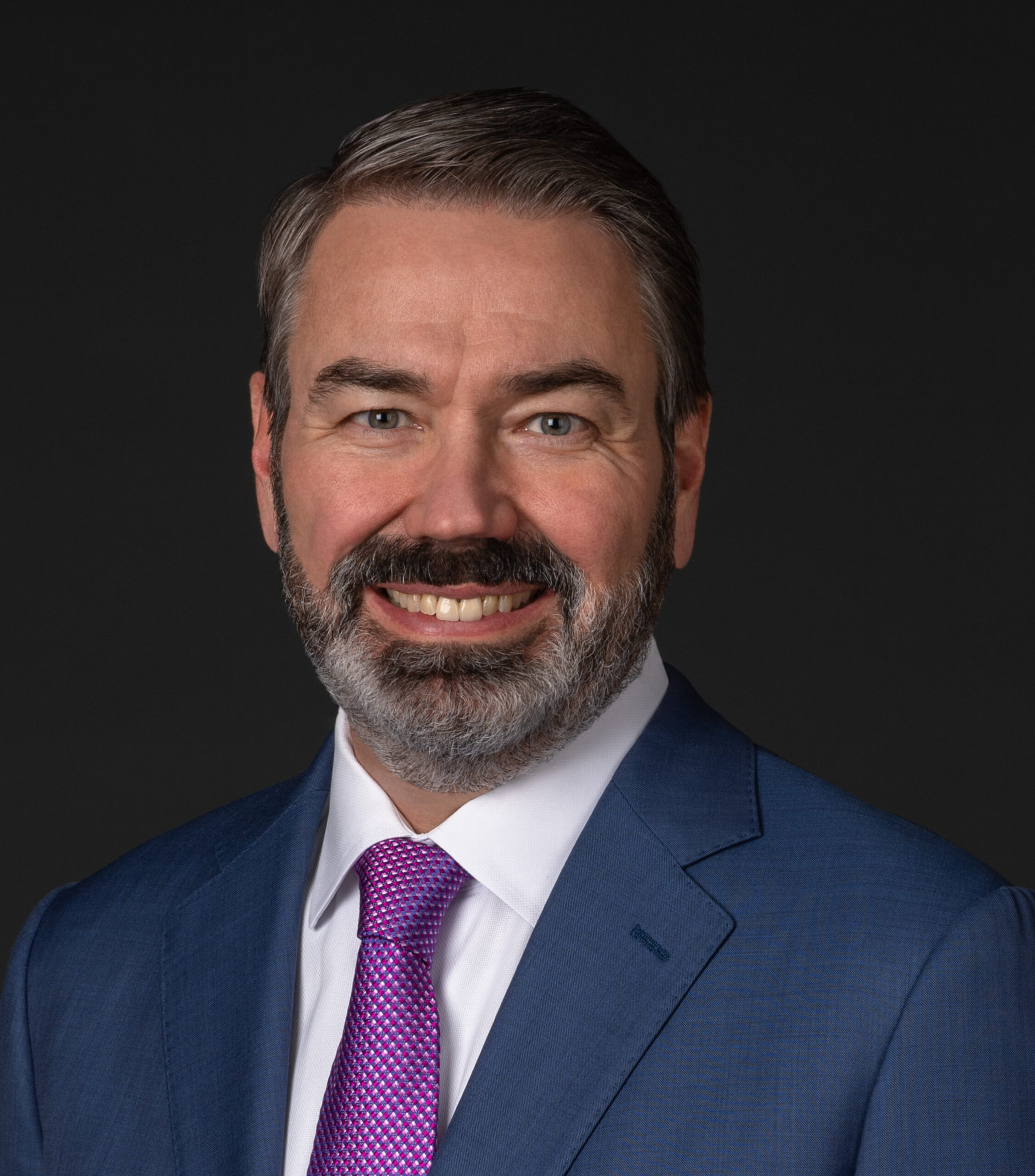
Photo courtesy of HYM Investment Group
Doug Manz
Partner and chief investment officer, HYM Investment Group
Age: 54
Industry experience: 30 years
The HYM Investment Group is best known for tackling large and complex projects such as Boston’s Bulfinch Crossing and the redevelopment of the Suffolk Downs racetrack property. In the current financial climate, suburban communities offer Boston-based HYM opportunities to build age-restricted developments designed for an aging population. Chief Investment Officer Doug Manz is responsible for securing hard-to-find development sites, from underutilized strip malls to college- and church-owned properties, that are suitable for its 55-and-over development model. Manz joined HYM in 2009 and was named chief investment officer in 2021.
Q: When you’re looking for development sites for age-restricted housing, what are the criteria?
A: It definitely does deal with population. Our average age for our communities tends to be around 79 or 80. We do independent living, assisted living and memory care really in one building. The size of our communities is usually between 150 to 200 units, versus the older [continuing care retirement communities], which were huge: 2,000 units. We’re also a rental model. It’s not a big buy-in, it’s just on a per-month basis.
We just completed a zoning process in Arlington [in May] at the St. Camillus Church [for 145 units]: a huge vote in favor of passing the rezoning. We have a 20-acre site in Weston under contract from Regis College. Obviously Weston is a pretty typical target: suburban towns that have a core demographic of those in that age range, with home values that are high. We’re also working on a project in Plymouth at the old Benny’s plaza site. We have 184 units there, because over the past 20 years, so many people have retired to Plymouth at the Pinehills and places like that.
Q: What are the advantages of combining independent, assisted living and memory care under the same roof, and the space ratios for each?
A: Probably more than two-thirds is independent living, and the balance is split. We also will do just assisted living and memory care; that’s what we’re actually doing in Arlington because it’s a smaller site. The independent living [product] is probably the most sought-after. This is still a high level of care. People can get at least one meal per day in the dining facilities. You have one- and two-bedroom apartments typically, and people want to stay longer. That’s what starts to fill the assisted living or the memory care. We also are getting a lot more couples.
Q: Why is your business model rental-only communities?
A: The group that we’ve teamed up with is NexCore out of Denver, and Experience Senior Living is their operating arm. That’s just their model. It provides some flexibility versus the older style, the CCRC, where you have a major buy-in [cost for residents]. NexCore is our general partner and so they’re bringing the general partner equity. We will seek limited partner equity as we go forward on individual deals, or grouping some projects. But that’s very similar to how it’s approached on the multifamily deals.
Q: How do project costs compare to traditional multifamily, given the institutional elements of these projects?
A: The first key thing is we have a commercial kitchen and several dining rooms. We’re providing the assisted living and memory care three meals a day. We have three dining rooms typically, with restaurant-style dining, and much more robust amenity rooms. Memory care is a secured facility. So, the amount of common amenity space is much greater than multifamily, but it is a residential-character building. It’s the percentage of amenity space that’s driving our cost. Outside of the dining facilities, clearly fitness centers, indoor pools, and health and wellness are a big part. Activity rooms, craft rooms and beauty parlors. And then it’s transportation. We provide car service and shuttle services, and make sure we’re integrated with the local senior center and community center. And then I would say dog parks. A lot of our residents do have pets. That’s another area that’s growing, and it’s very important and great for well-being and socialization.
Q: How did you respond to the neighborhood opposition in Weston?
A: We started with one larger 4-story building that had 185 units. The first big change was we split it into two smaller 3-story buildings, and one of them is just the dedicated independent living building. And then we did assisted living and memory care in the other buildings. So, we dropped one complete story, and by splitting it, we were able to move it even further away from the abutters. Now we’re 600 feet away from any abutter. And we do have 30 55-plus for-sale townhomes. For affordability, we’re proposing 10 percent on-site or 15 percent off-site.
Q: How difficult is staffing these facilities given the Trump administration’s current immigration policies and enforcement techniques?
A: Staffing definitely is a big component. We could have over 100 team members at a community. This is more of a care model versus a housing model. We have three shifts and 24/7 staff. We have a nurse on staff 24/7 as well. Again, we’re not a nursing home, but one of the things we always look at as soon as we’re proposing a community is: Where is our workforce going to come from? That’s really important to [NexCare]. Immigration issues are also really important to them. Obviously, healthcare workers tend to be immigrants, and so they’re definitely sensitized to that too as well. Labor is a big part of these communities.
Q: What is your growth plan?
A: We’re in active negotiations on two or three other sites. Our goal is to do about 10 in the Greater Boston area. We’re looking for sites that typically are 3 to 5 acres. Those are not easy to find. We definitely have competed for a few smaller office building sites that are market-obsolete. Typically, we’ve been outbid by multifamily because they can probably do more density. But we have had great success with universities and religious properties, because it’s more aligned with their mission. They’re land-rich, capital-poor and they’re looking to stabilize their endowments, and we see a lot of synergies.
Churches usually have older populations that are looking for housing options, and it’s a great option for the town because obviously those are typically not on the tax rolls. In Arlington, that was a big part of the process of that. Residents are really excited to get a piece of land that’s not in the tax rolls to really help with their tax base, and we obviously generate very little traffic. We don’t bring school-age children to the towns, and so we’re a net gain from a real estate tax perspective. And so, and those are similar themes that are resonating right now in Weston and definitely resonated as well in Plymouth.
Manz’ Five Most Important Things
- Mi Familia
- My faith
- My friends and colleagues
- American democracy
- “Everything else that is required to sustain the above”