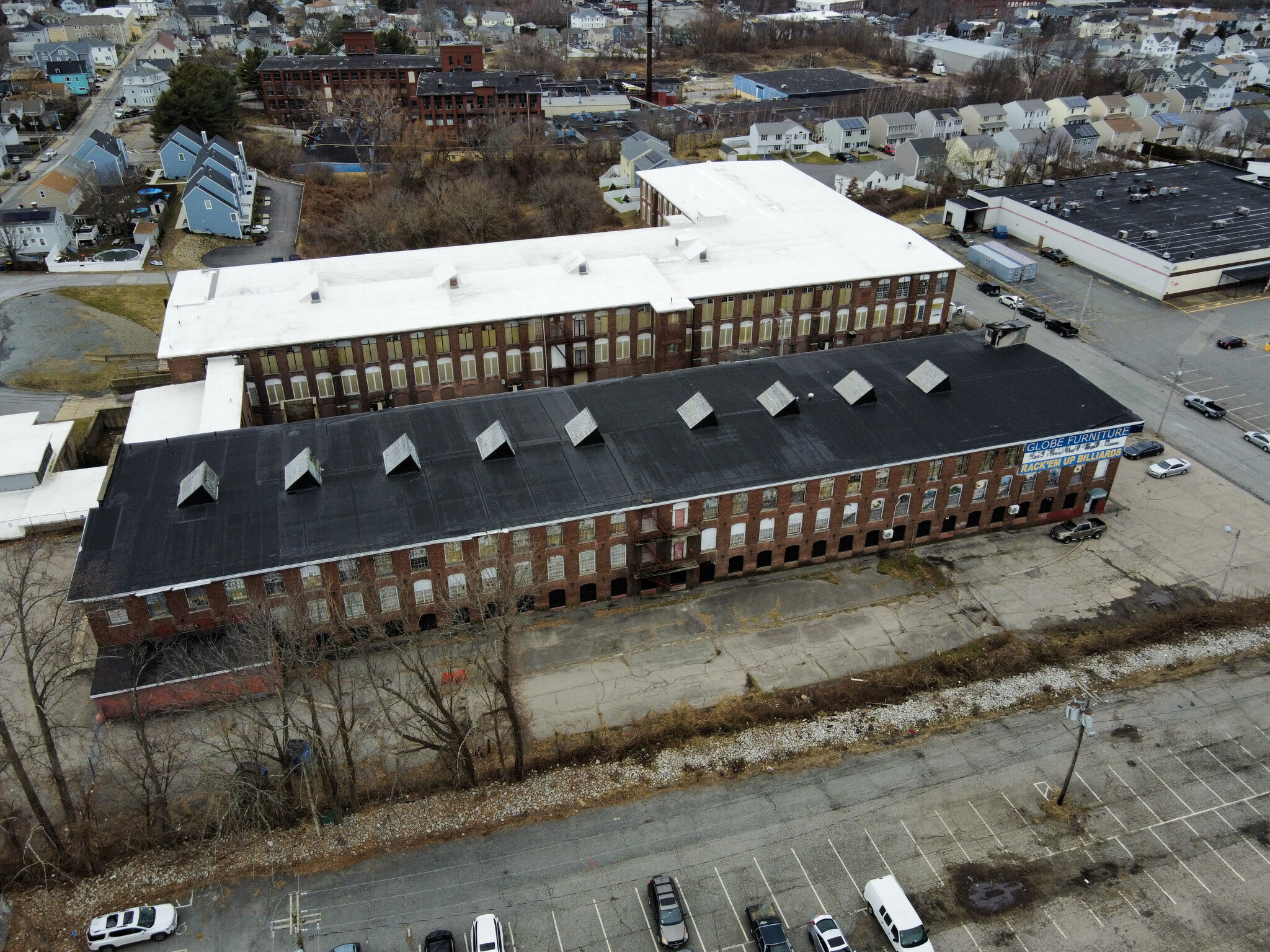
A $3 million award from Massachusetts’ Housing Development Incentive Program will help Boston-based MassCanCapital complete financing for its Globe Mills Lofts project, creating 89 loft-style apartments in a former Fall River yarn mill. Photo courtesy of MassCanCapital
The Healey administration delivered an early holiday present in December to six developers, doling out grants that will help catalyze groundbreakings of projects creating 369 apartments in five Gateway Cities.
The $15 million funding round came from the Housing Development Incentive Program, Massachusetts’ mechanism to prime the pump for market-rate multifamily construction in the 26 economically struggling communities. It was the latest chapter in a 15-year-old program that has awarded $102 million in gap-filling development financing since Gov. Maura Healey took office, toward more than 2,700 housing units.
So why do some progressive housing activists and free-market conservatives alike have a beef with the HDIP program?
Some critics say the program may drive gentrification and displacement, particularly in Gateway Cities that already are plagued with lack of affordability in comparison to local incomes. Others wonder whether public dollars could be spent more efficiently.
“Given our budget problems and what the federal government is doing, are they really going to spend many millions more for market-rate and luxury housing?” asked Judith Liben, a housing attorney at the Massachusetts Law Reform Institute.
HDIP Fills Gaps in Capital Stacks
Outside of Greater Boston, HDIP can make a critical difference in jumpstarting projects that offer reasonable rents without the formal restrictions associated with subsidized developments. In Fall River, rents are too low to make projects feasible without public subsidies, said Edd Hamzanlui, founding principal of MassCan Capital.
His Boston-based firm recently received $3 million in HDIP funding along with historic tax credits for a housing conversion at Fall River’s Globe Mill Lofts.
RELATED: Latest HDIP Grants Awarded to Projects from Lowell to Hyannis
MassCanCapital placed the 19th-century former yarn mill under agreement two years ago, and is set to break ground later this year on conversion into 89 loft-style apartments.
The $3 million HDIP award was the most important funding piece for the $40 million project, Hamzanlui said, filling a void left by reluctant equity investors.
“You have to figure out how to capitalize these projects outside the box. For that reason, HDIP was really, really important,” Hamzanlui said. “These projects are very tight financially and the upside is limited, because we know what the rents are in Fall River. This is not Cambridge. This is not Somerville.”
Average asking rents in Fall River are $1,820, according to MassInc’s 2025 Gateway Cities Housing Monitor.
Hamzanlui estimated rents in the completed project will average $2.75 to $3 per square foot, or approximately $2,000 for a one-bedroom unit.
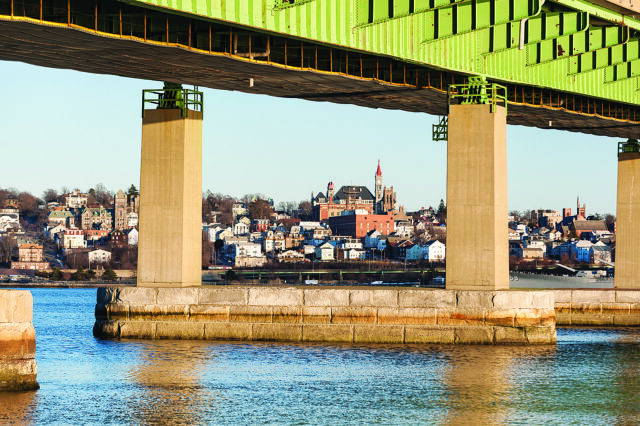
Fall River’s Durfee High School is framed by the city’s Braga Bridge. The city, like many of the state’s midsized communities, doesn’t have rents high enough to support the construction of new, unsubsidized housing. iStock photo
Market-Rate Projects Fill ‘Piece of Puzzle’
At the groundbreaking of Revere’s Portico apartment complex in December, Massachusetts Secretary of Housing and Livable Communities Ed Augustus defended HDIP’s goals and results. The HYM Investment Group project is part of the Suffolk Downs racetrack redevelopment, which could eventually include over 16 million square feet of commercial and residential development.
“Market-rate projects are a piece of the puzzle, particularly in Gateway Cities that are often looking for mixed-income neighborhoods,” Augustus said, noting that projects using HDIP helped restore historic buildings and add downtown housing during his tenure as Worcester’s city manager.
The Portico project was awarded $5 million last August, enabling HYM to complete a financing package that included a $225 million construction loan from New York-based Related Companies.
MassINC coined the term “Gateway Cities” in 2007 to describe the struggling midsized communities that lost economic vitality with the decline of Massachusetts’ manufacturing base. A 2010 state law established HDIP and other programs to encourage reinvestment in the communities, which now number 26 cities and towns from Pittsfield to Barnstable.
But Gateway Cities’ housing markets have changed in the past 15 years, noted Liben, the Massachusetts Law Reform Institute attorney.
Revere, located just a 17-minute subway ride from downtown Boston, now has the fifth-highest asking apartment rents among Gateway Cities at $2,786 per month, according to the MassINC Policy Center’s 2025 Gateway Cities Housing Monitor.
The first apartment building at Suffolk Downs, the 475-unit Amaya, was built without HDIP subsidies, Liben noted, although the project broke ground in May 2022 just as the Federal Reserve was starting a series of interest rate hikes. It currently advertises studios starting at $2,265 per month.
Unlike other public subsidies for housing development, HDIP doesn’t restrict rent increases or require a certain percentage of larger apartments designed for families, Liben noted.
“It’s exclusionary housing in many ways,” she said.
Program Has Free-Market Critics, Too
Andre Leroux, program director of the Gateway Cities Innovation Institute at MassInc, said layering additional requirements into the HDIP program could make it impossible for smaller developers to qualify.
“We see too often that the housing market is dominated by companies that know how to work the system,” Leroux said. “They have dedicated staff to deal with the paperwork and the ins and outs. We really should have our housing programs be more open.”

Steve Adams
Andrew Mikula, a Pioneer Institute senior housing fellow, said some research indicates that programs such as housing vouchers awarded to individuals are a more efficient way to allocate public funds than grants to developers. Another alternative is buying existing private housing with below-market rents, in partnerships with local nonprofits who agree to maintain affordable rents, Mikula said.
“HDIP in theory can add to the housing stock in areas that don’t have the market to support private development,” Mikula said.
Leroux said HDIP’s track record has helped developers outpace recent increases in project costs.
“We see a need for HDIP and there seems to be an almost unlimited capacity to absorb these HDIP credits,” Leroux said. “I still talk to municipal economic developers saying they could have another four to six projects if there were enough credits to get these projects into the pipeline.”