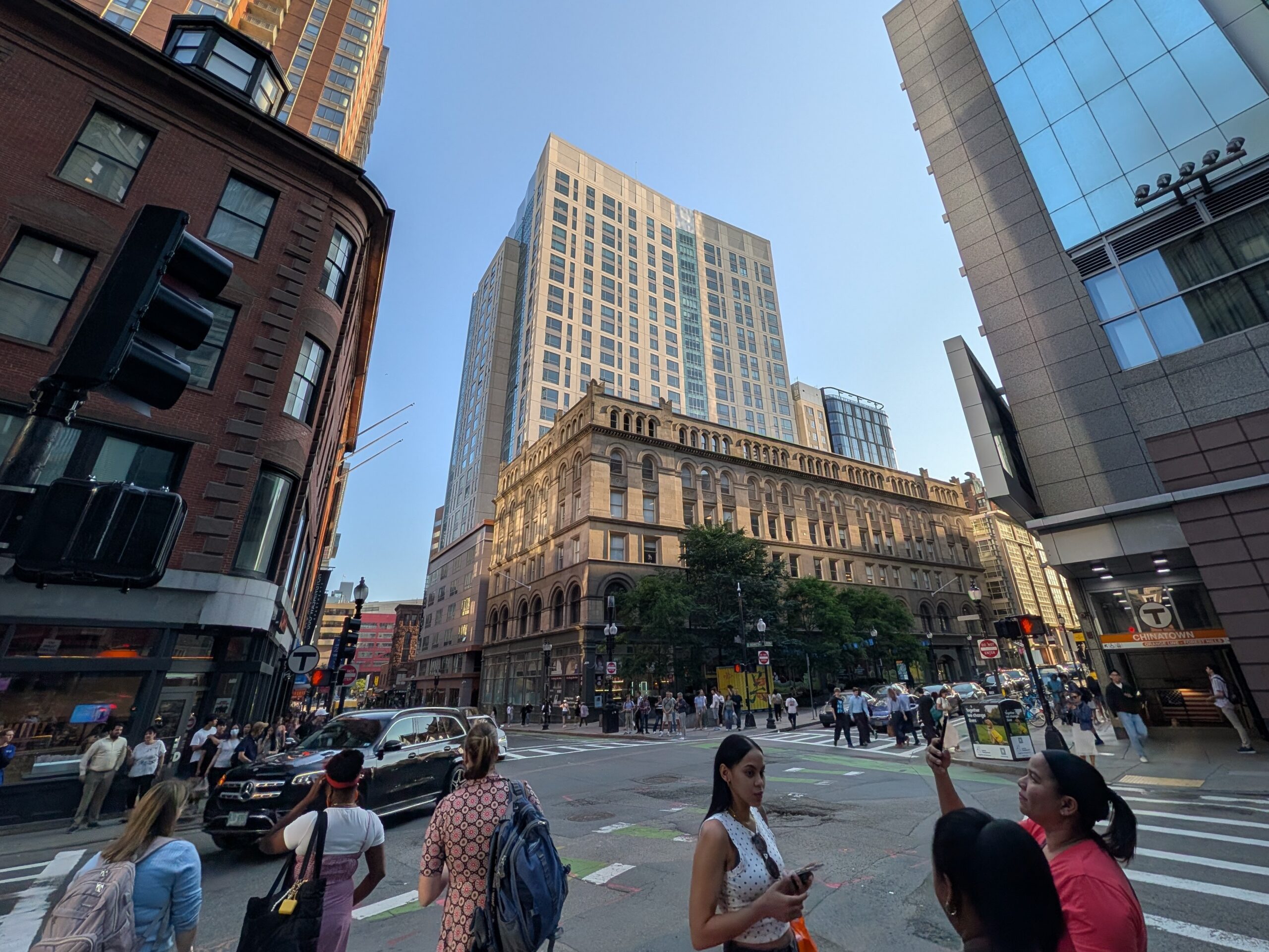
In the biggest-ticket local apartment transaction of the year, Ponte Gadea USA acquired the 381-unit Kensington tower in Boston for $234 million in July. Photo by James Sanna | Banker & Tradesman Staff / File
Multifamily brokers saw an immediate thaw in the investment sales market after the Massachusetts Supreme Judicial Court invalidated a potential ballot question on statewide rent control in June.
Owners of large apartment complexes brought them to market. Bidding pools got more crowded. Transaction volume started to return to normal across Greater Boston.
Then, interest rates and inflation promptly added a new element of uncertainty, raising questions about valuations and deal viability.
“Things were going pretty smoothly up until two months ago, when interest rates starting climbing,” said Simon Butler, vice chairman and managing director at CBRE in Boston. “We got rid of the rent control issue. Now we have a new issue.”
Investors who had shunned acquisitions of Massachusetts properties during the rent control debate returned, deepening bidding pools despite rising rates during the summer, Butler said. Following the Federal Reserve’s first interest rate hike in over three years in September, the benchmark 10-year Treasury note topped 5.2 percent.
“That obviously creates more issues, because then it becomes not just a conversation around interest rates, but other assumptions,” Butler said. “Most buyers can probably absorb 25 to 30 basis points of rate movement. This is a pretty material movement.”
Rents Plateau Amid Drops in Demand
Demand might remain resilient if local apartment rents were still rising strongly. But since 2024, Greater Boston’s pricey apartment market has felt twin blows from job losses in key industries such as health care, life science and education, and a drop in international students attending local colleges amid the Trump administration’s tougher immigration policies.
The drop in demand has been accompanied by a widespread plateau in asking rents.
According to an ApartmentList report this month, the region’s median apartment rent has risen just 3.1 percent since 2020.
“The leasing environment has actually gotten worse. The last two years have been really challenging: rising vacancy, flat rents in different markets,” said Kevin Benzinger, a managing director of capital markets at Boston Realty Advisors.
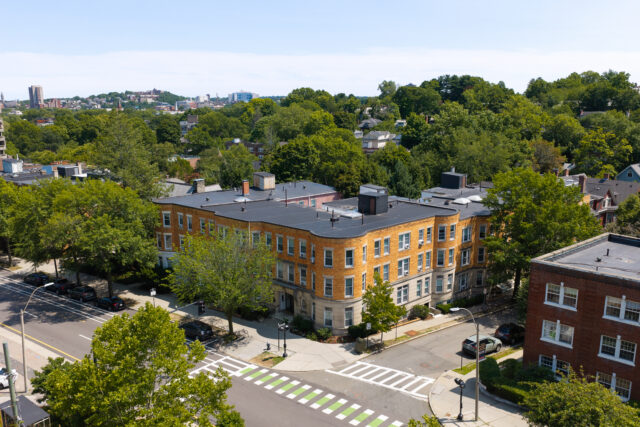
Long-term investors such as family offices remain interested in multifamily investment sales, brokers say, seeking capital preservation as opposed to short-term returns. Pictured is the Beacon Fairbanks Manor property in Brookline. Image courtesy of Boston Realty Advisors
And backers of rent control have vowed to renew their push for statewide legislation during the legislative session that begins in January, or through another ballot question in 2028.
“A lot of folks are asking us again, ‘What do you think about rent control two years from now?’ It’s still out there,” Benzinger said.
Return-driven investors are sitting on the sidelines, waiting for a resolution of the Iran war and its effect on inflation and interest rates.
“They are going to wait this out and get some clarity,” Benzinger said.
Some investors will switch to other asset categories outside real estate, he predicted.
No Widespread Distress Expected Locally
Brokers and lenders say they don’t expect any widespread distress in the region’s multifamily market, despite an anticipated wave of mortgage expirations.
Approximately $757 billion in multifamily mortgages are due to expire between now and 2028, according to the Mortgage Bankers Association. Apartment values have dropped over 20 percent nationally since 2022, according to the Wall Street Journal, raising concerns about foreclosures when existing mortgages at lower rates expire and owners are unable to refinance.
Observers say Greater Boston’s multifamily market has structural advantages that will deter distressed sales and foreclosures.

Steve Adams
“People are going to wait to do foreclosures as long as people can continue to pay some form of interest on multifamily,” said Sean Kelly-Rand, principal at RD Advisors, a Boston-based private lender that provides short-term financing for small- and mid-sized multifamily properties. “Banks will wait and see if rates do come down, and if there is an exit.”
And higher interest rate hikes also add even higher hurdles to new development financing, offering apartment investors some assurance that rents won’t plummet amid new competition.
The region’s barriers to entry have kept occupancy rates above 95 percent through late spring, and new construction continues to decline to 8,221 units, according to a Colliers research report. At the peak of the construction boom in 2022, more than 17,000 units were under construction across the region.
For now, Benzinger said, family offices and other long-term investors are staying active in the market. Investor interest has been strong in such listings as a 56-unit property at 1539 Beacon St. in Brookline.
“The private capital: families that have been around for generations and are buying for wealth preservation, are not concerned about cash-on-cash return,” Benzinger said.